Le Duy Khanh, 44, was sentenced to four years in prison for property theft after being found guilty of six separate incidents of stealing luxury items from his neighbor. The Ho Chi Minh City People's Court of Appeal upheld the four-year sentence on 23/7, also ordering Khanh to pay 48 million dong in compensation to a fashion company that purchased one of the stolen bags.
The appellate court rejected the victim's request to reconsider the asset valuation and for an additional 100 million dong in compensation for an unrecovered Chanel bag. According to the court, the victim failed to present any new evidence that would change the nature of the case during the appeal hearing. The lower court had fully considered these matters, and the determination of stolen assets and the valuation were conducted in accordance with regulations.
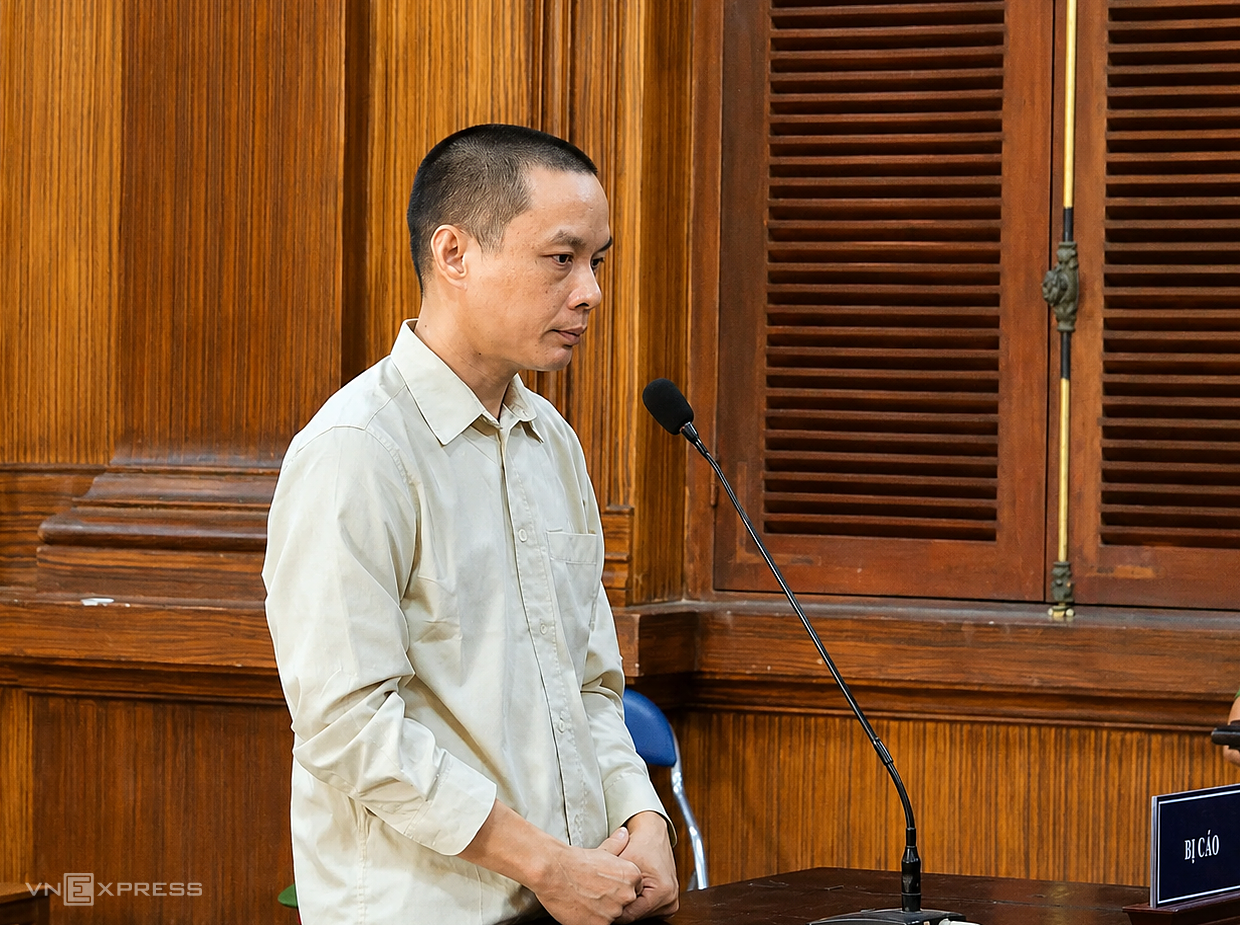 |
Defendant Le Duy Khanh in court today. *Photo: Binh Nguyen*
According to the initial verdict, Khanh lived on the same floor as Ms. Dung in an apartment building in Bay Hien Ward, Ho Chi Minh City. Driven by a need for money, Khanh broke into Ms. Dung's apartment six times. He stole 1,5 million dong in cash and various other assets, including four Chanel handbags, one Balenciaga bag, watches, jewelry, perfume, and eyeglasses. The total value of these stolen items was estimated at nearly 200 million dong.
Khanh sold one Chanel bag to a fashion company, receiving over 48 million dong. He hid many other stolen items at his workplace to prevent his wife from discovering them. Upon discovery of the thefts, investigators recovered the remaining assets.
In May, the People's Court of District 4 - Ho Chi Minh City conducted the initial trial and sentenced Khanh to four years in prison.
During the initial trial, Ms. Dung contended that the asset valuation did not accurately reflect the true value of the stolen property. The victim also claimed that Khanh had taken a white Chanel bag that had not been considered by the procedural agencies, requesting 100 million dong in compensation if it could not be returned.
However, the initial court determined that Khanh did not admit to taking this particular bag. The case file showed that all exhibits had been recovered and returned, leaving no basis to reconsider the valuation conclusion.
Dissatisfied with the ruling, Ms. Dung filed an appeal, asking the appellate court to overturn the initial verdict for reinvestigation and retrial.