


Jason Price, 54, a metal detectorist, received a 12-month suspended prison sentence for fraud at Lincoln Crown Court on 8/1.
In 2019, Price claimed to have discovered a horse-shaped brooch in Leasingham village, Lincolnshire. This "discovery" was initially hailed as a significant find, altering historical understanding of Roman brooches in England.
The brooch, hailed as a "one-of-a-kind discovery", garnered national attention.
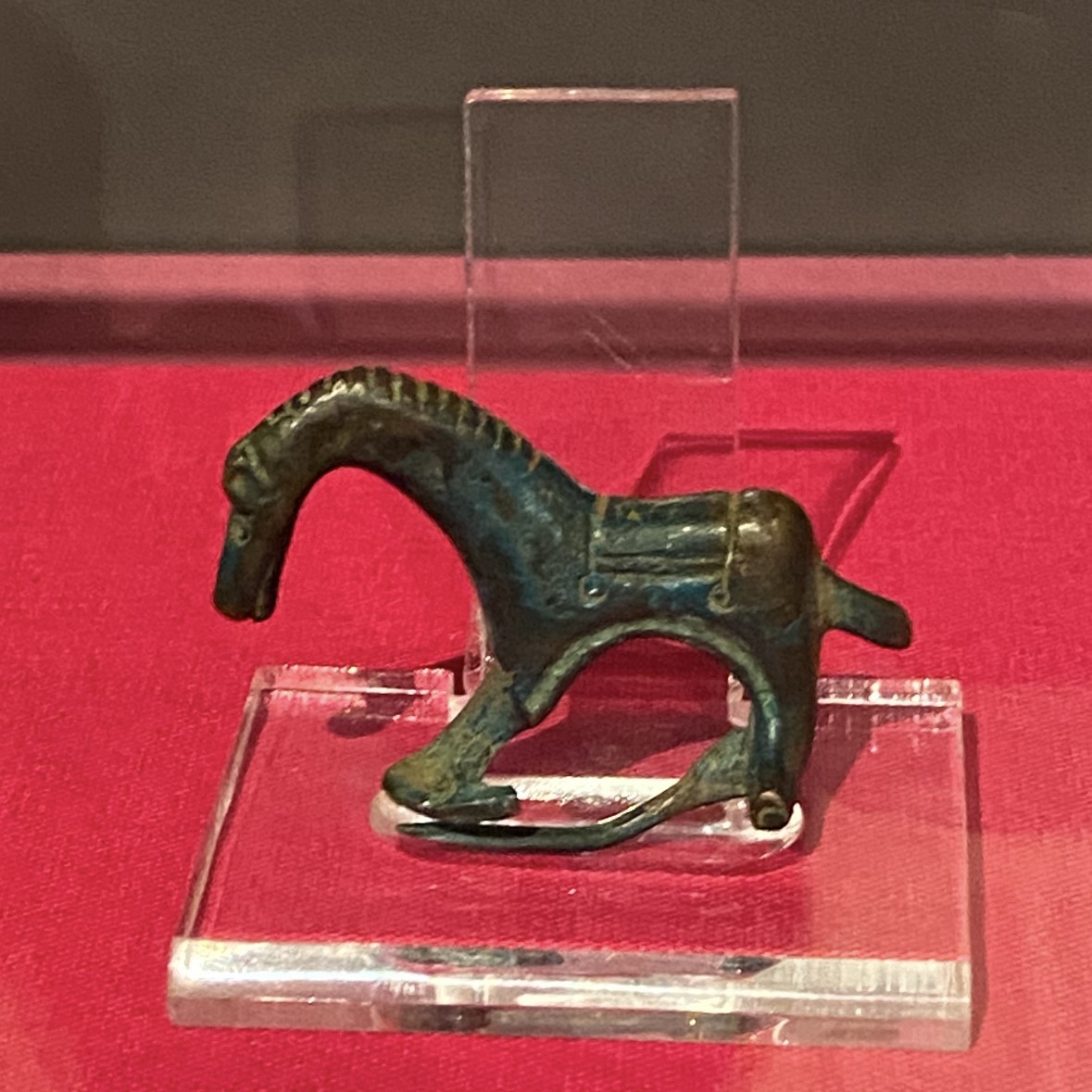 |
Lincolnshire Police stated the Leasingham horse-shaped brooch was purchased on eBay. Photo: Lincolnshire Police |
The copper alloy artifact measured 5 cm long and weighed 23,18 g. Lincolnshire County Council initially estimated its origin to be between 200-410, during Roman rule in England.
Price recounted: "The brooch was buried in mud, about 20 cm below the surface. Initially, I thought it was just a piece of trash, but cleaning it left me astonished."
Archaeological experts at the time deemed Price's find "exceptionally rare." They noted its realistic depiction of a horse with incredible detail. Despite its supposed 1,800-year age, the artifact appeared almost intact, with its pin still functional.
According to experts: "This type of brooch was likely used to fasten a cloak. It is very rare in England, only the second one ever found."
Price subsequently received 5,000 GBP for the brooch to be displayed at the museum. He then "discovered" several ancient Roman coins and was again compensated for these artifacts to join the museum's collection.
He also claimed to have found two Roman hoards, including a Bronze Age axe and small figurines.
These artifacts became some of the most discussed items in the museum's collection. However, staff grew suspicious of other items Price presented. They decided to re-examine the brooch, then notified Lincolnshire Police.
The ensuing investigation exposed the item as a fake. Price admitted to purchasing the brooch online for a few pounds each. These were modern replicas, coated with antique-effect paint to mimic age.
During the investigation, Price confessed to burying the items, hoping to trigger a full archaeological excavation in his hometown of Long Bennington.
Beyond his suspended sentence, Price was ordered to pay 3,250 GBP in compensation to Lincolnshire County Council and over 1,000 GBP in additional fines. He must also complete 10 days of rehabilitation and 150 hours of community service.
Will Mason, head of culture at Lincolnshire County Council, expressed disappointment: "It is incredibly sad and disappointing that anyone would choose to exploit Lincolnshire's rich heritage in this way. Fortunately, such incidents remain rare due to the rigorous vetting process for artifacts before they enter museum collections."
In England, metal detecting requires prior landowner permission. Significant historical artifacts, potentially classified as treasure, must be reported to a local liaison officer. Finders typically receive a reward based on the artifact's value.
Individuals have 14 days to report suspected treasure finds. Failure to do so within this timeframe constitutes an offense under the Treasure Act 1996.
Metal detectorists can also voluntarily report historically valuable non-treasure artifacts to the County Council for inclusion in the Portable Antiquities Scheme.
Hai Thu (Source: Telegraph, LinCS Police)


