Starting this summer, male civil servants working in Tokyo's administrative agencies are shedding their jackets and ties for a new work attire. This initiative addresses both the sweltering weather and rising electricity costs.
This policy builds upon the "Cool Biz" initiative, launched by Japan's Ministry of Environment in 2005, which aimed to reduce reliance on air conditioning. Initially, the regulation simply allowed employees to forgo ties and jackets. Now, with the looming risk of an energy shortage, the Tokyo government has further relaxed its dress code.
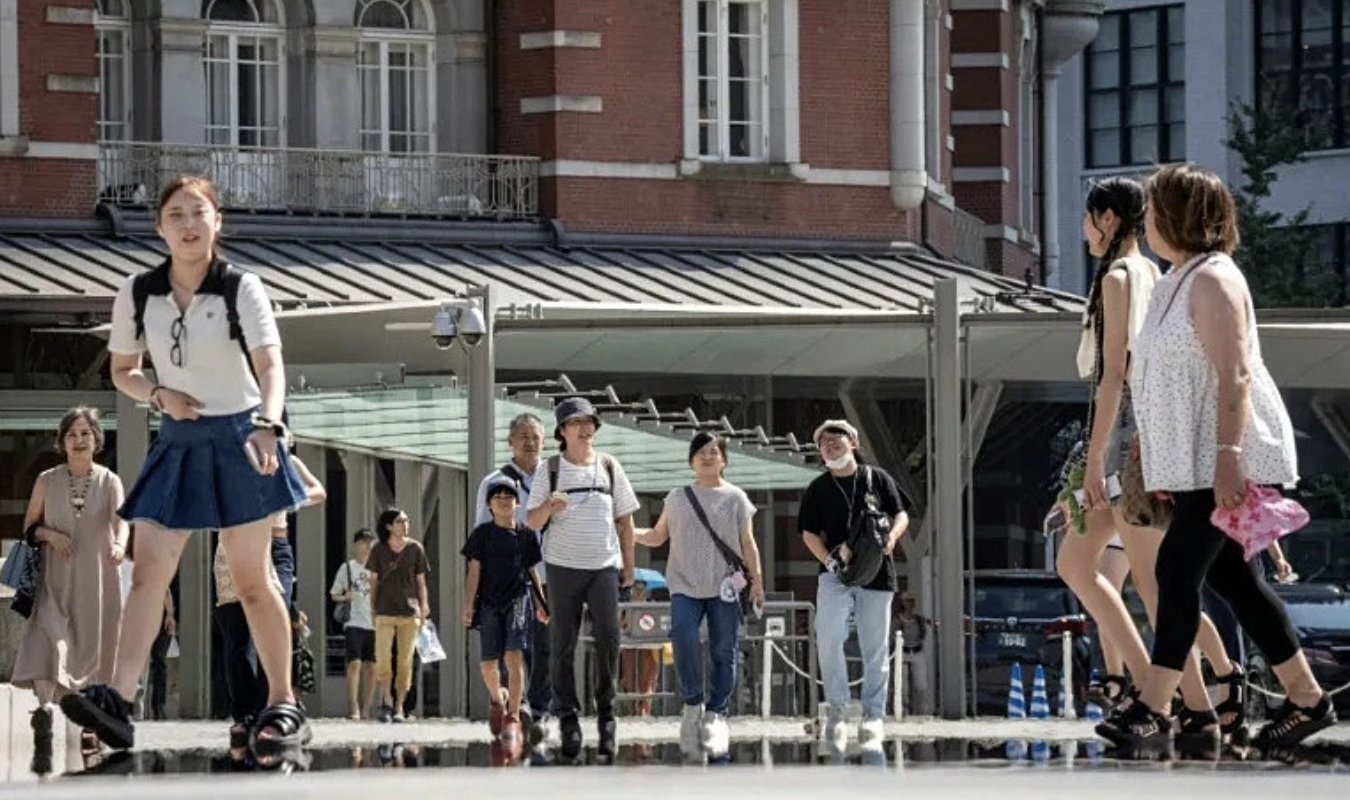 |
People walking past Tokyo station on a hot day in Tokyo in 2025. Photo: AFP
Tokyo Governor Yuriko Koike stated that the electricity supply faces difficulties. Therefore, she encourages employees to choose attire such as polo shirts, sneakers, and shorts, depending on individual job requirements. The government also advises staff to monitor temperatures, actively prevent heatstroke, and consider working early shifts or from home.
The new dress code has been welcomed by office workers. One civil servant noted that the new attire helps him work comfortably and improves performance. "When it's hotter, I want to come to the office earlier and combine it with working from home," he said.
The prolonged Middle East conflict has impacted Japan's economy. 90% of the nation's imported oil passes through the Hormuz Strait. Japan has utilized its strategic oil reserves and plans to release an additional 20 days' worth of oil starting in early May. Tokyo is also seeking alternative suppliers that do not require passage through the Hormuz Strait. Experts warn that if maritime transport does not normalize soon, businesses and households will have to drastically cut fuel and electricity consumption, reminiscent of the 1970s oil crisis.
This relaxation of dress codes comes as Japan has experienced record high summer temperatures since 1898. Temperatures above 40 degrees C occur frequently, prompting meteorological agencies to use the term "kokusho" to issue warnings about the weather conditions.
Minh Phuong (According to Guardian, Straitstimes)