Inside, photographers moved around with reflectors placed near the walkways. Many people were changing outfits or touching up their makeup. Delima waited 30 minutes for a seat. "I was about to leave because I thought this was an event for KOLs promoting a brand," the Malaysian tourist said.
She found the cafe through a social media recommendation and waited 30 minutes for a table. Delima expressed surprise when staff explained these were just customers coming to check in. In Malaysia, cafes are spaces for working or conversing. Hiring personal makeup artists and photographers is typically reserved for weddings or major events.
Aleksandra Sorokina, 24 years old, a Russian teacher, has grown accustomed to young people queueing for photos, from streets to cafes and small alleys, after one year in Hanoi. "I once thought those places held special historical significance, but it turns out they didn't," she said.
In Aleksandra's home country, she does not encounter such scenes because people prioritize privacy. Taking photos for too long in public is considered impolite. Despite this, she views it as a cultural trait, noting that Vietnamese people display confidence and creativity by transforming every street corner into an artistic backdrop.
Recently, the "check-in culture" of Vietnamese youth has become a popular topic across many social media platforms. Videos showcasing foreign perspectives have garnered thousands of interactions. "I asked many people and was told this habit stems from a desire to preserve memories," Delima said. Other opinions suggest the rise of freelance jobs like content creation and service reviewing, along with the "fear of missing out" (FOMO) on trending locations, have fueled this phenomenon.
"But primarily, it's about building an image on social media. They invest to have beautiful photos to post online," Aleksandra said, citing We Are Social's Digital 2024 report, which indicates Vietnam has over 72 million social media users, leading to a boom in demand for enhancing digital image.
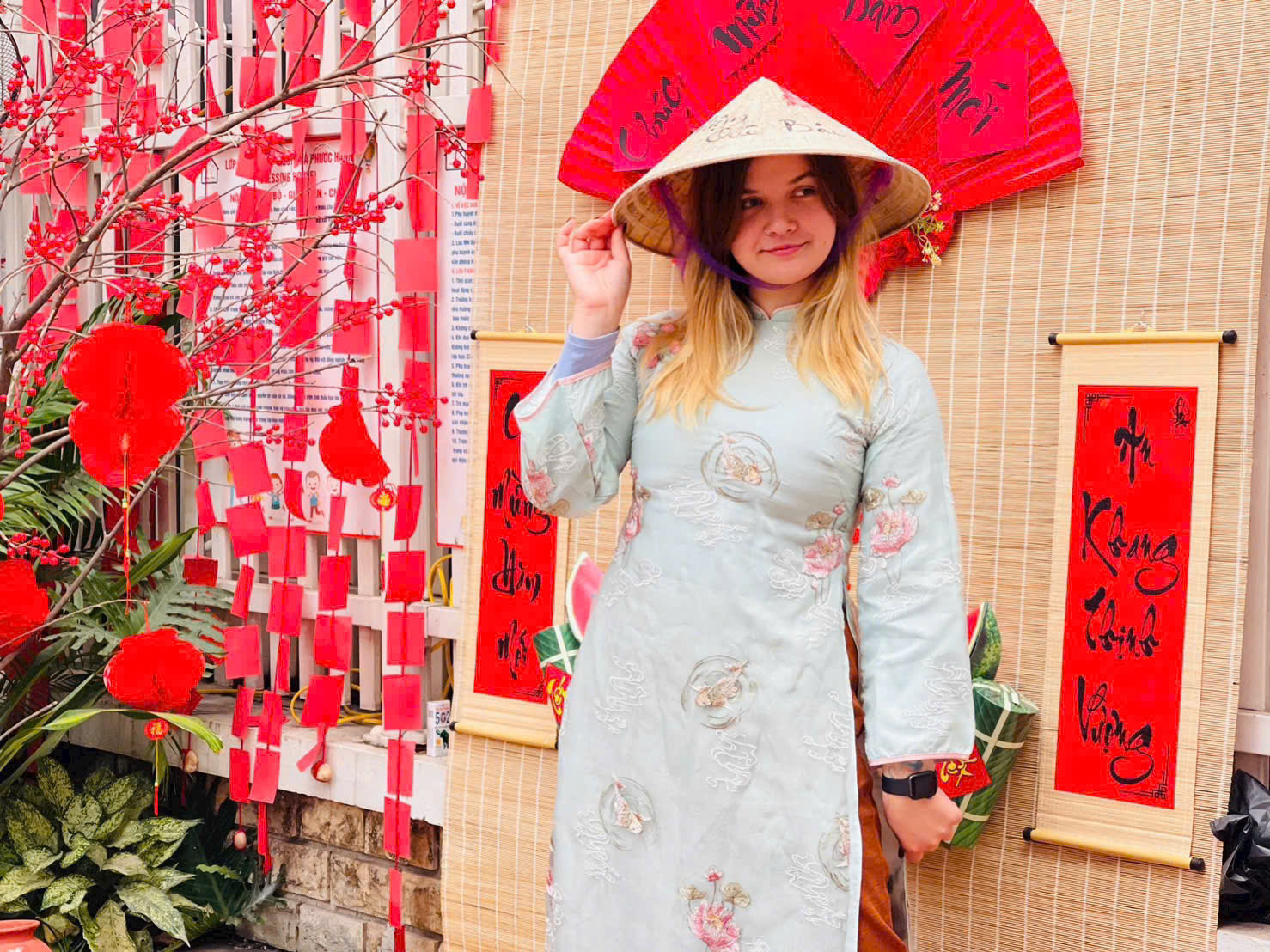 |
Aleksandra Sorokina, 24, from Russia, participates in an ao dai photoshoot in Hanoi, 2025. Photo: Provided by subject |
For those who enjoy checking in, cafes are "ideal studios." "Instead of spending 250,000 - 500,000 VND per hour to rent a professional studio, I choose cafes with beautiful spaces and natural light," said Le Thuy, 27 years old, a photo model in Hanoi.
One inconvenience of taking photos at cafes is the lack of space for props. Thuy noted that she often brings many items but is conscious about keeping them tidy and seeking permission from the cafe. She is willing to pay fees at places that charge for photography.
However, she admitted that photographers make it difficult to find a quiet space to meet friends. "Now, if I want peace, I can only go to cafes specifically for working," she said.
Hoang Hai Anh, 21 years old, from TP HCM, shared that appearing presentable for public photos boosts confidence. She spends hours waiting at "hot" spots. "Taking photos at places attracting the community helps me feel I'm keeping up with society. The wait for a good photo is also an experience," Hai Anh said.
This trend has prompted many businesses to change their policies. In Hanoi and TP HCM, dozens of cafes display "No professional cameras" signs or announce photography fees ranging from 300,000 to 600,000 VND per hour.
Nguyen Thu Huong, 43 years old, owner of a cafe in Hoan Kiem ward, said she frequently encounters groups of customers bringing suitcases of clothes, occupying restrooms for 30 minutes, or even an hour, to change.
"To protect customers who need quiet, we have to limit equipment. Customers who spend too long doing makeup at their tables are also charged 150,000 VND per hour. Photo teams are only allowed to stay for one to two hours," Huong said.
Some cafe owners, however, view this as an opportunity for free promotion. Duy Nam, 32 years old, owner of a cafe in TP HCM, said investing in seasonal decorations helps his cafe attract a large number of young customers. "Many customers coming to take photos helps the cafe become more widely known," he said.
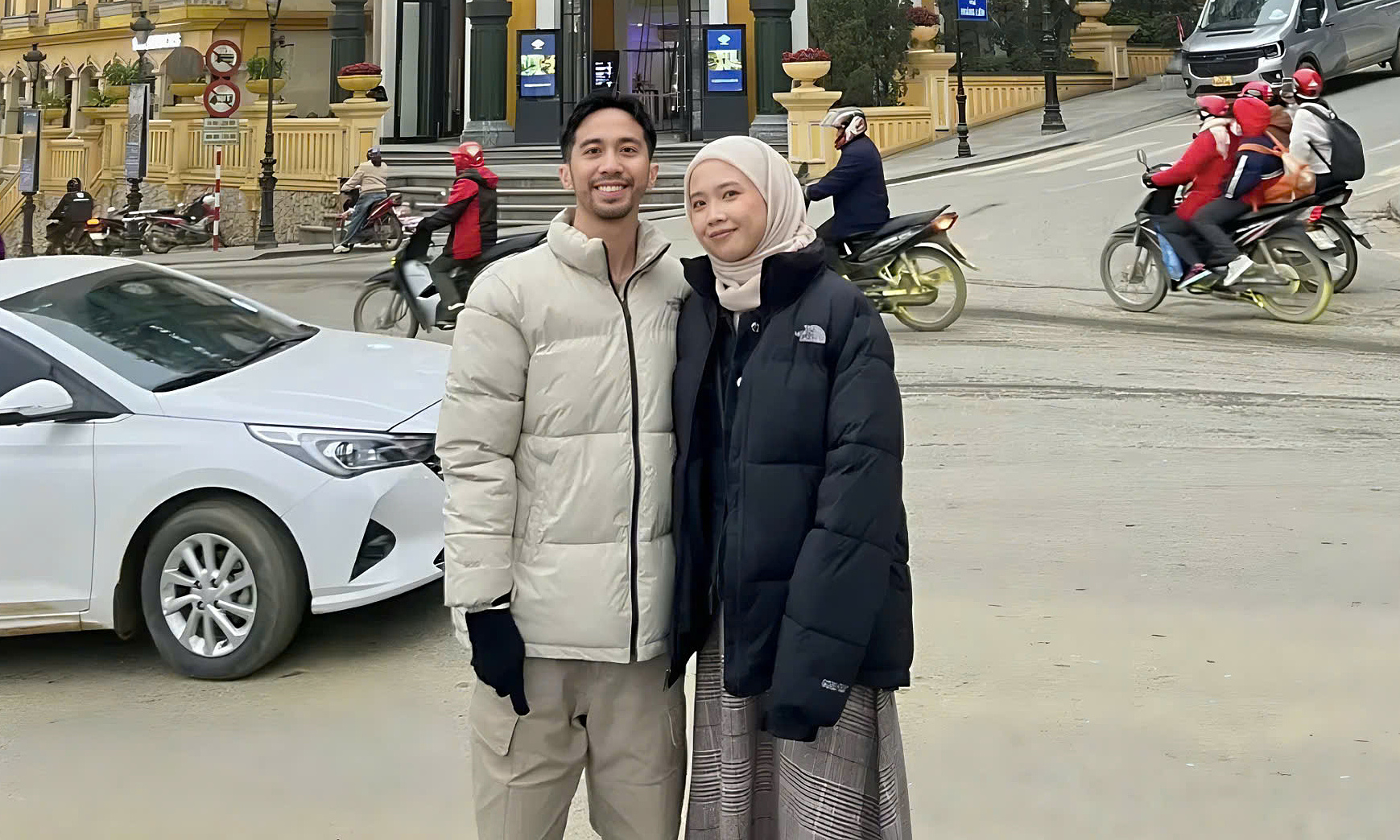 |
Nur Delima (right), 30, from Malaysia, and her husband during their trip to Vietnam, 2026. Photo: Provided by subject |
Associate Professor Doctor Pham Ngoc Trung, former Head of the Department of Culture and Development (Academy of Journalism and Communication), stated that the "check-in culture" of Vietnamese youth reflects a desire to assert personal value as the quality of life improves. This trend serves as an effective promotional channel for destinations, aiding the development of the service economy.
"However, Westerners prioritize privacy and personal space. Occupying shared spaces for too long to take photos can easily create an impression of a lack of subtlety," Trung noted. The expert suggested that young people should establish civilized codes of conduct: practicing conscious photography in shared spaces and avoiding bothering others.
Monica Niebrit, 26 years old, from the US, said this trend has helped her discover more destinations in Hanoi and TP HCM. The tourist once hired a photography service to experience it like a local and was surprised when makeup happened right at the cafe table. "Everyone likes to have good photos, but in the West, people are often hesitant because it's not a common practice around them," Monica said.
Aleksandra, the Russian woman, said she has been "Vietnamized," now also wearing ao dai for photos with colleagues on every holiday. "Now I see this as a positive activity, as long as it doesn't bother anyone. Taking photos to post on social media is also how they share their lives," the Russian teacher said.
Nga Thanh