During the recent 11/11 shopping festival, many e-commerce store owners in China reported receiving unusual refund requests. These requests were accompanied by images of severely damaged products, which were in fact created by artificial intelligence (AI).
An online clothing store owner shared an experience where a customer demanded a full refund, claiming a dress was severely torn at the collar. However, upon inspecting the evidence photo, the owner noticed the lighting around the collar did not match the rest of the dress. The garment's outlines also showed anomalies characteristic of AI-generated images.
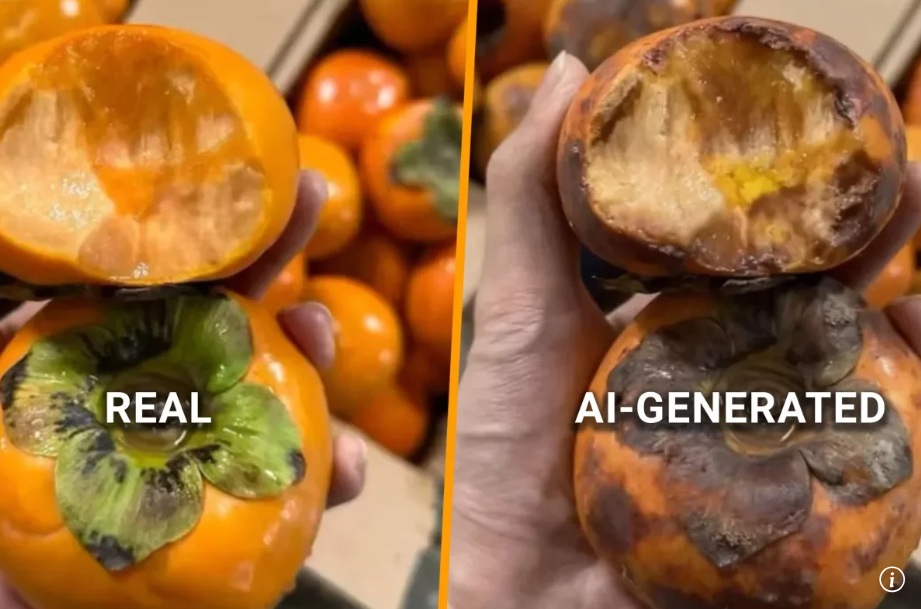 |
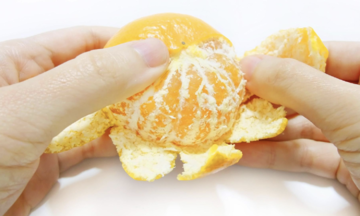
Real image of a persimmon and an AI-generated image. *SCMP* |
In another instance, a seller of electric toothbrushes received a complaint with a photo of a rusted toothbrush. "They present flaws that defy common sense", the seller commented, noting a new product would hardly rust. Similarly, a ceramic mug seller received a photo of a mug cracked in a spiderweb pattern. Suspicious due to the careful packaging, he asked the customer for a video of the product. The buyer immediately withdrew the refund request. The mug seller later used AI detection software, which indicated a 92% probability that the image was artificially generated.
In China, those who exploit such loopholes are known as "wool shearers"—a term for fraudsters. They typically target low-priced products, reporting defects to receive refunds without returning the items, a practice known as "refund only". Policies on many e-commerce platforms often favor buyers, accepting refunds even for unconvincing reasons.
Beyond buyers, sellers are also misusing AI to cut costs. Some stores use AI to create models, backgrounds, and even fake product images to attract customers.
In response to this situation, major e-commerce platforms like Taobao and Tmall began canceling the "refund only" option in April. A new credit evaluation system was implemented, based on purchase history, refund records, and seller feedback, to filter customers. From 1/9, China started enforcing regulations requiring all AI-generated content to be clearly labeled. However, the platforms' detection tools do not yet guarantee absolute accuracy.
Lawyer Liu Dongchen of Shaanxi Zhongzhi Law Firm warned that using AI images for fraudulent gain could constitute fraud. On social media forums, many suggest platforms take stronger action, permanently banning fraudulent accounts and requiring video evidence for product damage claims.
By Nhat Minh (According to Jiemian News/SCMP)