On the morning of 6/3, Chi Hoa, 40, from Hanoi, paused just outside his home, unsure what gift to buy for his wife for International Women's Day, especially with the lingering memory of last year's "unwanted" bag.
At the office, the desks of his female colleagues were empty as everyone was off for half a day to take ao dai photos. As soon as he turned on his computer, his screen was flooded with messages from the men's group, urging him to contribute to the party fund.
Hoa sighed. Tet, Valentine's Day, then March 8th — these holidays in quick succession always made him calculate gift expenses. What confused him was the growing list of people to consider: his mother, wife, daughter, sisters, female colleagues, and even his children's teachers. "I only want to focus my attention on my wife and daughter, but it feels like an invisible pressure forces me to fulfill my role for everyone," he said.
Chi Hoa's sentiment is common among Vietnamese men. Few countries maintain two large-scale days to honor women like Vietnam (March 8th and October 20th). Stephen Turban, an American businessman who has lived in Vietnam for six years, noted that in the West, International Women's Day is often more about advocating for rights. "I was quite surprised to see this day celebrated and gifts given so lavishly here," he shared.
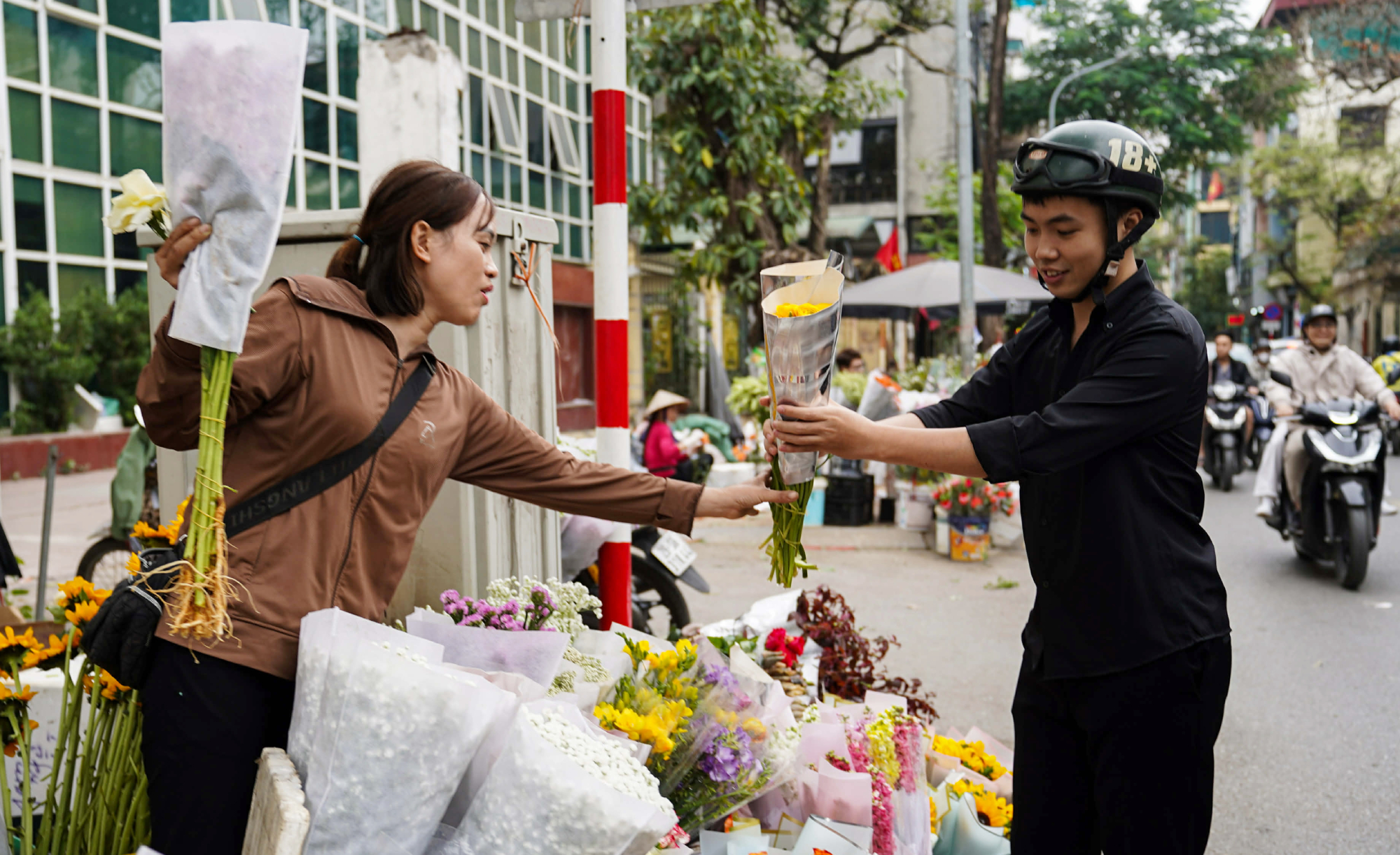 |
A young man buys flowers on Nguyen Trai flower street, Hanoi on the afternoon of 7/3. Photo: Hoang Giang |
Pressure from the market's 'redefinition'
March 8th originated from the movement to fight for women's equal rights and improved working conditions. However, the booming market economy in Vietnam has subtly redefined this concept.
"The right to equality is gradually being replaced by the right to receive gifts," observed Ngo Hoang Ngoc Hiep, a political communication and gender research expert (Chevening Scholar, UK).
According to the expert, elaborate gift-giving is sometimes a manifestation of "conspicuous consumption" – using material possessions to feign respect for women, thereby inadvertently glossing over real issues women face, such as violence or income disparity.
"This distortion both hinders the progress of women and places an additional financial burden on men," Hiep explained.
From a psychological perspective, Vu Trung Kien, founder of Kien Parenting system in Hanoi, believes that pressure comes not only from market encouragement but also from unconscious psychological scripts. Many women desire gifts to feel "connected," while men strive to give gifts to prove their "worth."
However, these expectations are rarely fully met. When a wife does not receive a desired gift, she easily falls into a "victim" mindset, while the husband suddenly becomes at fault if the gift is not to her liking. Unintended remarks can crush the desire for recognition, causing men to become self-pitying, blameful, or "freeze" gift-giving in subsequent years.
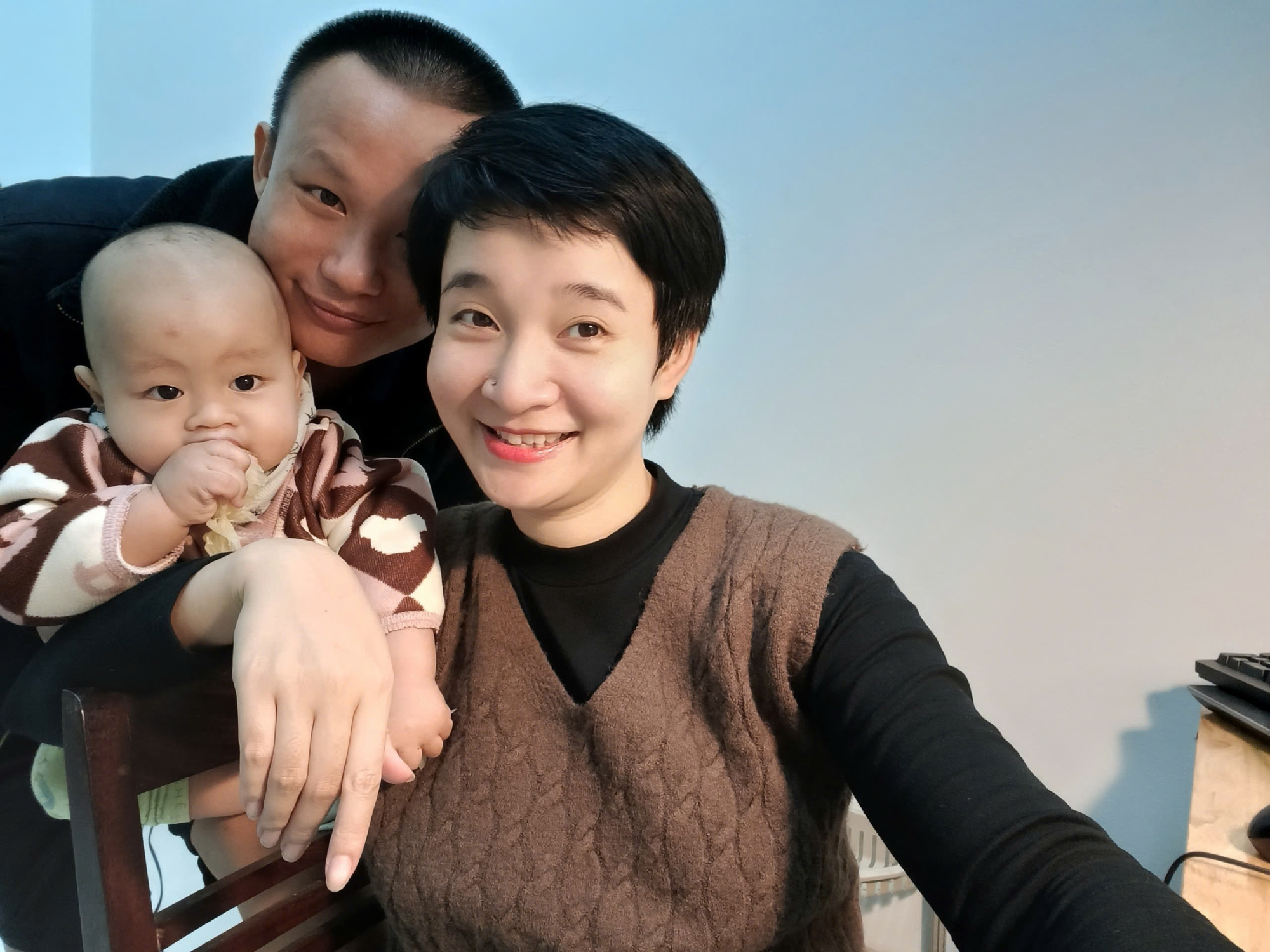 |
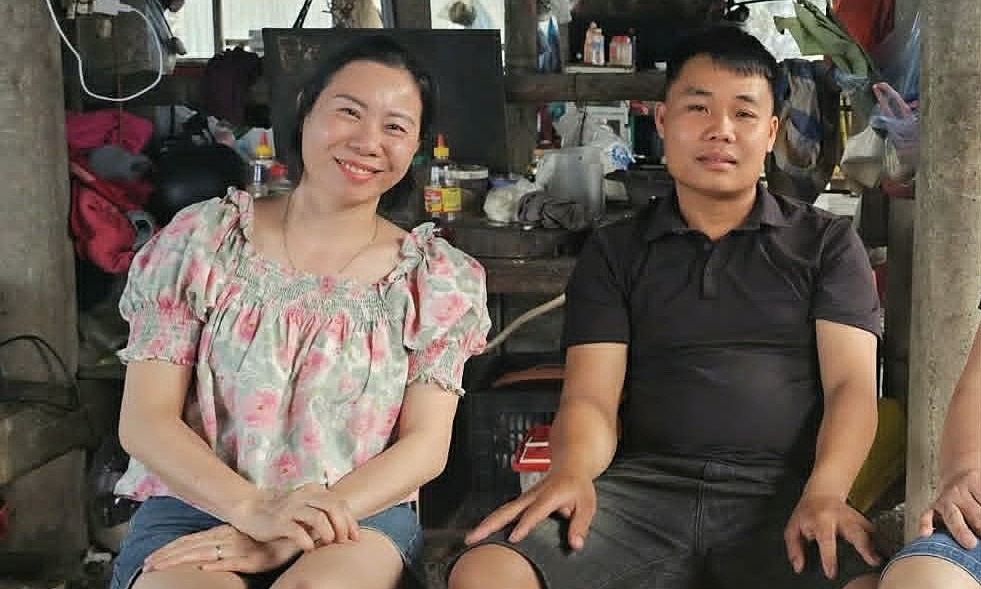
Kien and his wife at their home in Hanoi, 1/2026. Photo: Provided by interviewee |
Equality is not found in a bouquet
This is also the sentiment of Quang The, a 32-year-old engineer in Cau Giay district, Hanoi. "Many times I prepared carefully, but my wife still wasn't pleased and would get upset. It was too tiring, so for the past two years, I've stopped giving anything," The said.
Aware of these invisible pressures, many modern women are now "declaring war" on superficial consumerism by refusing symbolic gifts.
Tran Ai Le, 38, a communications professional in Hanoi, no longer demands symbolic gifts from her husband. "For some men, giving gifts is just the cheapest way to buy peace of mind, allowing them to maintain control of the family without having to share household chores for the remaining 364 days," Le shared.
However, from a woman's perspective, receiving gifts undeniably brings legitimate joy. For Hang Nga, 47, from Ninh Binh, holidays are rare occasions when wives and mothers see life as "rosier." After more than 20 years of marriage, she has a jewelry collection gifted by her husband on these occasions. "There are only a few days a year for a husband to show affection; when the wife is happy, the family is also more harmonious," Nga said.
Discussing March 8th gifts, Professor Doctor Ngo Thi Phuong Lan, Rector of the University of Social Sciences and Humanities (Vietnam National University, TP HCM), believes this holiday creates a "language of recognition," an opportunity for society to acknowledge the role of women.
According to the expert, the aspiration for gender equality does not diminish romance; rather, it elevates gestures of care into genuine respect. The method of expression needs to change so that materialism does not overshadow true nature. Appreciation, empathy, and sharing daily tasks are the most valuable gifts.
The way to escape this pressure is sometimes simply to look within each relationship. Expert Vu Trung Kien shared that since he and his wife began studying psychology and reflecting on themselves, holiday disagreements have disappeared. A few days ago, seeing the bustling streets selling flowers, his wife jokingly asked, "Where's mom's gift?" He smiled, pointing to his left chest: "Here!" When his wife demanded "accessories," he carried their young son into her arms. The whole family burst into laughter.
"When we recognize our self-worth and feel abundant in love, we stop placing the burden of 'proving' ourselves on gifts. As writer Nguyen Ngoc Tu once said, confident women beautify themselves for themselves. Living that way means not waiting for gifts," Kien concluded.
Phan Duong