In the fashion industry, this detail is known as a "Jacron label" or "leather patch." Its origin stems from the 19th-century battle among jeans brands to assert quality.
In 1873, Levi Strauss & Co. and Jacob Davis patented jeans with rivets. When the patent expired in 1890, competitors began copying the design. To protect their brand and affirm quality, in 1886, Levi's pioneered adding a leather label featuring the "Two Horse" image to the back waistband.
The image of two horses attempting to tear the jeans apart conveyed a visual message to customers of that era—mostly miners and immigrants who did not speak English—about the product's "indestructible" durability.
Soon after, competitors introduced similar strategies. Sweet-Orr, founded in 1871, used an image of a tug-of-war competition. Lee, meanwhile, won over cowboys with a genuine cowhide patch branded with an iron-stamped logo.
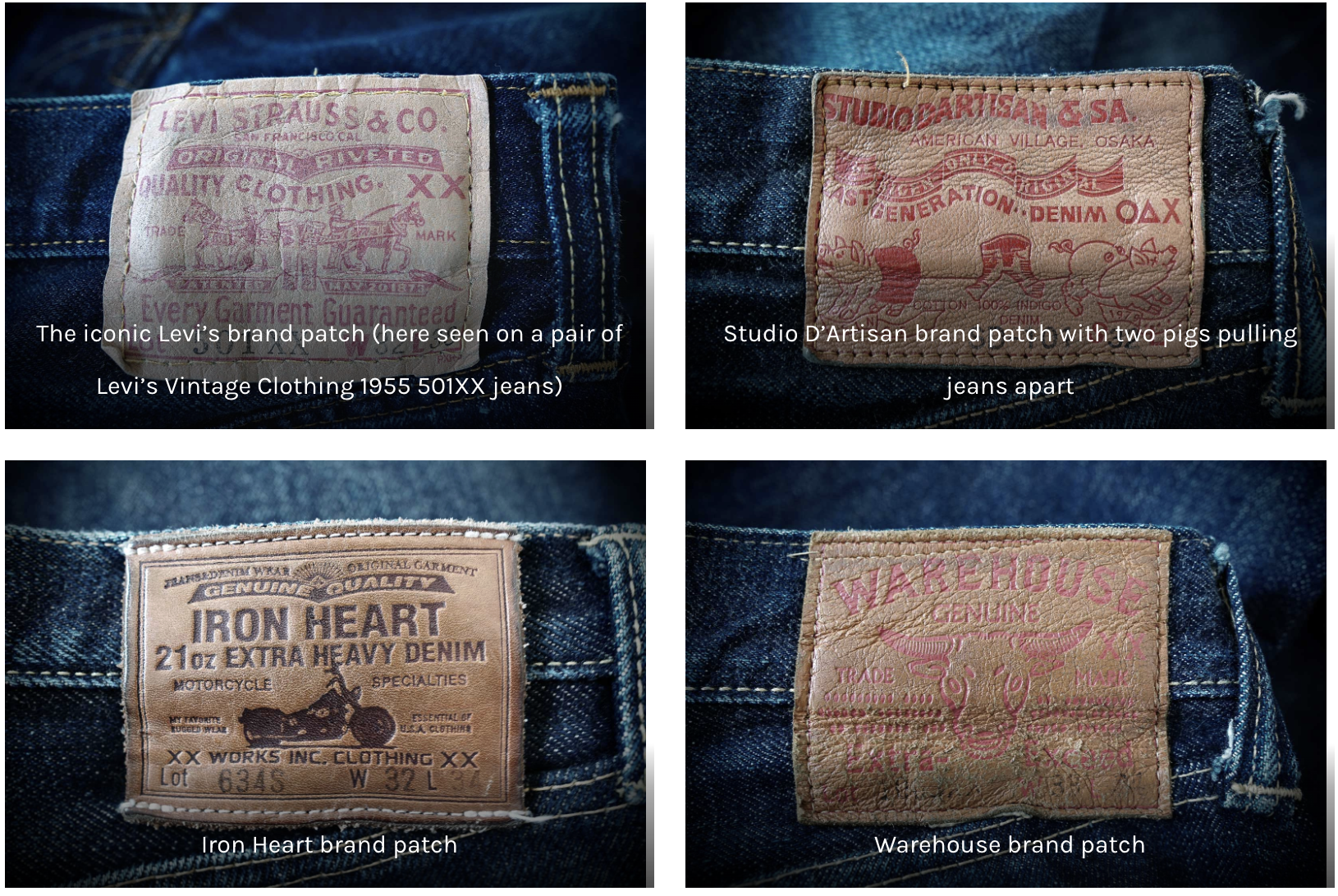 |
A selection of back patches from famous jeans brands. Photo: Denimhunters |
Today, this patch acts as a manufacturer's business card, enabling discerning consumers to quickly identify product quality.
Premium jeans often feature labels made from genuine leather or Jacron, a special high-strength compressed paper resistant to washing. A quality patch feels soft and elastic to the touch, with crisp, refined heat-stamped letters and logos. If made of real leather, the patch will develop a beautiful patina over time.
In contrast, lower-quality jeans typically use stiff plastic, thin compressed paper, or cheap faux leather labels. These are often rigid, feature faded printed designs, and tend to peel, crack, or break after just a few washes.
Beyond brand identification, this patch also serves as a location for manufacturers to print important garment specifications, such as the lot number and size (W/L). Printing this information on leather or Jacron ensures greater durability compared to standard ink-printed fabric labels inside the garment. This allows users to easily find and repurchase their preferred size and style for years to come.
Occasionally, a new jeans label might feel stiff, causing discomfort to the wearer's back. Instead of cutting it off and diminishing the garment's value, you can soften it using two simple methods:
Apply heat: Use a hairdryer on a medium setting, gently warming the patch for a few minutes. Once the leather is warm, carefully bend and manipulate it by hand to break down its rigid structure.
Use conditioner: For genuine leather patches, apply a small amount of specialized leather conditioner (or moisturizer, coconut oil) to the surface with a cotton swab. This method helps the patch become softer and develop a more attractive sheen.
Bao Nhien (According to Aboluowang/Denimhunters)