A piece of meat, when boiled, has a light flavor, but when grilled or pan-fried, it develops an appealing aroma and color. According to chef Vu Nhat Thong of Eric Vu cooking class, this difference stems from the Maillard reaction.
In 1912, French physician Louis-Camille Maillard discovered this mechanism while heating a mixture of amino acids and sugars during his protein research. The mixture turned brown and emitted an aroma. Science later proved this to be the origin of flavors in roasted, fried, and grilled dishes, such as grilled meat.
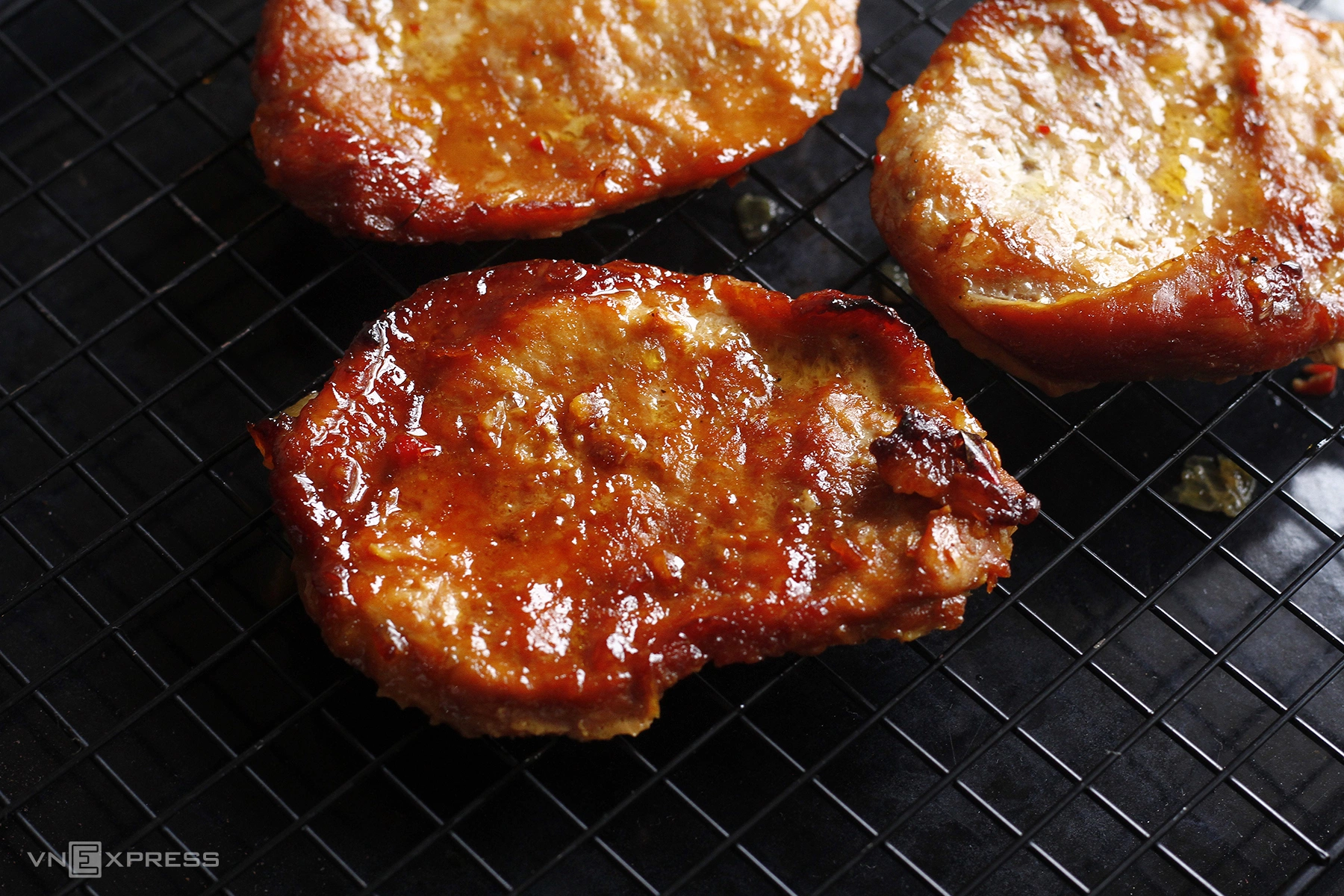 |
Tender, juicy grilled pork chop for Saigon broken rice. *Photo: Bui Thuy*
Foods containing protein always have amino acids and a small amount of natural sugars. At high temperatures, these two components react, undergoing a series of transformations to create hundreds of new compounds that impart a brown color and distinct flavors. Depending on the structure of the amino acids and sugars, the Maillard reaction yields different taste profiles.
Beyond grilled meat, the Maillard reaction is also responsible for the crispy crust of bread, grilled pork patties in bun cha, roasted chicken skin, the scorched rice at the bottom of a pot, grilled rice paper, and the aroma of roasted coffee or sauteed onions and garlic. This reaction creates hundreds of compounds, including notes of roasted nuts, butter, caramel, and a subtle smokiness. This chemical similarity also explains why the combination of a grilled meat sandwich and coffee often creates a harmonious flavor.
Mechanistically, the Maillard reaction only begins when the temperature reaches 140 degrees C. When boiling, the maximum water temperature is 100 degrees C, which is insufficient to activate the reaction; thus, the meat does not change color and retains its original flavor. Conversely, when grilling or pan-frying, the surface exposed to the heat source typically reaches 160-200 degrees C, allowing the reaction to proceed vigorously and create a crispy brown crust.
Based on this principle, chef Vu Nhat Thong advises that the most important step when pan-frying meat is to thoroughly dry its surface. If the meat remains wet, heat energy will be expended evaporating the water, causing the surface temperature to stay at 100 degrees C and inhibiting the reaction. A common technique involves drying the meat and then salting it about 40 minutes beforehand. Salt draws moisture out and carries savory flavor back in, resulting in a drier meat surface and accelerating the browning process.
Bao Nhien