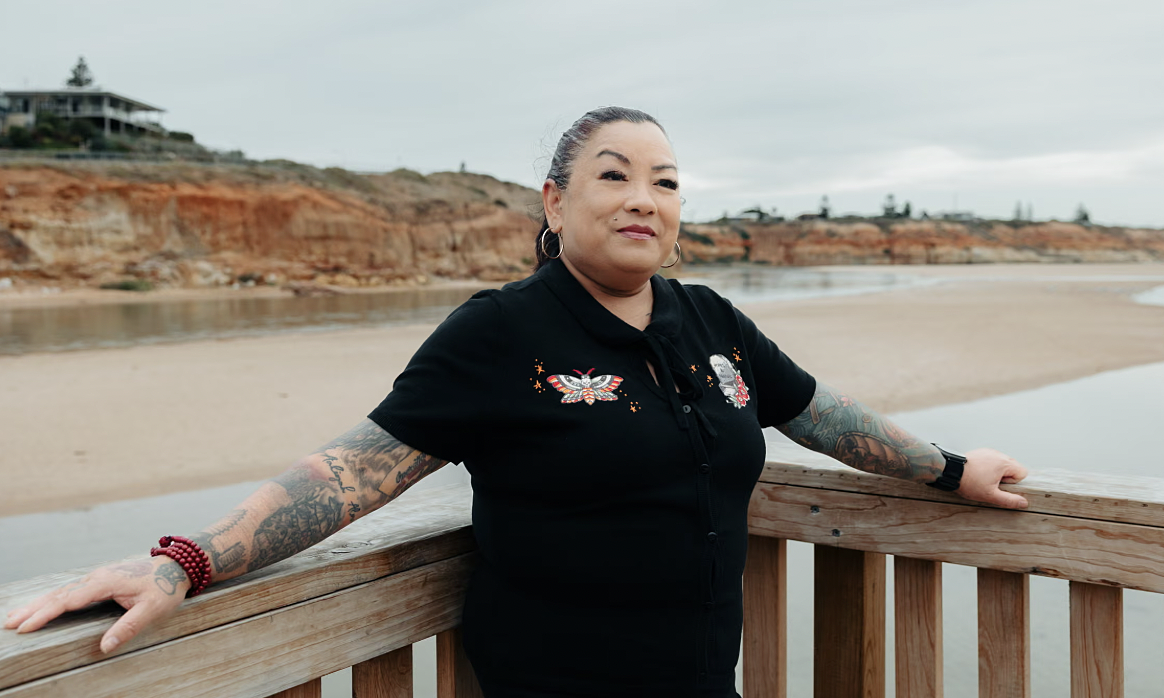
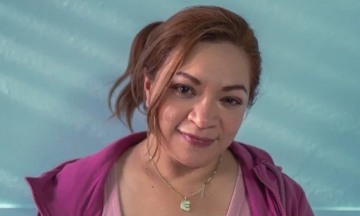
Jasmine Lim, 29, and Leslie Lee, 31, married in late 2023 but still live at their parents' homes. Due to high rental costs, they held their wedding first and decided against moving out.
Lim stated that their lives have not changed. Aside from being legally married, their daily routines remain the same as when they were dating.
Singaporeans typically begin their marriage journey by applying for a subsidized apartment, known as a build-to-order (BTO) flat, managed by the Housing Development Board. After waiting three to four years for completion, they usually hold their wedding and move in together. However, an increasing number of couples are choosing to marry first and live separately. This approach is seen as a way to secure their marital status early and avoid potential increases in wedding service costs.
 |
Jasmine Lim, 29, and her husband Leslie Lee, 31, in Singapore. Photo: CNA
Kelvin Siew, 32, and his fiancee Denise Yeo, 30, are set to marry this october. After their wedding, they plan to alternate living between their parents' homes while awaiting the completion of their apartment in the Bedok area by late 2027. Siew resides in eastern Singapore, while Yeo lives in the central region, making commuting quite time-consuming. "We separated the payment for the wedding and home renovations to reduce financial pressure. Dividing our time between both sets of parents is also a way to show respect," Siew explained.
The absence of a shared living space forces young couples to adapt to daily inconveniences and travel. Jason Chua, 34, for instance, spent three years commuting from Loyang in the east to Bukit Batok in the west to meet his wife once a week.
The couple was allocated an apartment in 2017 and married in 2019. However, the Covid-19 pandemic delayed their home handover from late 2021 to mid-2022. To save costs, they did not rent a place and held a small wedding at home. "We accepted the inconvenience to avoid additional expenses. The distance made us appreciate each other more," Chua recounted.
 |
Kelvin Siew, 32, and his fiancee Denise Yeo, 30. Photo: CNA
Professor Sumit Agarwal, chairman of the Asia Bureau of Economic and Financial Research at the National University of Singapore, noted that living separately after marriage is a way to cope with economic pressures. For Singaporeans today, getting married does not immediately mean starting a family life. This period often serves as a waiting phase to receive a BTO apartment, stabilize finances, and accumulate enough resources to live independently.
He argued that not being able to live together does not necessarily mean a weaker bond between spouses. However, if the waiting time for a home is prolonged, plans for marriage, childbirth, and family building could also be delayed.
In fact, Singapore's total fertility rate decreased from 0,97 children per woman in 2024 to 0,87 in 2025, marking an all-time low. According to the Singapore Department of Statistics, private housing prices in the country often exceed one million USD, while BTO flats range from 300,000 to 500,000 USD. This disparity makes young people entirely dependent on the supply of public housing, despite the multi-year wait.
Theresa Pong, director of Relationship Matters Counseling Center, stated that financial issues, housing, and future plans often create pressure as couples begin making major decisions together.
However, Kelvin Siew believes this does not change the meaning of marriage. He asserted that marriage is not solely about owning a home. What matters is building a life together, becoming a family, and making joint decisions.
Jason Chua, for his part, expressed no regrets about his choice. "The distance made us appreciate each other even more," Chua said.
Ngoc Ngan (According to CNA)