 |
Ngo Van Nam, who cultivates two sao of millet, stated that this year's heat and low rainfall reduced yields compared to last year, reaching about 1.5 quintals per sao. Compared to traditional crops like corn and peanuts, millet offers double the economic efficiency. |
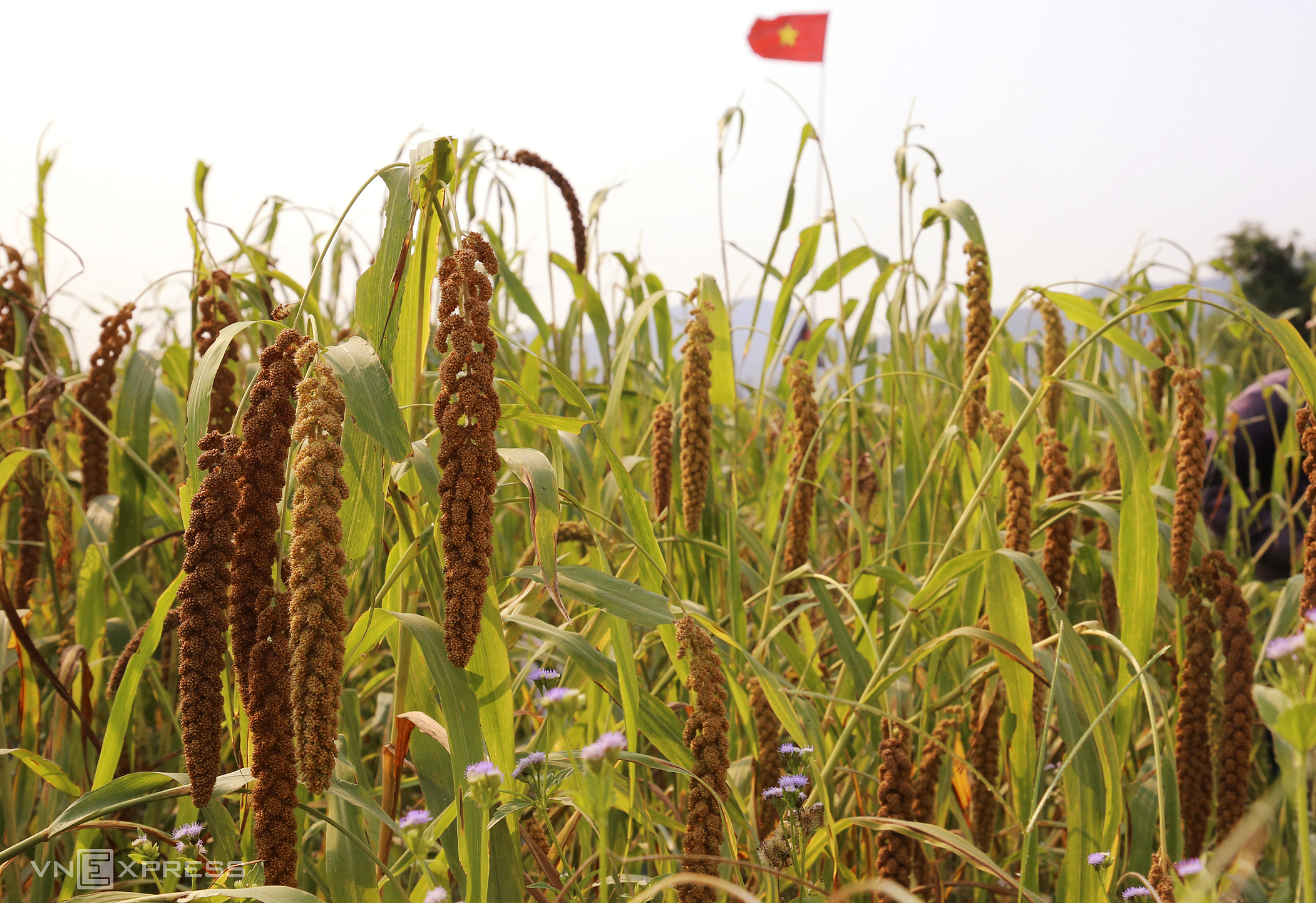
In mid-April, many millet fields, intercropped with corn and peanuts along the Son River, entered their harvest season. These fields are located about 5 km from the center of Phong Nha - Ke Bang. Millet plants in these fields have turned a golden color, their stalks shorter than those of corn.
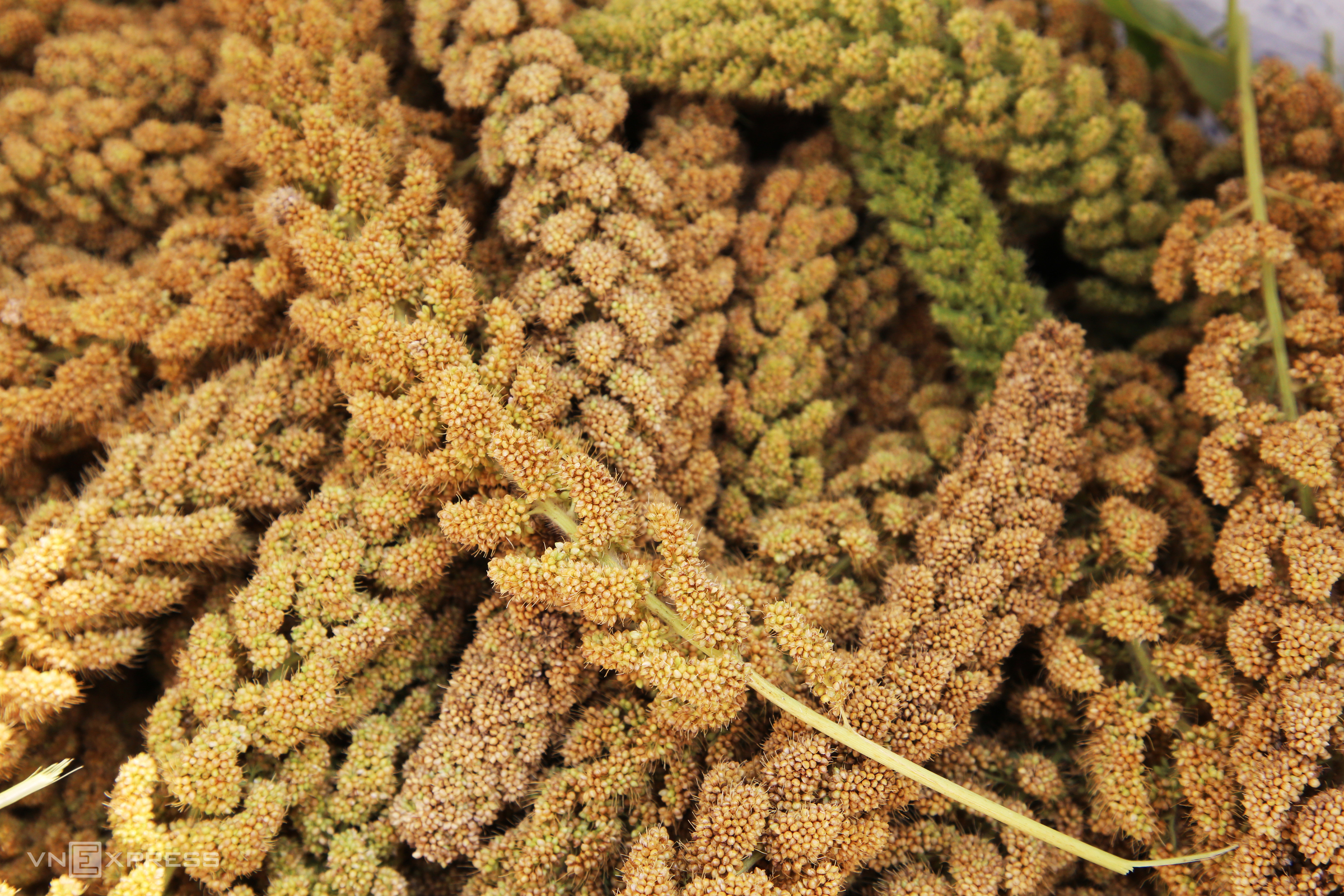
Golden millet, also known as foxtail millet (scientific name Setaria italica), is an ancient, nutrient-rich grain. After approximately three months of cultivation, the millet ripens. The plants grow almost as tall as a person, with heavy, seed-laden heads that curve downward like a fox's tail.
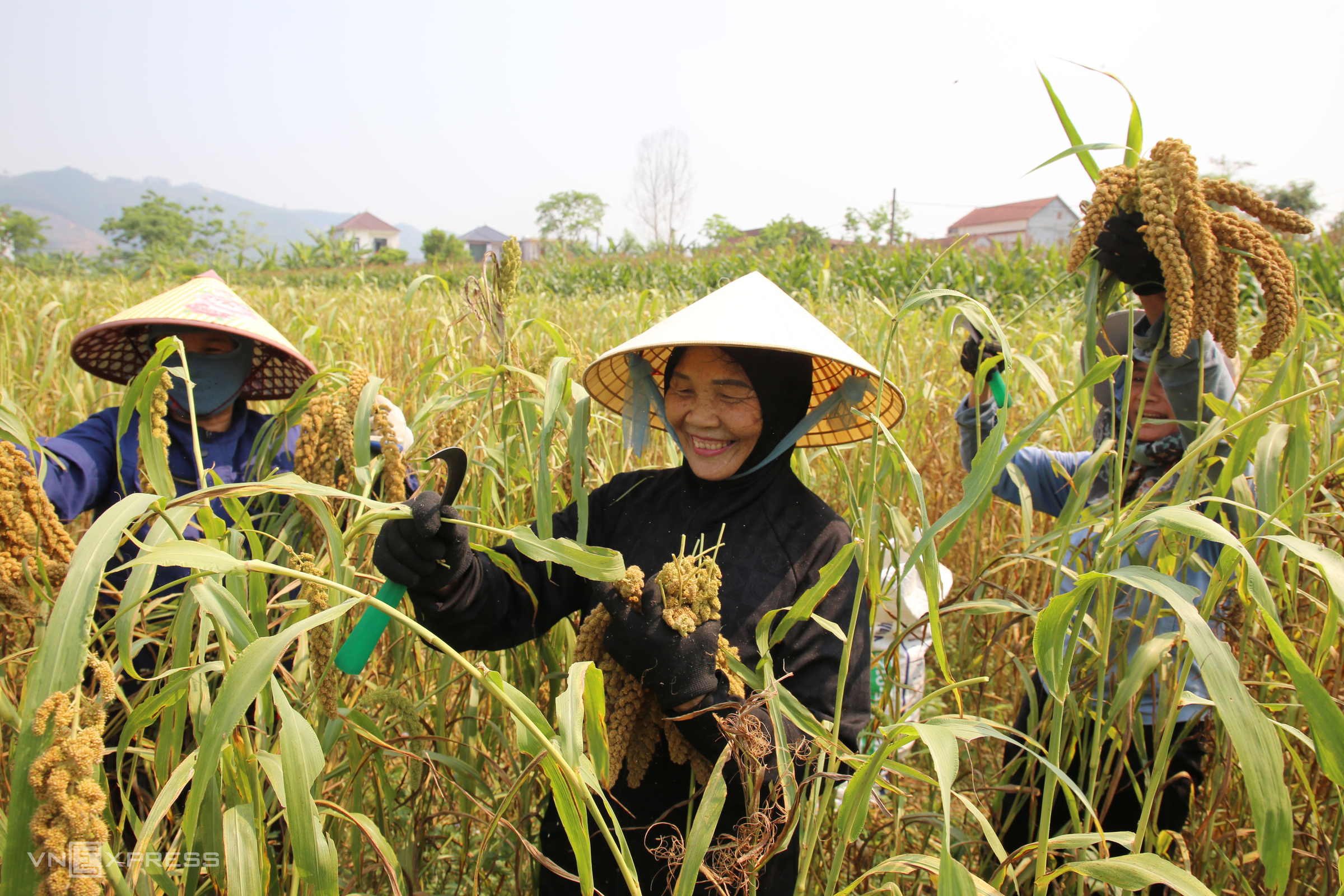 |
Daily, a laborer harvesting millet can earn about VND 300,000. Nguyen Thi Minh, a farmhand, noted, "Cutting millet heads is more strenuous than harvesting rice because you have to stand and cut each head. However, the additional income motivates everyone to work."
To protect themselves from the sun, farmers wear conical hats, caps, and scarves while working for many hours, often with their clothes soaked in sweat.
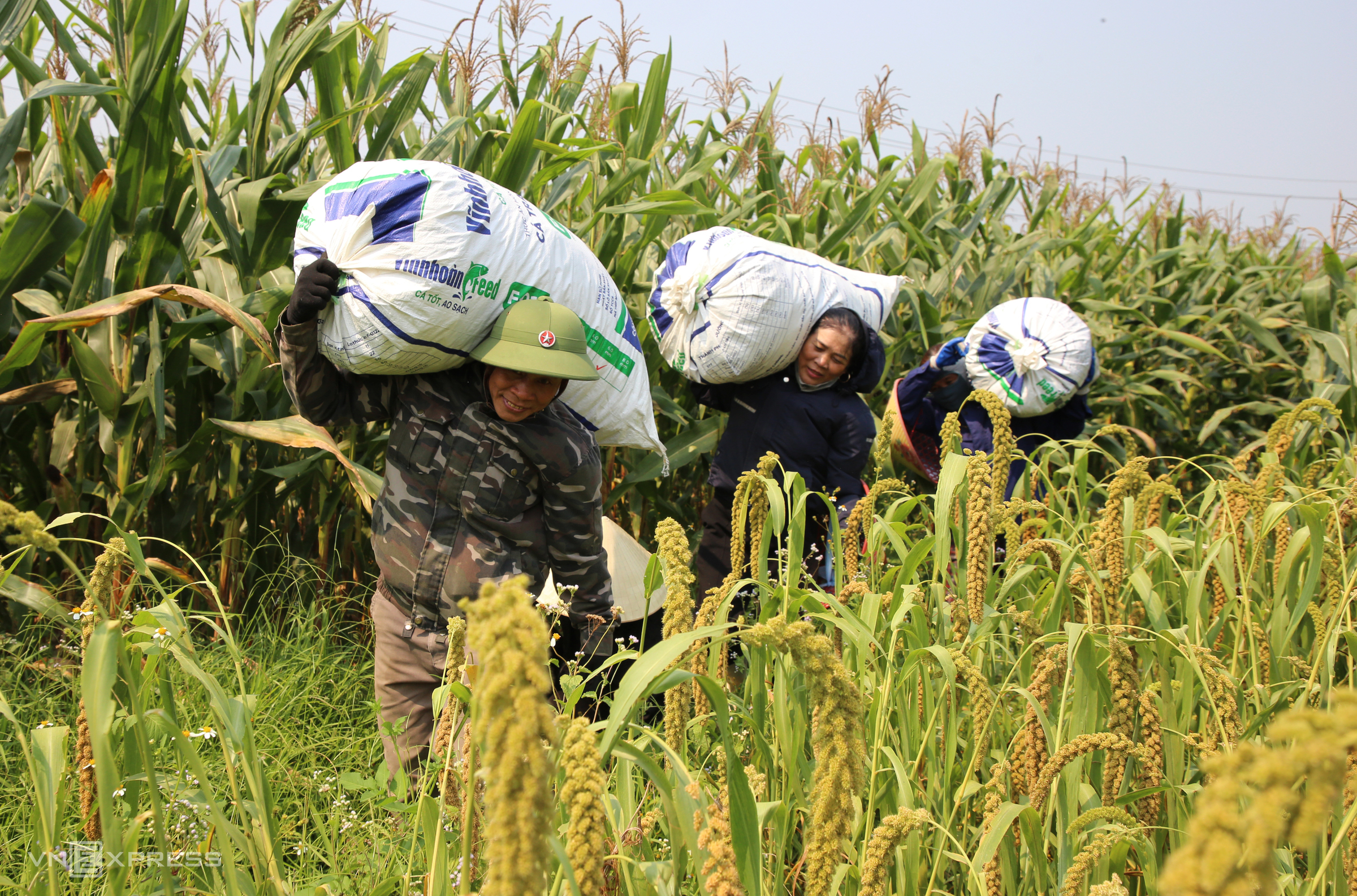
Unlike rice, which can be harvested by machine, millet is harvested entirely by hand. Under the sun, field owners hire 5-10 people to line up, using sickles or scissors to cut each head. These are then gathered into sacks for drying. The work requires meticulousness and patience due to the small, densely growing heads. Millet leaves and stalks have many stiff hairs, which can easily scratch the skin, causing hands and feet to become red and irritated. Workers often wear long-sleeved shirts, cover their faces, and wear gloves to minimize scratches and avoid sun exposure.
Since 2020, residents in Bo Trach commune have converted many areas previously used for growing corn and peanuts to millet cultivation. The plant grows well, yields high, and maintains stable prices, leading to its widespread adoption.
Each household cultivates from nearly one to three sao (500 square meters per sao), with yields reaching 1.5-1.8 quintals per sao.
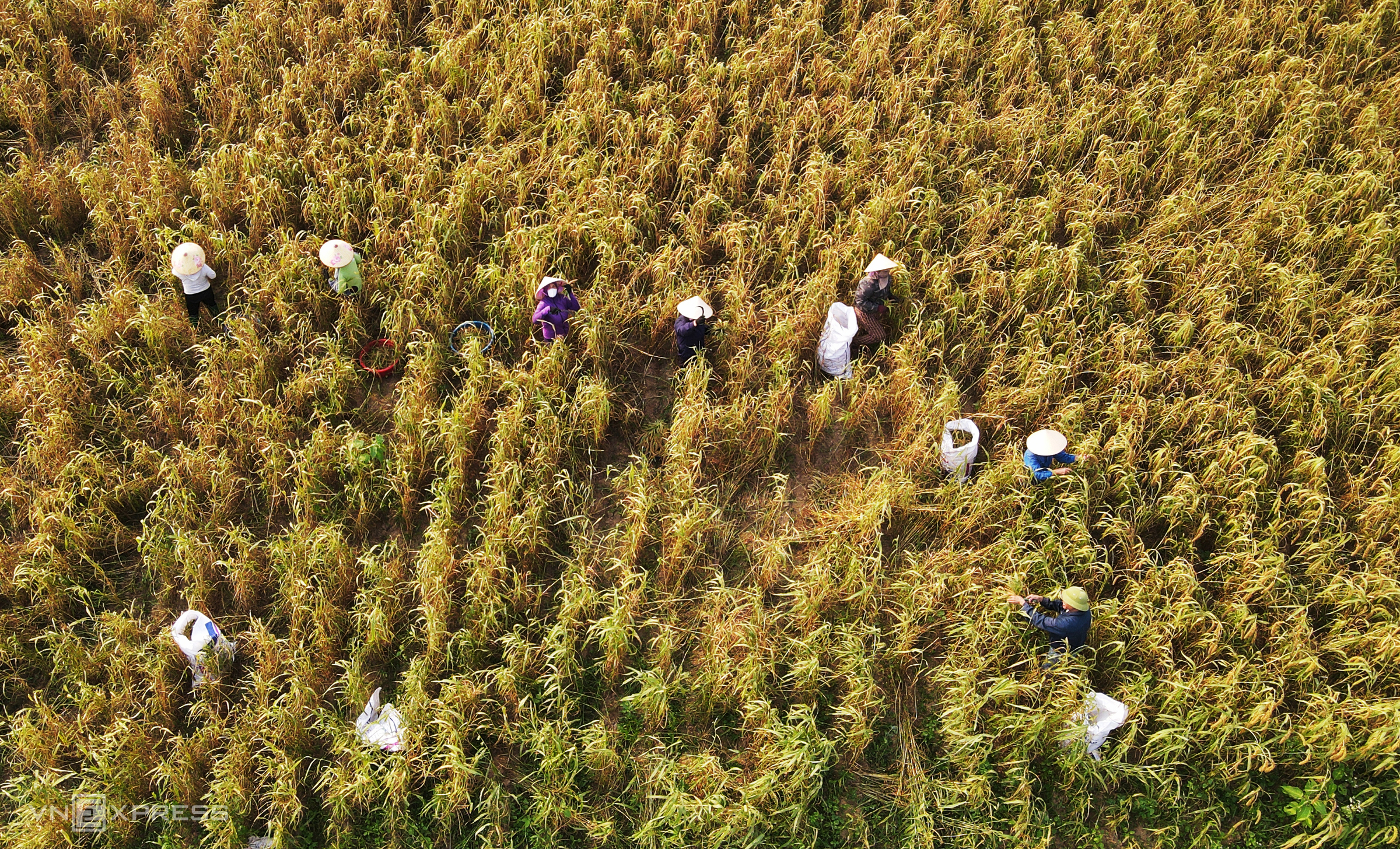 |
Clusters of millet grains are cut and gathered into piles, then bagged, awaiting transport.
Locals state that millet is easy to grow, resistant to pests, and has low investment costs. However, it requires significant care, especially thinning and weeding. Millet resembles grass, making it easy to accidentally pull out the wrong plants.
 |
 |
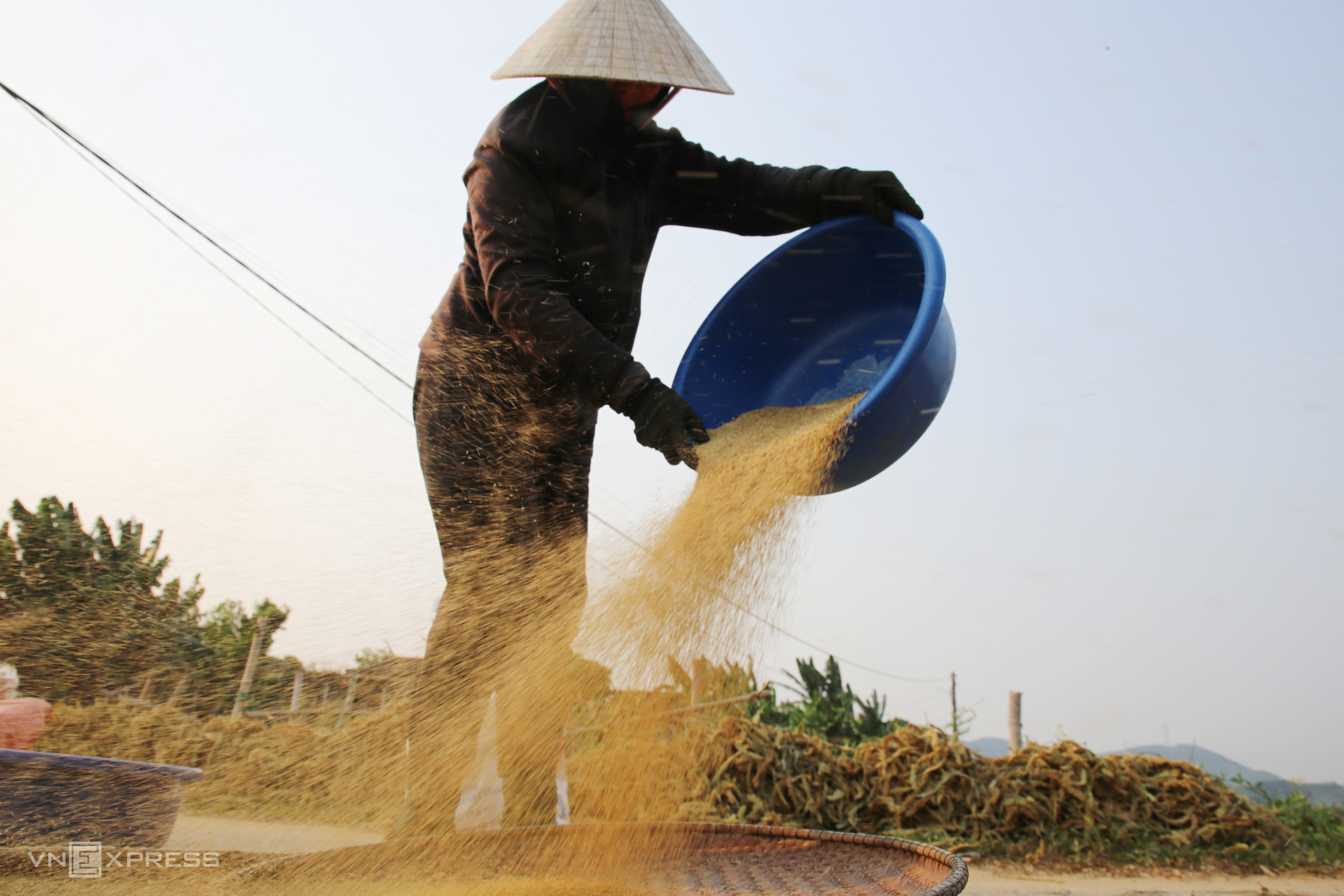
After harvest, millet is dried, and grains are separated from the heads. To extract the grains, farmers gather them into piles and then rub them by hand. Grains mixed with heads and leaves are sifted using a basket to remove impurities. The grains fall through, while the heads and leaves remaining on top are discarded.
Each afternoon, residents use the wind to winnow, removing light, empty grains and retaining plump ones. Millet is poured from a height of about one meter; heavier grains fall, while lighter, empty grains are carried away by the wind.
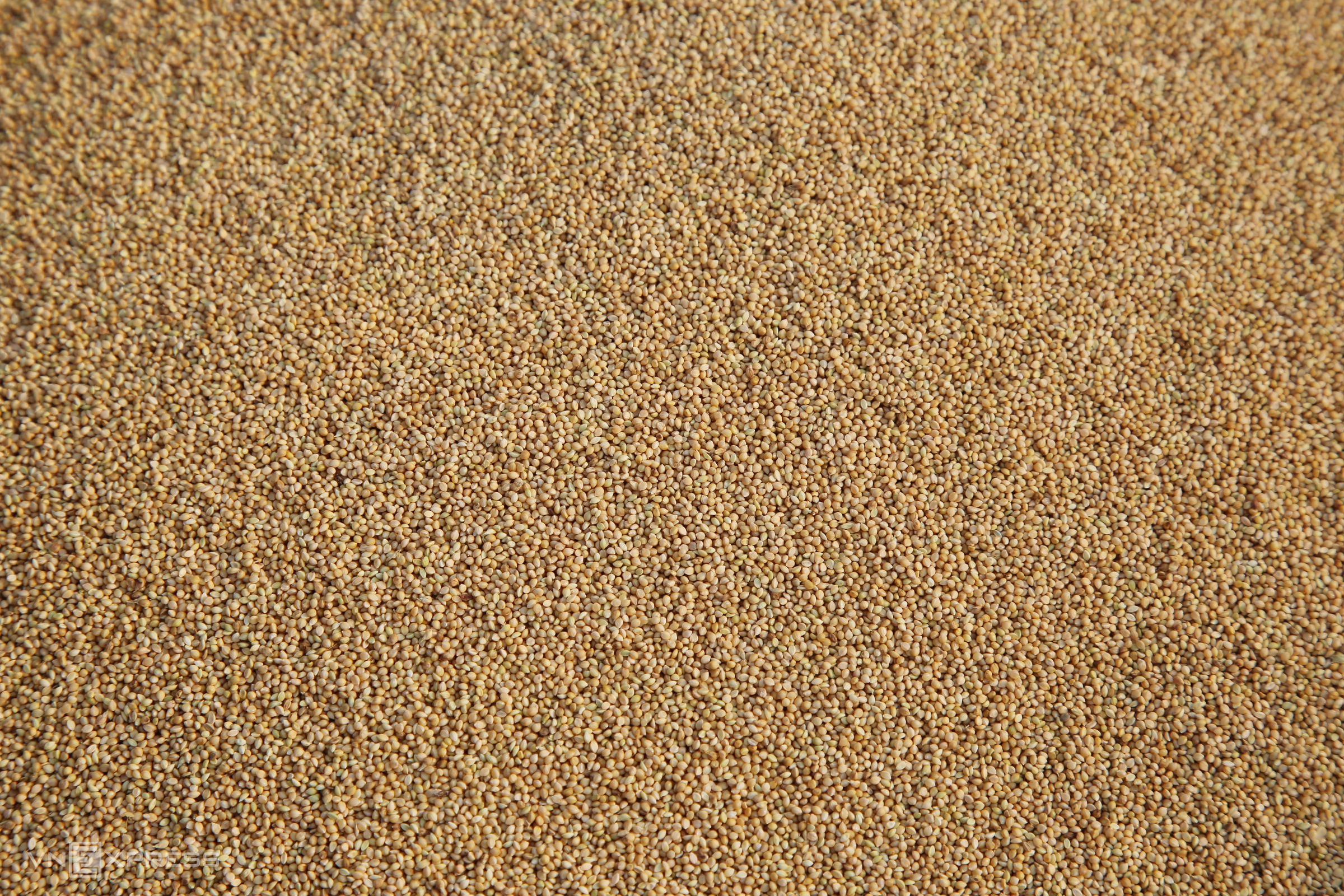
Dried, cleaned millet grains sell for VND 25,000-35,000 per kg, providing a stable income for many riverside households.
Millet is a nutritious ingredient used in many dishes: porridge, sticky rice, sweet soup, milk, millet crackers, and millet rice. Increased market demand has led to an expansion of millet cultivation areas in Bo Trach in recent years.
 |
Bo Trach commune is a major millet growing region in Quang Tri province. The Bo Trach Commune Department of Economy and Infrastructure reported that the entire commune has over 27 hectares of millet across six riverside villages along the Son River. The Son River originates from Phong Nha Cave, flowing about 35 km before joining the Gianh River. Annually, the rainy season floods deposit fertile alluvium along the section flowing through Bo Trach commune, making it suitable for farmers to grow short-term crops.
 |
Dac Thanh