"At this stage, profit or loss is not a concern; we must secure workers by any means necessary", said Dang Xuan Minh, a representative of AIT, the contractor building the Phu Quoc 220kV Substation. This substation is one of three power grid projects supporting APEC 2027, scheduled for November next year.
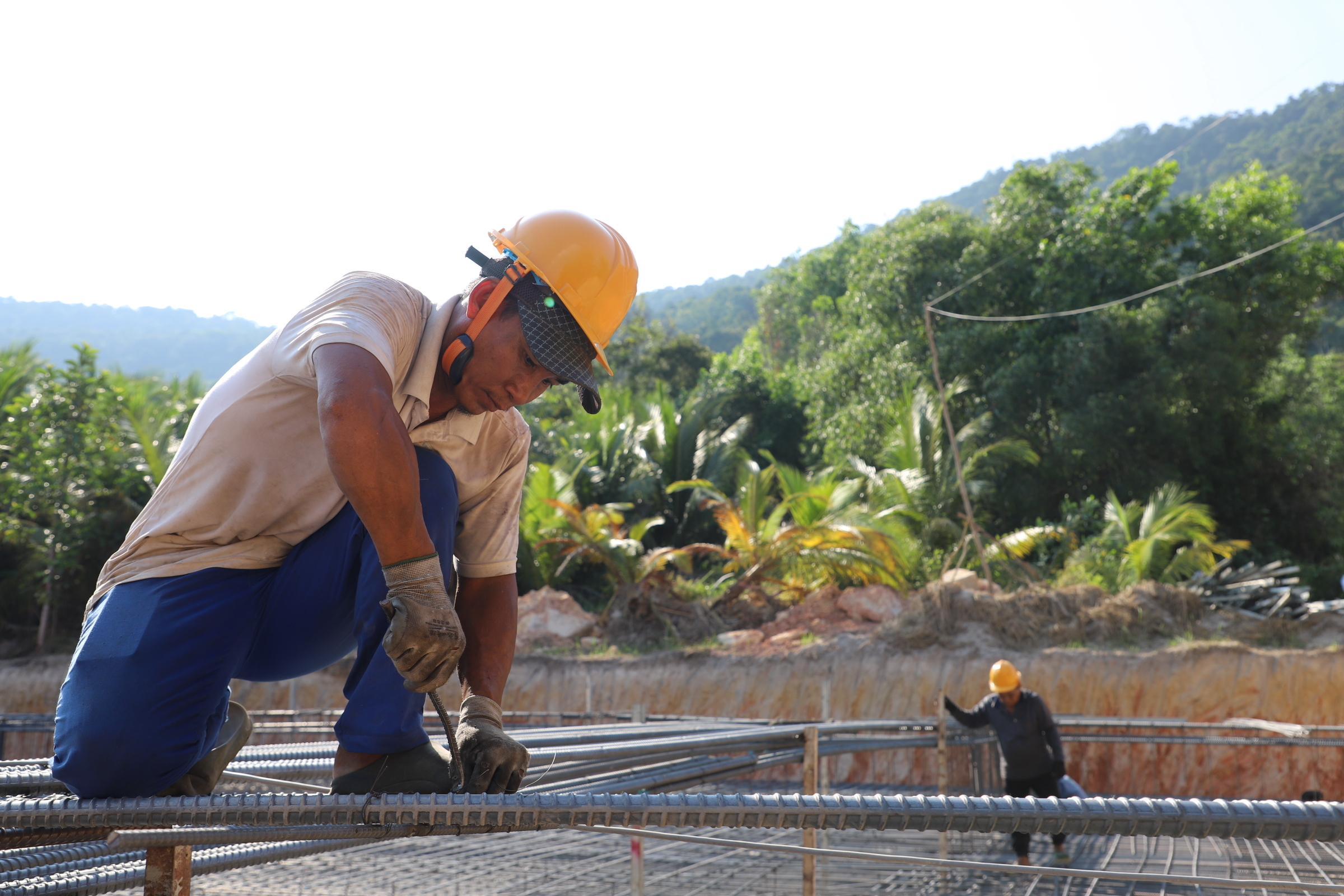 |
Bui Luong, 44, a worker at the Phu Quoc 220kV Substation construction site. Photo: Le Tuyet |
AIT is currently working on station foundation leveling, control building construction, drainage systems, equipment foundations, and slope reinforcement. For over three months, the unit has maintained more than 90 workers, operating continuous shifts without weekend breaks. As the project nears its completion phase, the contractor needs approximately 260 people to meet deadlines before the prolonged rainy season.
"Phu Quoc is currently a massive construction site, with intense competition for labor, while the local workforce is small", Minh stated.
To proactively secure workers, the company recruits from central provinces, requiring only adequate health. Workers are gathered in advance and paid even when there is no immediate work. When the project enters its peak, they are transported to the island. Travel and accommodation costs are covered by the contractor. Wages have increased by 30-40%, reaching about 800,000 dong per day.
According to Minh, current labor costs are significantly higher than when contracts were signed, but "there is no time to hesitate" due to deadline pressure.
To prepare for APEC 2027, An Giang province is simultaneously implementing 21 major projects. A prominent one is the Convention and Exhibition Center, with a total floor area of 95,200 m2. The facility includes a 10,790 m2 conference room, considered the world's largest, along with a press center to accommodate 4,000 reporters, aiming for long-term MICE tourism development.
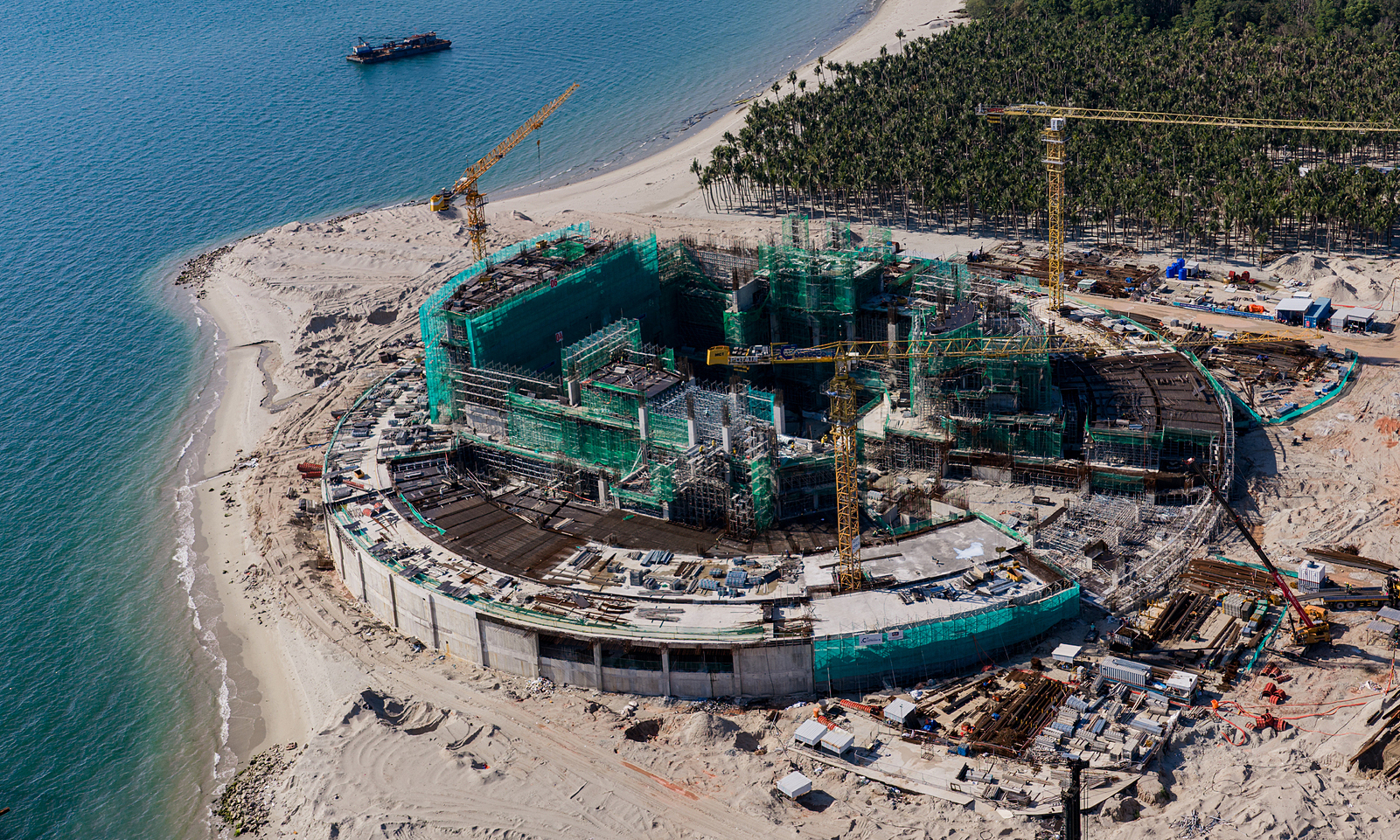 |
The APEC Convention and Exhibition Center project, 3/2026. Photo: Phuong An |
A representative from a project contractor reported that the current workforce meets only 30-40% of the demand as work volume rapidly increases. The remaining labor must be mobilized from various localities, primarily TP HCM and southern provinces. To attract workers, the unit has built temporary shelters, subsidized travel costs, provided meals, and offered night shift allowances.
Despite these efforts, recruitment remains challenging. Fewer young workers are choosing demanding jobs. Meanwhile, multiple large projects underway concurrently intensify labor competition. Phu Quoc's remote location and high living costs further diminish its appeal.
Reluctance to travel far, coupled with concerns about delayed payments from some previous subcontractors, also leads many to choose jobs closer to home.
To ensure progress, construction sites operate three continuous shifts, with night shifts accounting for about 30% of the workforce. At peak times, a single contractor at the Convention Center can mobilize 2,400-2,700 people for simultaneous structural, finishing, and mechanical-electrical system work.
Hoang Khac Ky, Head of Construction for the APEC Project Management Board under Sun Group, stated that during the rough construction phase, the site maintained over 2,000 workers and completed over 90% of the main structure. As it transitions to the finishing stage, demand could rise to 3,000-4,000 people, primarily skilled laborers.
"Contractors are concentrating their efforts as only about two months of the dry season remain for construction", Ky noted.
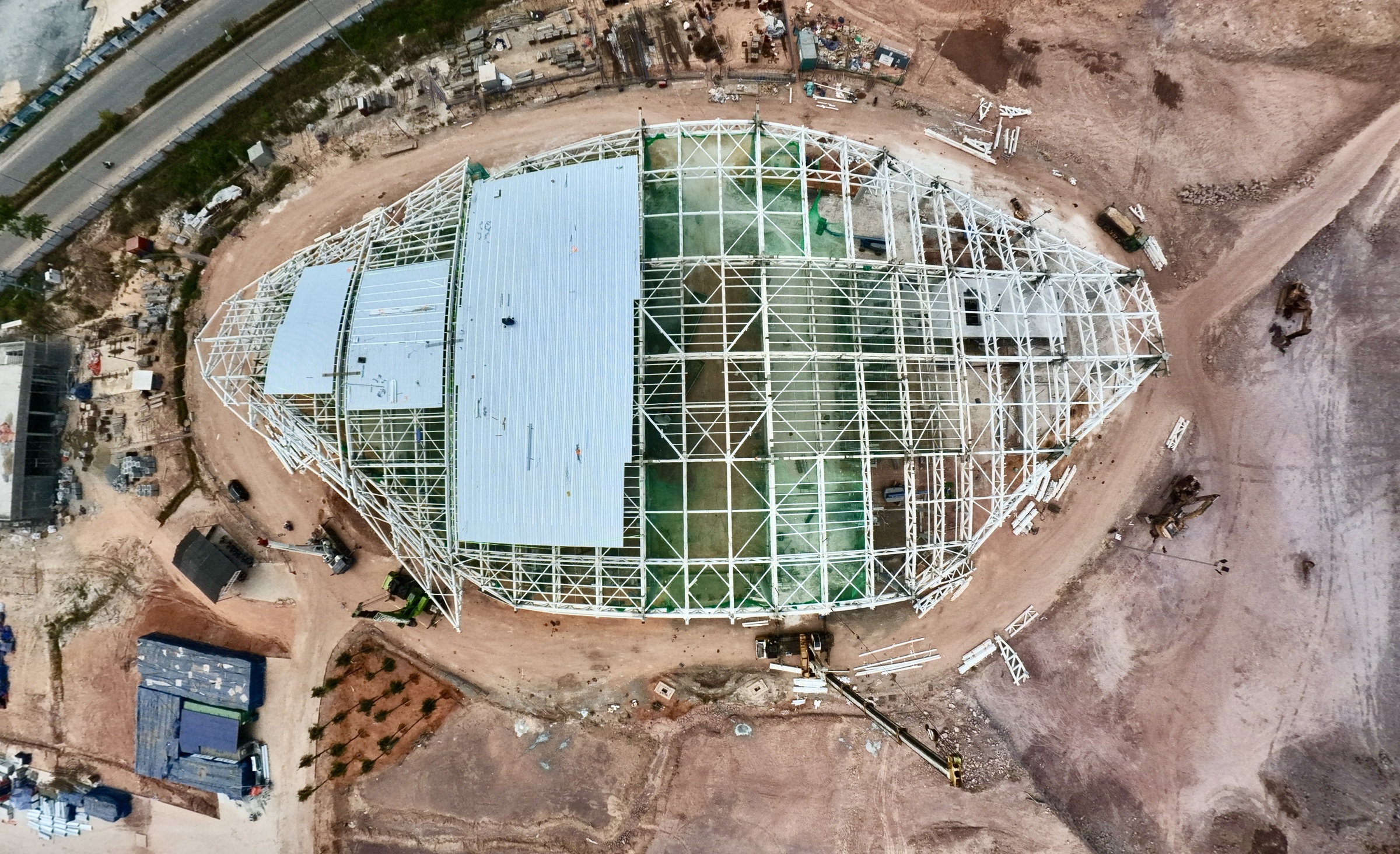 |
Installing the dome of Phu Quoc Airport's passenger terminal. Photo: An Phuong |
Not far away, the Phu Quoc airport construction site, including the runway, VIP terminal, and Terminal 2, currently has about 4,000 workers daily. However, to meet deadlines, especially while construction and operations occur simultaneously, the project needs an additional 2,000 people.
Le Minh Thuan, Head of Airport Infrastructure for the project, explained that the pressure is not only on quantity but also on specific construction conditions. Many tasks can only be performed during short periods in the early morning to avoid flight times, complicating workforce allocation and demanding high discipline.
According to Sun Group, the investor for 21 APEC-serving projects, overall progress is controlled, but immense pressure exists with only 9-15 months remaining. Contractors have about two months of the dry season (April-May) to accelerate before the rainy season begins from May to October.
The investor's representative identified labor shortage as one of four major bottlenecks, alongside site clearance, underground infrastructure, and materials.
To provide support, Sun Group has implemented various worker-focused policies. The corporation builds prefabricated housing, ensuring most workers have free accommodation. Long-term workers receive additional bonuses and flight tickets home. Workers who work through Tet (Lunar New Year) are awarded about one million dong per day. Committed individuals also receive free medical examinations and treatment. These support payments are transferred directly.
Meanwhile, some contractors propose allowing the recruitment of foreign workers. They argue that the demand for construction labor is surging as many projects proceed concurrently, while domestic supply becomes increasingly limited. Therefore, appropriate mechanisms are needed to provide businesses with additional resources and ensure the progress of key projects.
Le Tuyet - Ngoc Tai