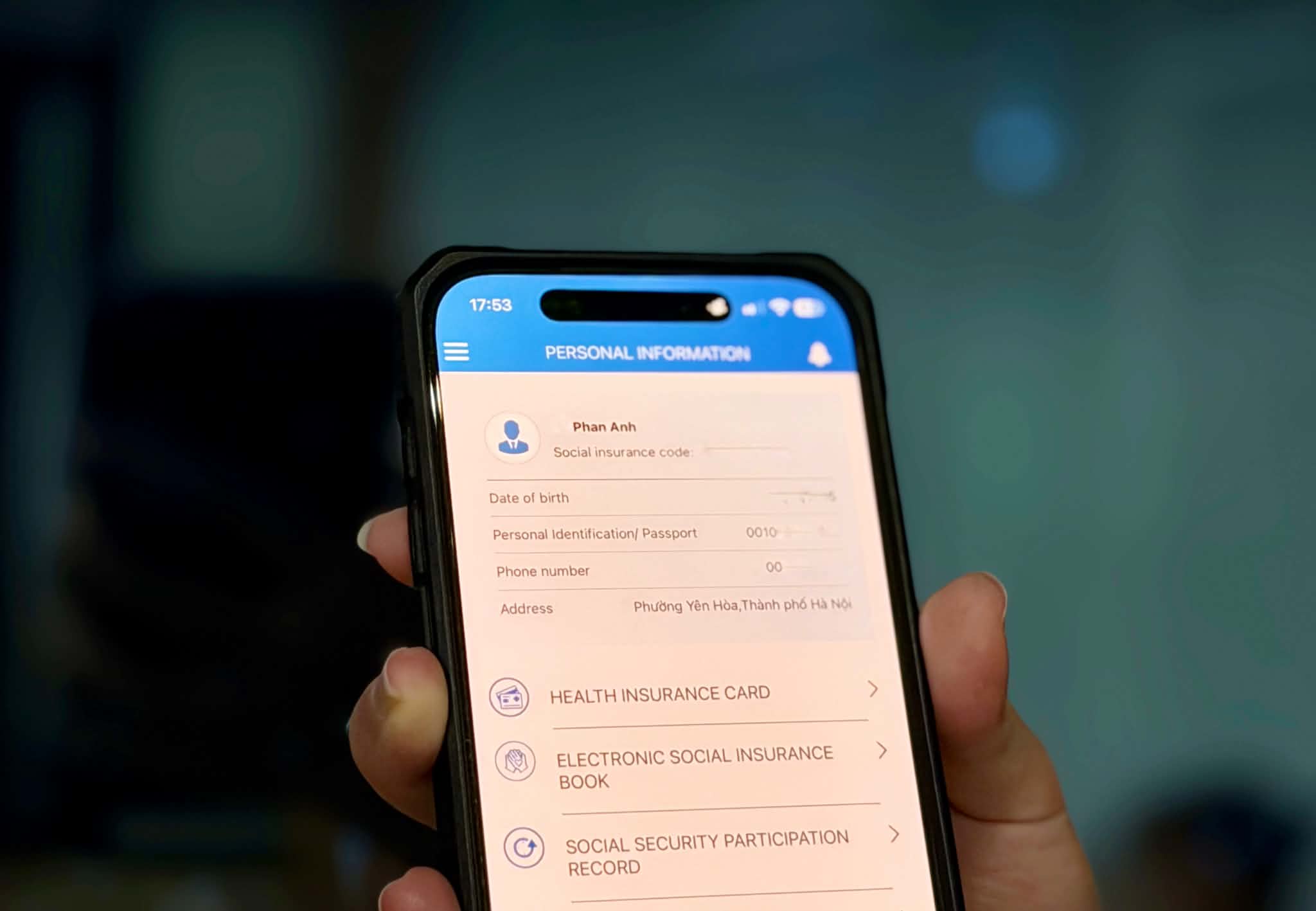
The Traffic Police Department, under the Ministry of Public Security, has developed a model for processing traffic violations entirely through electronic means. This model is based on the revised draft Law on Administrative Sanctions, which the 16th National Assembly is currently reviewing during its second session.
Under this model, the entire process, from detecting violations and verifying vehicle operators to issuing notifications, making sanction decisions, and collecting fines, can be completed via the VNeTraffic application. This eliminates the need for offenders to visit traffic police headquarters directly. The procedure is designed for violations identified through surveillance cameras and technical enforcement equipment.
When a camera or enforcement device detects a vehicle violation, images and data will be transmitted to the system. Traffic police will then review and cross-reference this information with vehicle registration databases and personal details to identify the vehicle owner.
Following verification, traffic police will send a notification to the vehicle owner's VNeTraffic account. This notification will include details of the violation, the proposed fine, the time and location of the incident, the vehicle's license plate, the processing unit, and accompanying images or videos as evidence.
Vehicle owners can review and respond directly within the application. If they agree with the violation information, they can confirm it online. If they believe the notification is incorrect, they can submit an explanation along with relevant documents, images, or evidence for the authorities to consider.
Should the vehicle owner not be the operator at the time of the violation, they must provide the driver's full name, citizen identification number, and the relationship between the two parties. This information allows traffic police to verify and process the violation against the correct individual.
If a vehicle has been sold but ownership has not yet been transferred, and the registered owner cannot identify the operator, the information will be returned to the traffic police for further verification.
 |
A bus driver sanctioned by the Traffic Police of Lao Cai Provincial Police. Photo: Traffic Police Department |
Once sufficient grounds establish the offender's identity, traffic police will issue a sanction decision and send it via VNeTraffic. The sanctioned individual can then pay the fine directly through the application and receive an electronic receipt, completing the procedure without needing to visit a police station.
The Traffic Police Department stated that this model aims to simplify violation processing procedures, reduce travel time for citizens, and leverage vehicle data and surveillance camera systems to enhance enforcement efficiency.
This proposed process is currently being developed based on the revised draft Law on Administrative Sanctions and is not yet officially in effect.
 |
Diagram of the contactless violation processing procedure. Photo: Traffic Police Department |
Pham Chieu