Florian Laplanche finished first at the Marathon des Chateaux du Medoc 2026 on 6/9, with a time of 2 hours 26 minutes 45 seconds, 26 seconds faster than his winning time last year.
Laplanche had previously run significantly faster on asphalt, achieving a time of 2 hours 21 minutes 59 seconds in Paris in 4/2025. The key difference was that in Paris, athletes were not expected to stop at 20 chateaux to enjoy a glass of Pauillac.
Florian Laplanche finished first at Marathon des Chateaux du Medoc 2026. Video: Instagram / marathondumedoc
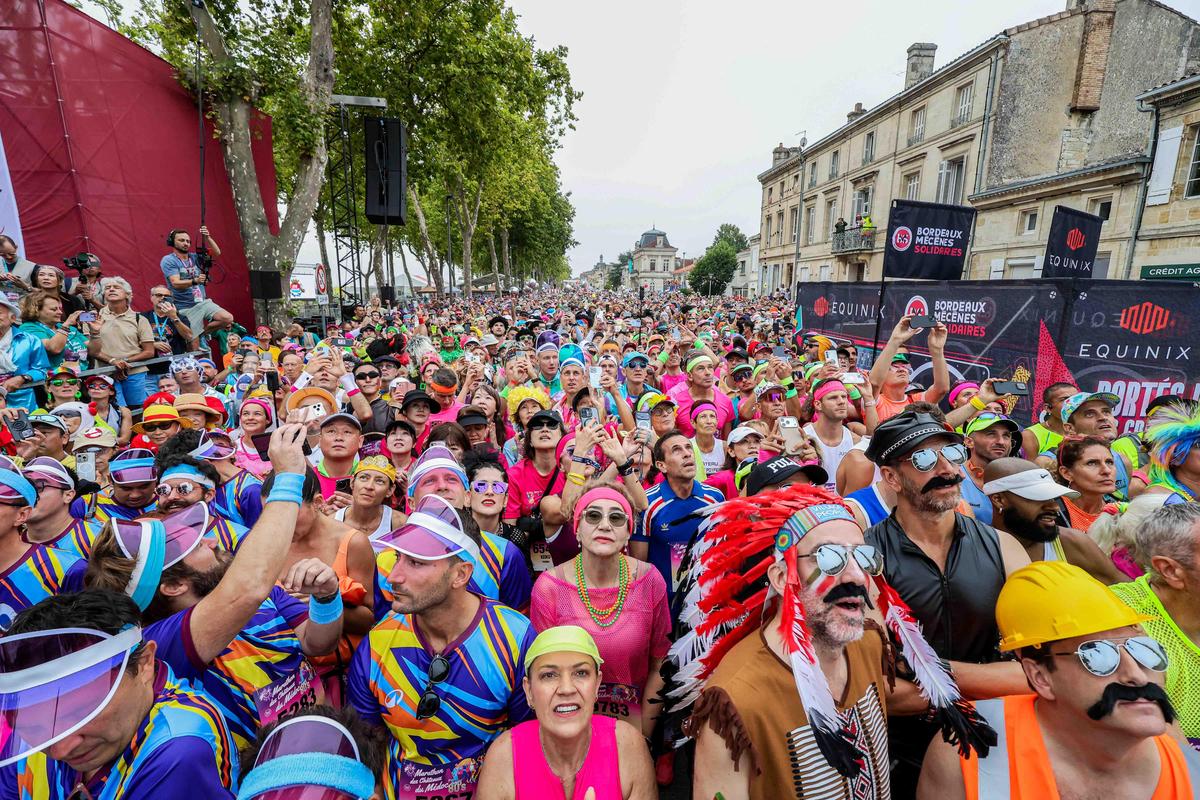
The number of participants in the Marathon des Chateaux du Medoc 2026 was limited to 8,500 people. Last year's event saw 8,700 participants, and organizers stated they would not increase the scale. Athletes are also required to wear costumes, a rule explicitly stated in the regulations in capital letters. According to the organizers, over 90% of participants arrived at the starting line in costume.
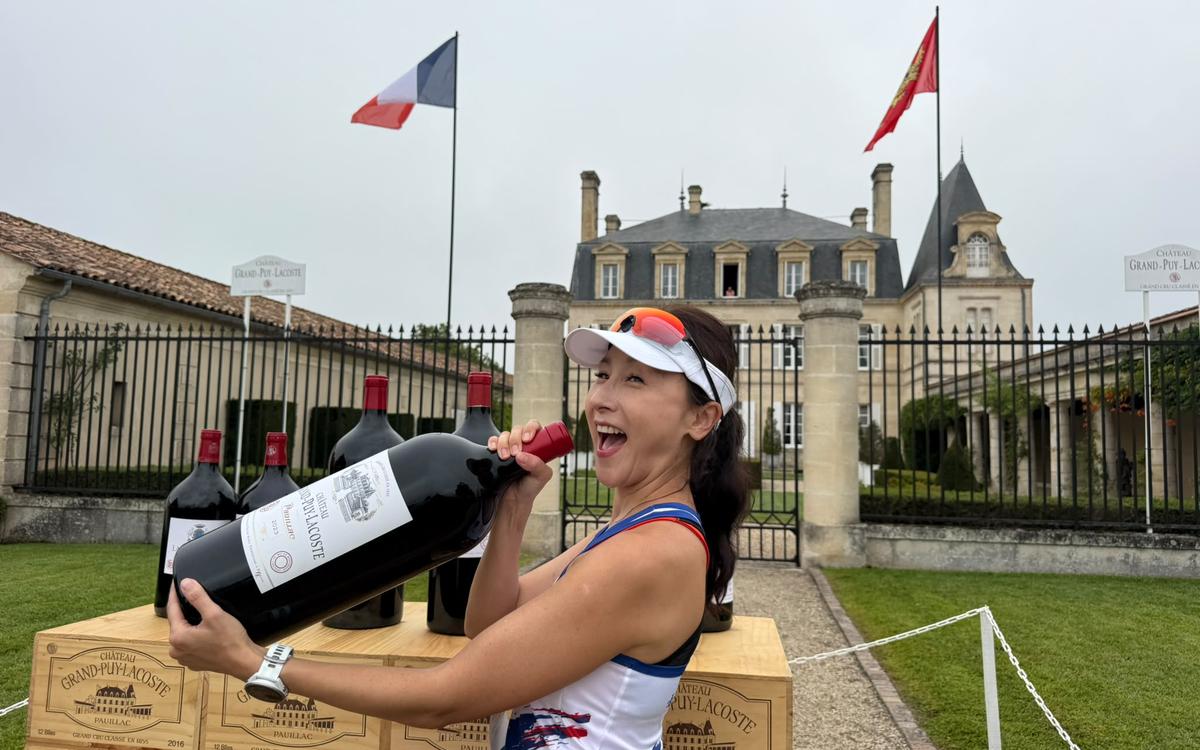
The race is a single loop, starting from the Pauillac harbor, passing through Saint-Julien, Haut-Medoc, and Saint-Estephe before returning. The 42,195 km course winds through approximately 50 chateaux, with 24% of the route being on dirt roads, and a total elevation gain of only about 180 m.
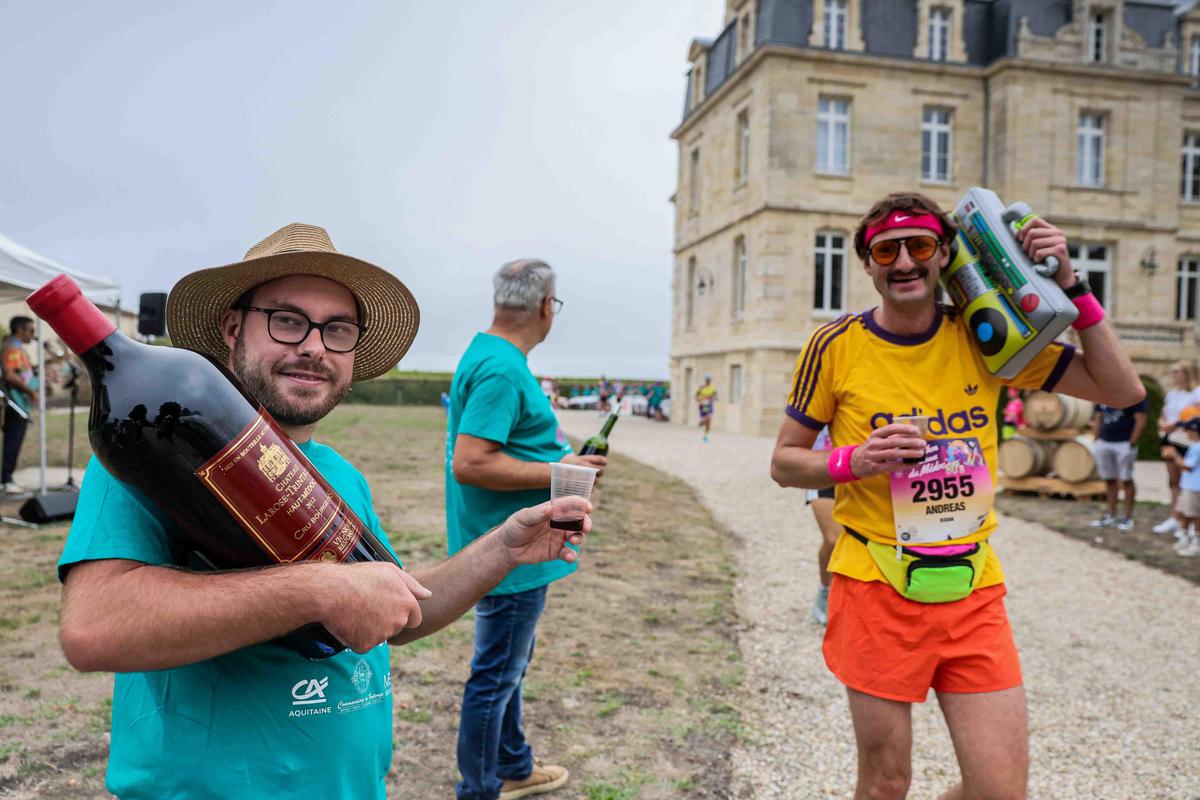
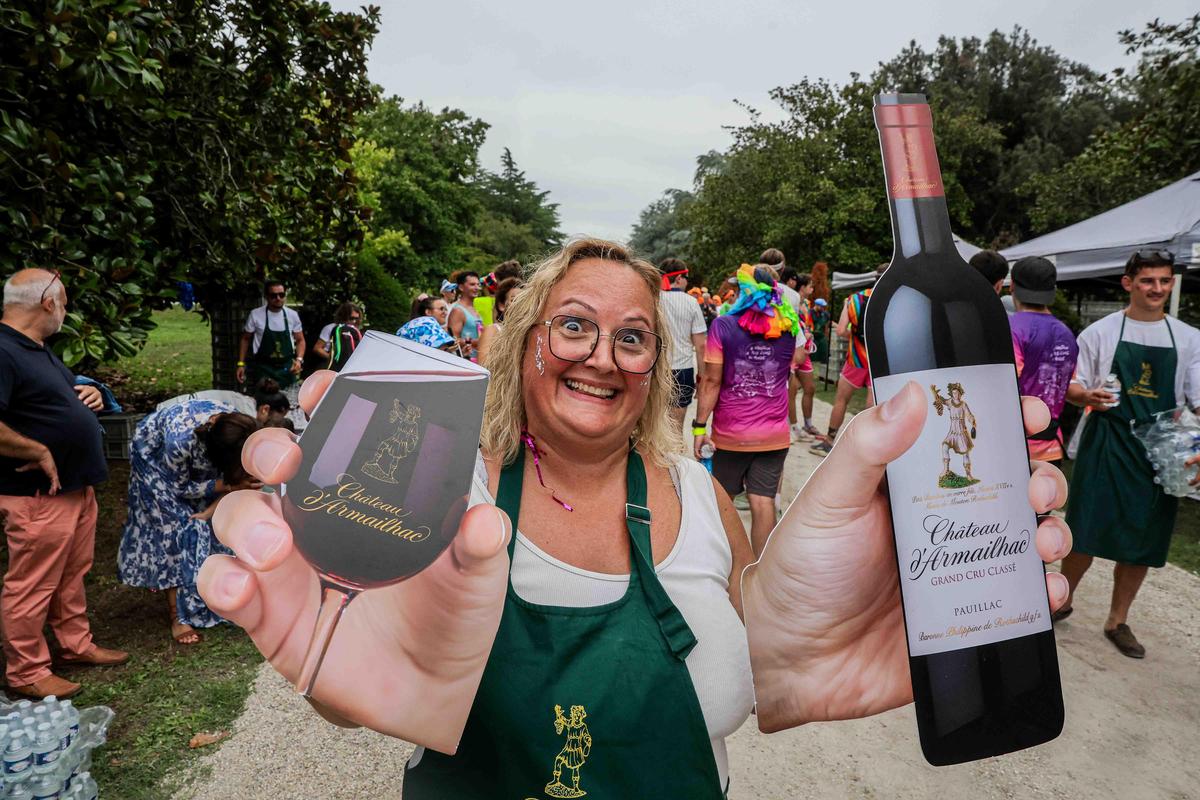
There are 22 aid stations along the course, in addition to about 20 wine tasting points. This year's entire event was themed around the 1980s, the decade the race originated.
Oysters replace energy gels
While traditional marathons offer energy gels, electrolyte drinks, or bananas, the Medoc marathon's distinctive refueling item is oysters.
According to The Drinks Business, a wine trade magazine, Patrick Schmitt, a wine expert and editor for the magazine, participated in the anniversary race and documented the events on the course. Approximately 18,000 oysters were served at km 37, cheese appeared at km 41, and 200 kg of sirloin beef were placed at the penultimate station.
Grapes and ice cream were also served along the route. More than 50 live bands performed among the vineyards, according to Schmitt's observations. About 3,000 volunteers were mobilized to manage the entire operation.
 |
 |
 |
 |
After last year's event, an organizing committee member revealed to Jogging International the calculation of wine consumed: each station had a 225-liter barrel, multiplied by 20 stations, which amounts to approximately 4,500 liters of wine poured in one day. This year's race is believed to have used a similar quantity of wine.
Athletes have a maximum of 6 hours 30 minutes to complete the course, and this cut-off time (COT) is strictly enforced. The "sweeper" group eliminates anyone they overtake. If an athlete skips a station, their result will not be recognized, regardless of their finishing time.
With a global average marathon completion time of 4 hours 32 minutes 49 seconds, a typical athlete has less than two hours "extra" to stop and enjoy the wine and food along the way. As a result, 7,849 people were officially recognized as having completed the race.
In the women's category, Celine Merel finished first with a time of 2 hours 54 minutes 38 seconds. Jennifer Mozuelos placed second with 3 hours 5 minutes 25 seconds, and Charlotte Maurin took third with 3 hours 6 minutes 34 seconds.
Celine Merel, a physical education teacher, primarily competes in short-distance trail races for a club in Brittany. She had almost no marathon experience. The Drinks Business reported this was Merel's second marathon, after a race in Paris, while MARATHONS.FR stated it was her first time competing at this distance.
Regardless of the calculation, Merel made a special mark: no female athlete has won the Medoc with a faster time since 2015. According to the list of champions published by the organizers, the winning times for women over the past decade typically hovered around the 3-hour mark.
Nathalie Vasseur, an athlete from Brittany, dominates this list. Before 2014, she had won Medoc 12 times and subsequently secured three more titles.
Prize is not money
Both the male and female champions received no monetary prize.
Since its first edition in 1985, the organizers decided to award grands crus wines instead of cash and have maintained this tradition. Therefore, Laplanche and Merel will receive a quantity of Medoc wine with a total weight equivalent to their body weight. The winner of each age group also receives a case of wine.
Athletes in costumes competing at Marathon des Chateaux du Medoc 2026. Video: Instagram / marathondumedoc
The Marathon des Chateaux du Medoc regulations state that if participants believe sport means "health, joy, and camaraderie," this marathon is for them. Conversely, "troublemakers, hooligans, and record hunters" are advised to stay home.
The registration fee is 110 euros (about 128 USD). The full package, including a pasta dinner at Chateau Beychevelle on friday evening, costs 263 USD.
The race on 6/9 marked the 40th time the Marathon des Chateaux du Medoc has been held, but it took place in the 42nd year since the event's inception.
Medoc was first organized in 1985, with 500 registered participants and 396 finishers. The Covid-19 pandemic caused the cancellation of two editions. The 36th edition, planned for 2020, was postponed to 11/9/2021 but was ultimately canceled. Consequently, the list of champions shows no winners for these two years.
The competition for the title of "world's most fun marathon" is also less intense than before. The Marathon du Beaujolais in november is larger, having set a record of 23,000 participants in 2023 and featuring six events. However, the marathon distance accounts for only a small portion of that; organizers expected about 4,500 people to run the marathon distance when they introduced the event last year.
In England, the Bacchus at Denbies Wine Estate, Surrey, organized a two-loop marathon in 2019 but later dropped the marathon event, replacing it with a half marathon limited to 1,800 people and a 10 km distance.
Medoc, however, has no distances shorter than 42,195 km in its official program. The last time organizers announced the number of people wanting to participate, in 2006, there were 15,000 applications competing for 8,500 slots.
Hong Duy (according to Marathon Handbook)