In 1974, Zaire became the first sub-Saharan African nation to qualify for the World Cup, held in West Germany. At the time, the country was under the rule of authoritarian President Mobutu Sese Seko, who had renamed the nation and tightly controlled all aspects of life, including football.
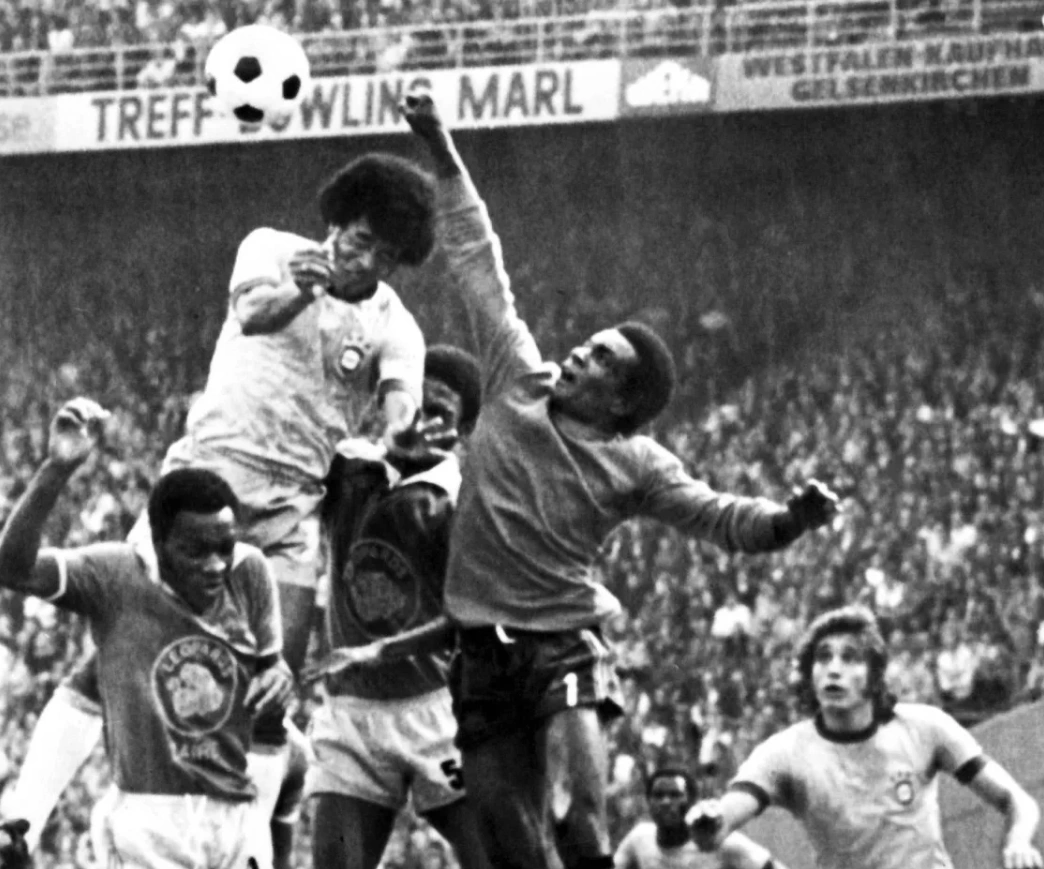 |
Zaire goalkeeper Muamba Kazadi punches the ball clear from Brazil forward Jairzinho at the 1974 World Cup. *Photo: AFP* |
On their journey to the World Cup, Zaire navigated a demanding African qualifying campaign and then won the 1974 Africa Cup of Nations (CAN). The squad at the time did not feature European-based stars like today, but still boasted notable players such as Tshimen Bwanga and 1974 CAN top scorer Ndaye Mulamba.
However, the tournament in West Germany quickly devolved into disaster. Following their 0-2 opening loss to Scotland, the Zaire team faced an internal crisis over bonuses and living expenses. Many players protested, believing that accompanying officials had embezzled support funds, leading to a temporary strike where they refused to play.
Amidst the chaos, the world football governing body, FIFA, reportedly intervened, paying Zaire players directly to ensure the tournament continued.
In their next match, Zaire suffered a 0-9 defeat to Yugoslavia, marking one of the most lopsided results in World Cup history. This score reflected a team crumbling both in morale and organization.
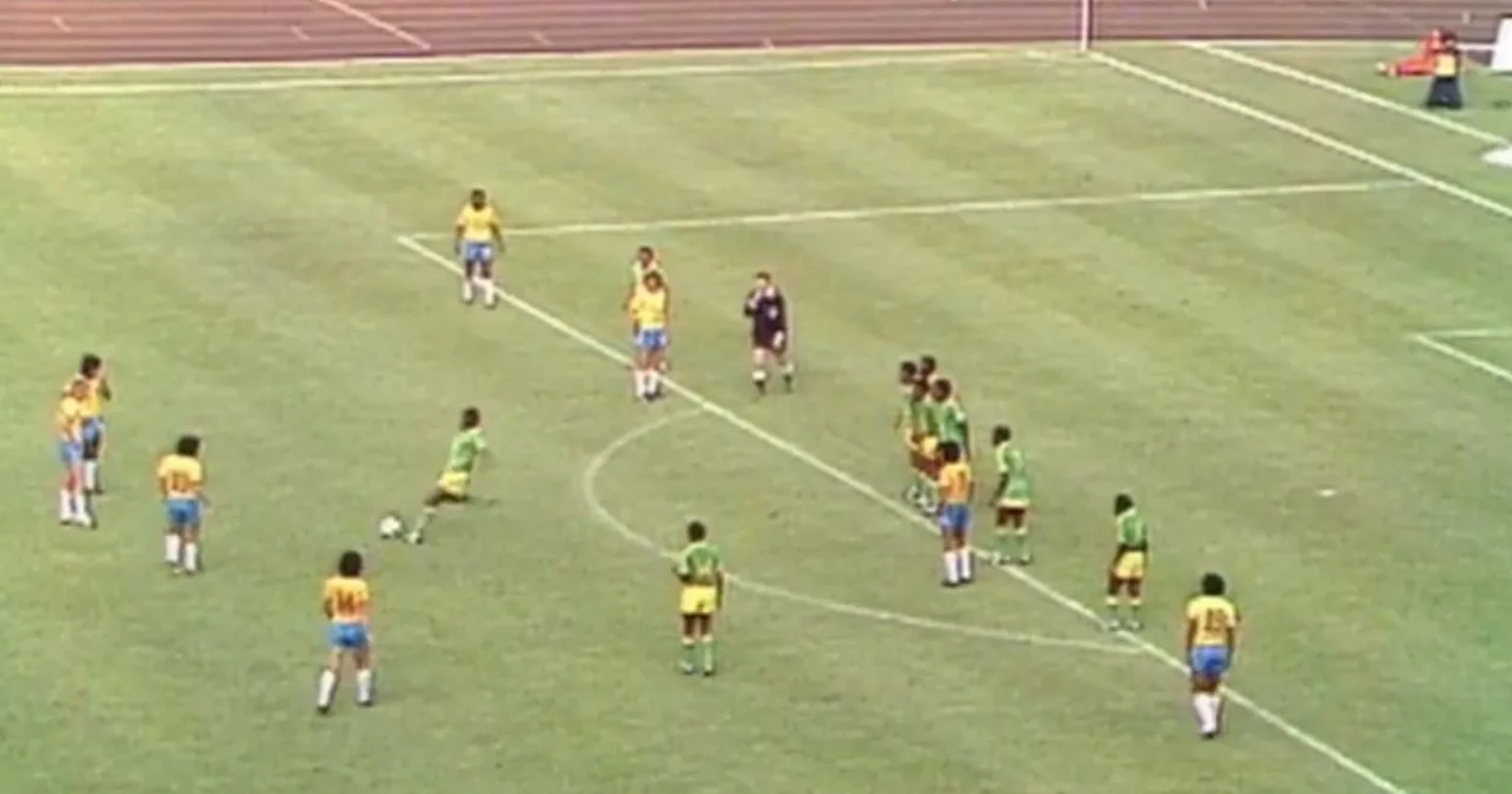 |
Mwepu Ilunga runs out of the wall to kick the ball away as Brazil prepares for a free kick. *Photo: BBC* |
The tragedy continued when Zaire faced Brazil in their final match, a team featuring legendary players. According to defender Mwepu Ilunga, the players faced intense pressure from security forces accompanying President Mobutu, even receiving threats that they would not be allowed to return home if they lost by a large margin.
During this match, one of the most controversial moments in World Cup history occurred: Ilunga unexpectedly broke from the defensive wall and kicked the ball away just before Brazil took a free kick. Many contemporary commentators viewed this as a lack of understanding of the rules. However, it was later interpreted as an act of panic under extreme psychological pressure and threats.
Brazil won 3-0, and Zaire exited the tournament amidst the derision of the football world. After that disastrous World Cup campaign, football in this African nation declined, suffering from reduced investment and losing its standing for many years.
From making a splash by participating in the 1974 World Cup, coinciding with the historic "Rumble in the Jungle" boxing match between Muhammad Ali and George Foreman, Zaire quickly became a symbol of sporting chaos and tragedy.
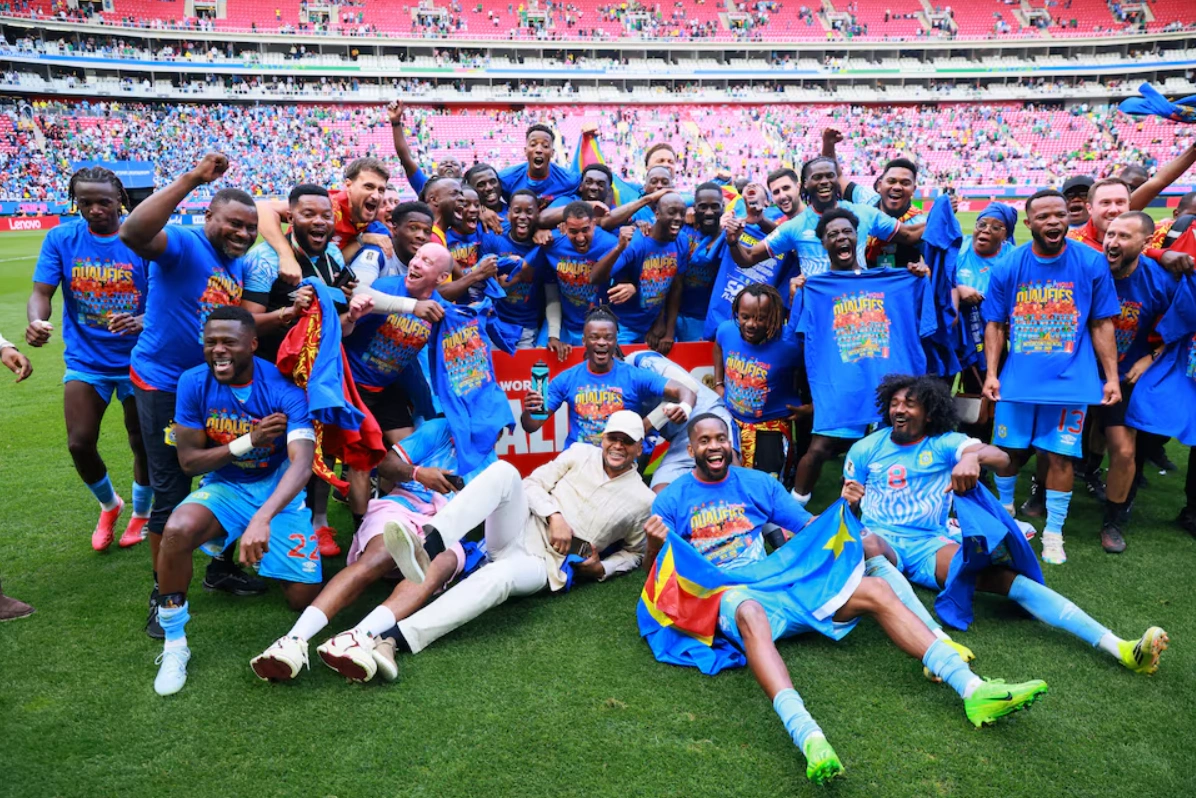 |
DR Congo players celebrate after qualifying for the 2026 World Cup at Guadalajara stadium, Mexico, on 31/3/2026. Congo now boasts many stars playing in England, including Yoane Wissa (Newcastle), Cedric Bakambu (Betis), Aaron Wan-Bissaka (West Ham), and Axel Tuanzebe (Burnley). *Photo: Reuters* |
Decades later, as the nation returned to being called the Democratic Republic of Congo, football experienced a resurgence with a generation of players competing in top European leagues. This has ignited hopes of rewriting history more positively at the 2026 World Cup. In their opening match on 17/6, the DR Congo national team will face Portugal, led by legend Cristiano Ronaldo.
*By Hong Duy (according to Sunsports)*