At 22 years old, Eileen Gu has amassed a record many athletes could only dream of achieving: three gold and three silver medals across two winter olympics, making her the most decorated freestyle skier in history. She is also a Stanford University student, an IMG model, and one of the highest-earning female athletes globally.
When asked about her biggest advantage, Gu does not mention technique, physical fitness, or sponsors. Instead, she points to her brain. "I spend a lot of time in my head", she shared. "I journal a lot. I analyze every thought process and adjust it".
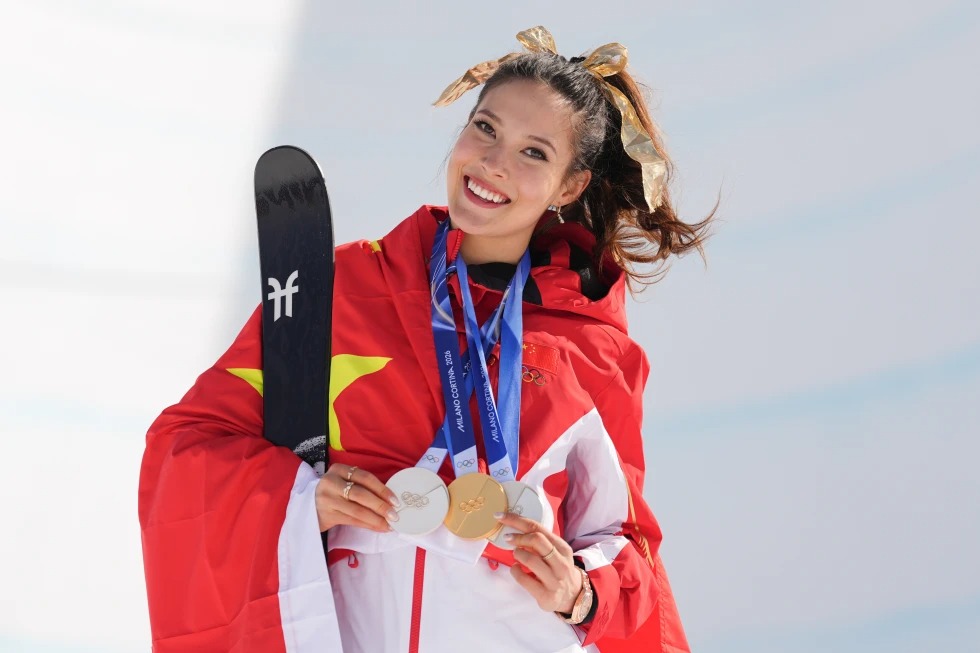 |
Eileen Gu with three medals at Livigno Snow Park, Valtellina Valley, Lombardy, Italy, winter olympics on 22/2. Photo: AP
The concept Gu refers to is neuroplasticity, also known as brain flexibility.
Neuroplasticity is the brain's ability for neural networks to change through growth and reorganization. The brain is not fixed after adulthood, contrary to old beliefs. Instead, it can adapt to new environments, learn new skills, and even restructure after injury.
According to Psychology Today magazine, for decades, scientists believed the adult human brain was almost fully developed after childhood. Studies from the latter half of the 20th century proved otherwise. Many cortical areas can still change in adulthood, though brain flexibility is not as high as in youth.
Neuroplasticity explains why a clumsy skill initially becomes fluid with sufficient repetition. Frequently used neural connections strengthen, forming pathways. Thus, habits gradually become automatic reflexes.
Gu believes that at 22, her brain is still flexible. "You can control what you think. You can control how you think. And therefore, you can control who you become", she added.
During the brief 30 seconds of her halfpipe routine, Gu must make precise decisions down to every rotation and jump angle. She once described visualizing a trajectory just one second before a jump, her brain operating at near-maximum speed. But before those 30 seconds, there are hours of silent analysis.
Gu describes herself as a data enthusiast, enjoying breaking records and measuring performance. Her approach to her mind is similar: observe, hypothesize, adjust. Journaling helps her detach from immediate emotions to identify recurring thought patterns. The Chinese-American athlete's goal is to become the version of herself that her 8-year-old self would admire.
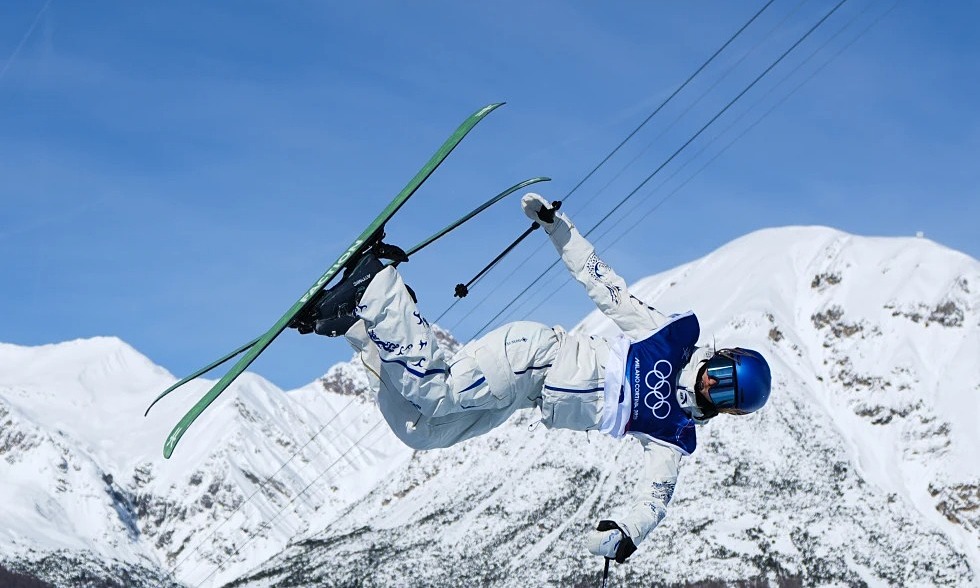 |
Eileen Gu during the halfpipe event where she won a gold medal at the winter olympics on 22/2. Photo: AP
Gu's perspective is supported by Arianna Huffington, founder of Huffington Post and CEO of Thrive Global. She argues that elite athletes succeed not through random inspiration, but through systems of habits based on behavioral science.
According to Huffington, repeating small choices daily strengthens neural circuits, automating actions. This reduces decision-making fatigue and lowers stress levels.
In other words, Gu is leveraging a real biological mechanism: the brain changes based on what we repeat.
Images of Gu on the podium often show a confident smile. Yet off the slopes, she is a controversial figure. Born in the US but representing China since 2019, Gu constantly faces questions about politics, identity, and sponsorships.
In an interview in Livigno, Italy, she admitted the halfpipe was a rare moment when she did not have to confront those questions. "Skiing gives me a sense of relief", Gu said.
Despite this, she is more demanding of herself than anyone. After losing her balance in the first run, Gu had to mentally adjust before returning for the next run. She calls it a moment of honesty with herself, where all her years of training are laid bare in just half a minute.
Neuroplasticity does not eliminate pressure. It helps practitioners recognize and adjust their responses to pressure.
Gu is utilizing neuroplasticity on a personal scale, viewing her mind as part of the training process. She neither deifies it nor denies innate talent, but emphasizes the controllable aspects.
In a world where success is often attributed to natural talent, Gu's story highlights another factor: deliberate repetition. Skiing requires muscles to remember movements. The mind also needs similar training.
Behind the Olympic spotlight are pages of journals and silent adjustments within Gu's brain. If neuroplasticity is the biological foundation, then daily discipline is the bridge that turns theory into achievement.
Compiled by Xuan Binh