The Football Association of Malaysia (FAM) appealed to CAS after FIFA penalized it for falsifying naturalization documents for seven foreign-born players in 12/2025. Three months later, CAS held a hearing for both parties to present evidence and arguments. The arbitration panel did not issue an immediate ruling but expects to announce its decision next week.
CAS stated that the case is serious and requires careful consideration. Malaysia national team CEO Rob Friend expressed optimism after the 12-hour hearing. Meanwhile, public opinion in Southeast Asia has urged CAS to issue a swift decision, hoping to conclude a case that has entered its sixth month.
 |
Seven foreign-born Malaysian players were banned by FIFA for one year due to naturalization fraud. |
Malaysian sports law consultant Zhafri Aminurashid trusts the integrity of CAS, believing it will not be swayed by online debates or external pressure. CAS may also seek expert opinions when necessary and apply the legal standard of "balance of probabilities," meaning a statement is more likely to be true than false.
"The arbitration panel examines each document to determine its authenticity, whether it matches other records, and if inconsistencies exist, whether they are intentional or unintentional," Zhafri told the New Straits Times. "Their duty is to make a conclusion based on evidence, not on external noise."
The expert noted that the hearing on 26/2 provided the basis for arbitrators to deliberate privately, compare notes, re-analyze evidence, and decide which facts to accept. "This work can take several weeks or months," Zhafri added.
The Malaysian expert outlined four possible outcomes in the FAM versus FIFA case. The first is for CAS to declare FAM innocent. This would mean the panel finds the evidence does not support the allegations, thereby reinstating the players' rights.
The second possibility is a partial overturning of the sanctions. In this scenario, CAS would reject some of FIFA's conclusions, leading to a change in the overall effect of the penalties.
Third, if mitigating factors are accepted, CAS could reduce the severity of the sanctions.
Finally, the harshest outcome for FAM would be for CAS to uphold FIFA's original sanctions.
Once a CAS decision is issued, all parties are bound to comply. "CAS decisions are binding on national federations because FIFA recognizes CAS as the final appellate body," Zhafri stated.
 |
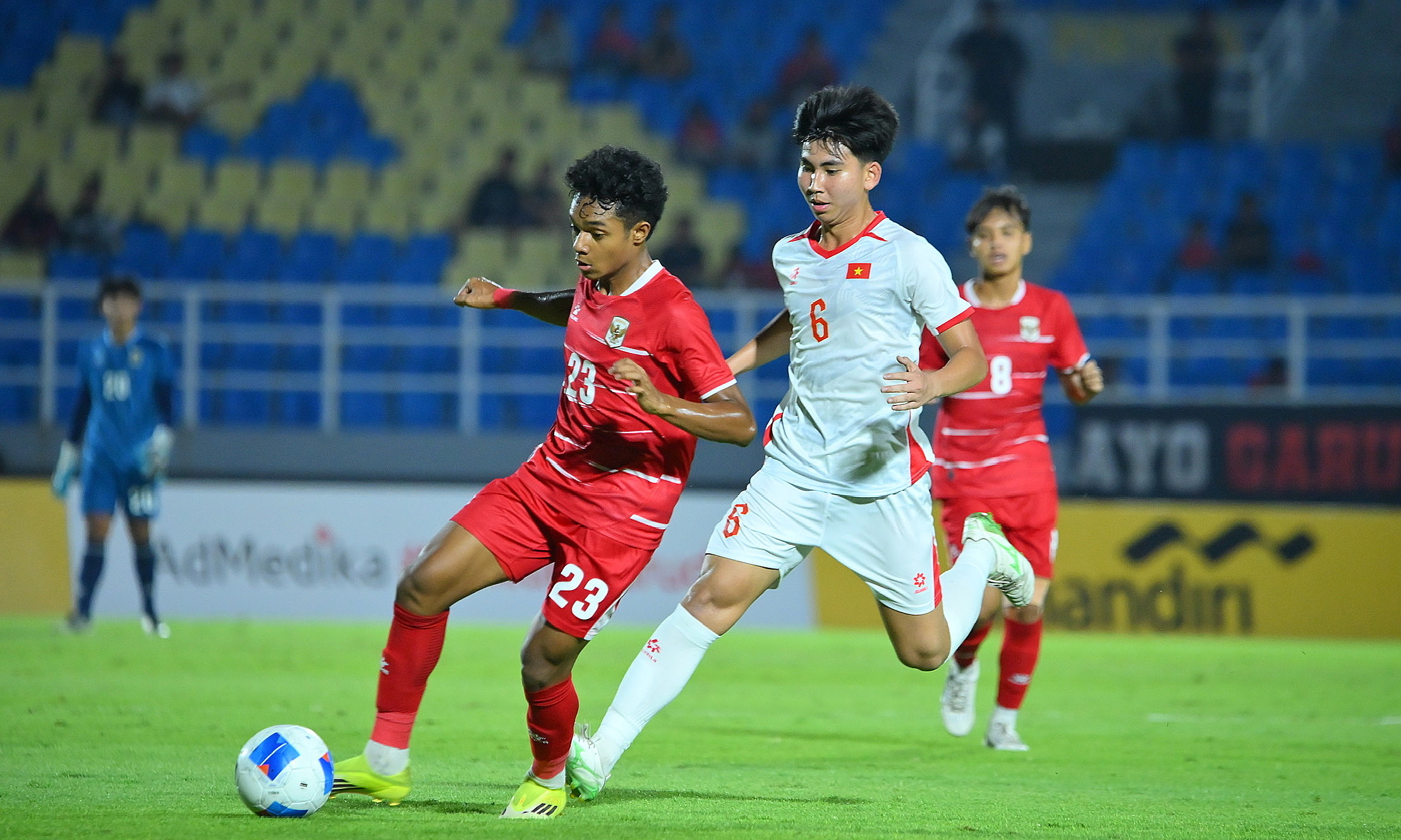
The Vietnam national team (red shirts) lost 0-4 to Malaysia in the second round of Group F of the Asian Cup 2027 qualifiers, at Bukit Jalil Stadium, Malaysia on 10/6/2025. Photo: Malaysia NT |
For the alleged falsification of naturalization documents, FAM was fined 350,000 Swiss francs (over 11 billion dong). The seven players—Joao Figueiredo (Brazil), Rodrigo Holgado, Imanol Machuca, Facundo Garces (Argentina), Jon Irazabal, Gabriel Palmero (Spain), and Hector Hevel (Netherlands)—were banned for 12 months and received an additional fine of 2,000 francs (65 million dong).
In 12/2025, FIFA further ruled that Malaysia forfeited 0-3 in friendly matches against Cape Verde, Singapore, and Palestine, due to using the aforementioned infringing naturalized players. These matches fell under FIFA's jurisdiction.
Should the appeal be rejected, FAM faces more severe penalties, such as suspension of the federation's activities. Additionally, Malaysian national teams and clubs could be barred from international competitions for a specific period.
On average, appellants like FAM have a 13% chance of overturning FIFA decisions at CAS, based on the period from 2020 to 2025. A notable instance of an appellant successfully appealing FIFA was Brazilian forward Gabriel Barbosa, who escaped a 24-month ban after being accused of doping fraud.
Malaysian television channel Astro Arena believes CAS balances evidence and law, delivering independent rulings. Appellants can win if they prove procedural or regulatory errors. CAS may overturn or reduce sanctions when discrepancies exist between factual circumstances and legal provisions.
"This indicates that CAS's ruling could favor Malaysia if the arguments presented are strong enough," a segment on Astro Arena noted. "CAS operates as an independent court, rather than merely endorsing decisions made by sports governing bodies."
Trung Thu (compiled)