In the 17th minute of a Group B match at Levi's Stadium, San Francisco Bay Area, on 13/6, a header from Breel Embolo led to midfielder Remo Freuler receiving the ball inside Qatar's penalty area before colliding with goalkeeper Mahmoud Abunada. Referee Hector Saez Martinez awarded Switzerland a penalty. After a VAR review, the decision stood, and Embolo successfully converted, opening the scoring for the European side.
Television replays suggested Freuler appeared to be in an offside position when he received the ball. However, the assistant referee did not raise the offside flag, and VAR also confirmed that the Swiss player had not committed an offense.
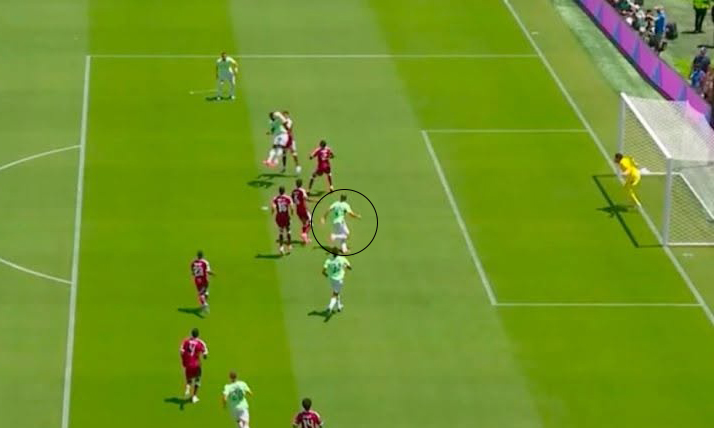 |
Midfielder Remo Freuler in a seemingly offside position before being fouled, leading to a penalty for Switzerland in a Group B World Cup 2026 match at San Francisco Bay Area, California, USA on 13/6. *Screenshot*
FIFA implemented an upgraded version of its semi-automated offside technology for the World Cup 2026. Before the tournament, the global football governing body promoted the new system for its ability to scan all players to create precise 3D images, facilitating quicker and more transparent offside decisions.
Typically, after controversial incidents, FIFA displays simulated graphics or 3D images showing player positions to explain VAR decisions. However, in Freuler's case, spectators only saw "Review Complete" on screen, without any accompanying illustrative images.
Switzerland's controversial opening goal.
This immediately sparked a wave of suspicion. Commenting on ITV, former England defender Gary Neville stated that Freuler was offside and FIFA needed to disclose the evidence to convince viewers. "We all thought it was offside," Neville said. "Viewers at home thought the same. FIFA is the host broadcaster; they have data from the semi-automated technology. So why not show it to everyone?"
The former Manchester United captain suggested that delaying the release of images only fueled suspicion. He argued that when FIFA possesses data but fails to share it with the public, the organization places itself at the center of controversy.
Neville became even more critical when legal expert Christina Unkel confirmed that FIFA indeed possessed the images and offside lines but did not broadcast them. "This is like a dictatorship," the 51-year-old former defender continued. "They keep the evidence internally and don't let fans of participating teams see it. It's absurd."
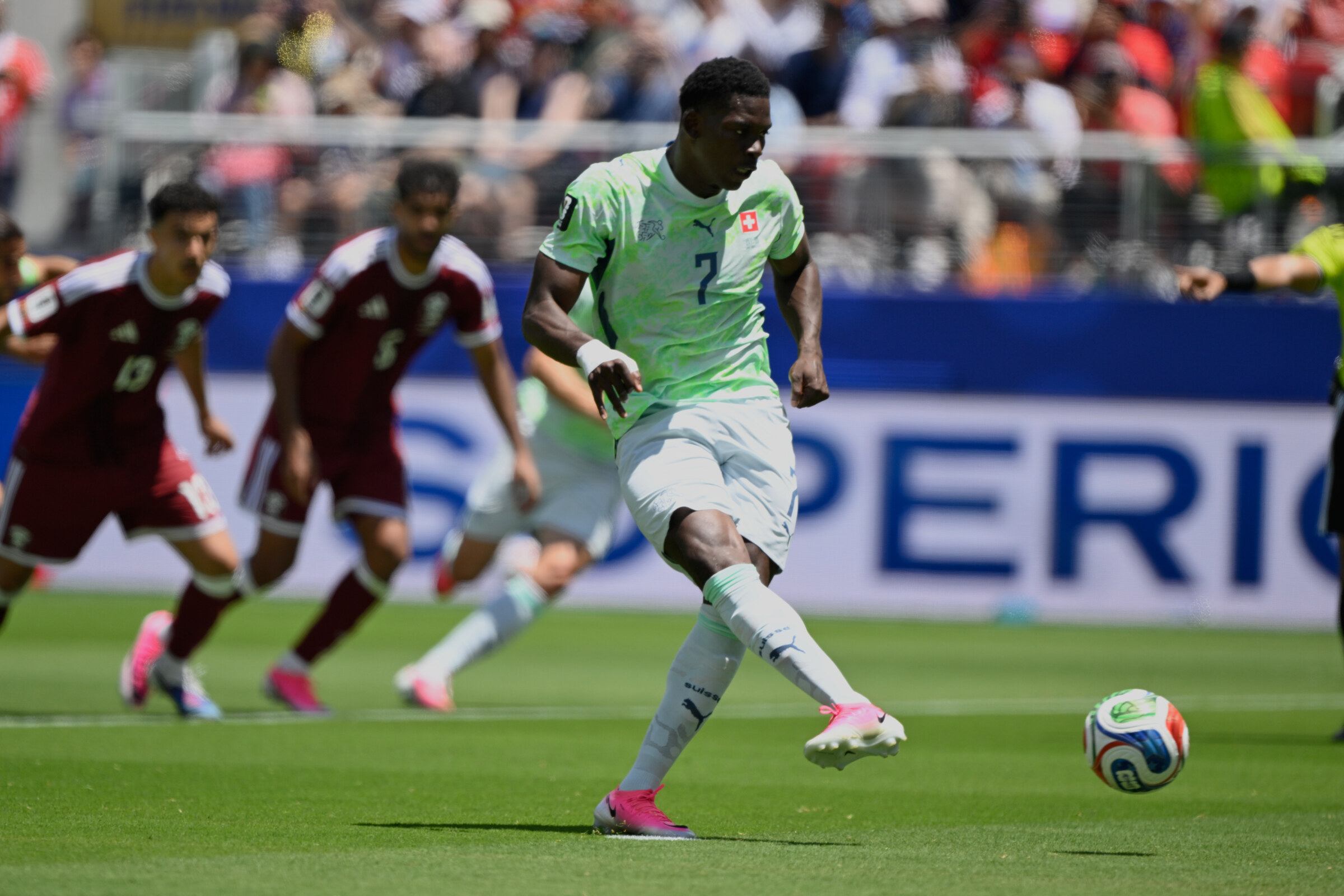 |
Forward Breel Embolo converts a penalty to open the scoring for Switzerland against Qatar in a Group B World Cup 2026 match at Levi's Stadium, Santa Clara, California, USA on 13/6. *AP*
Neville also demanded that FIFA substantiate the decision. "If it's not offside, show us immediately. Why isn't there transparency?" he emphasized.
Several news outlets, including the BBC, have contacted FIFA to request the images but have yet to receive a response.
Neville's viewpoint garnered agreement from many other experts. Former England striker Ian Wright stated he could not comprehend why FIFA failed to release images from the semi-automated offside system. "It looks offside to me. I truly cannot understand it," Wright said.
Commentator Lee Dixon even asserted immediately after the referee awarded the penalty that Freuler was beyond Qatar's defense, and the penalty should not have been given.
Highlights of the Qatar 1-1 Switzerland match.
The pressure intensified as FIFA had repeatedly emphasized its goal of increasing VAR transparency. In 2023, the organization approved trials to release VAR communication content to both stadium audiences and television viewers.
At the World Cup 2026, FIFA also consistently displayed offside graphics in other matches, even for less contentious situations. Therefore, the failure to release images for a play that could directly impact the match outcome left many perplexed.
While the controversy continued, Qatar avoided defeat with an equalizer in the fifth minute of second-half stoppage time. From a right-wing cross by Homam Elamin, captain Boualem Khoukhi powerfully headed past goalkeeper Gregor Kobel, securing a 1-1 draw.
The goal earned Qatar their first point in World Cup history. In the 2022 tournament on home soil, the team lost all three group stage matches, becoming the first host nation to finish this stage without any points.
By Hoang An (based on BBC, Independent)
World Cup 2026