Clubs not participating in the tournament were promised a certain percentage of this total amount, a commitment by FIFA to distribute event revenue equitably throughout the entire football system. According to the British newspaper Guardian, if divided equally, each club in the world's top leagues would receive approximately 67,000 USD. However, more than seven months after the Club World Cup concluded, these funds have not materialized, and FIFA has yet to determine a distribution method.
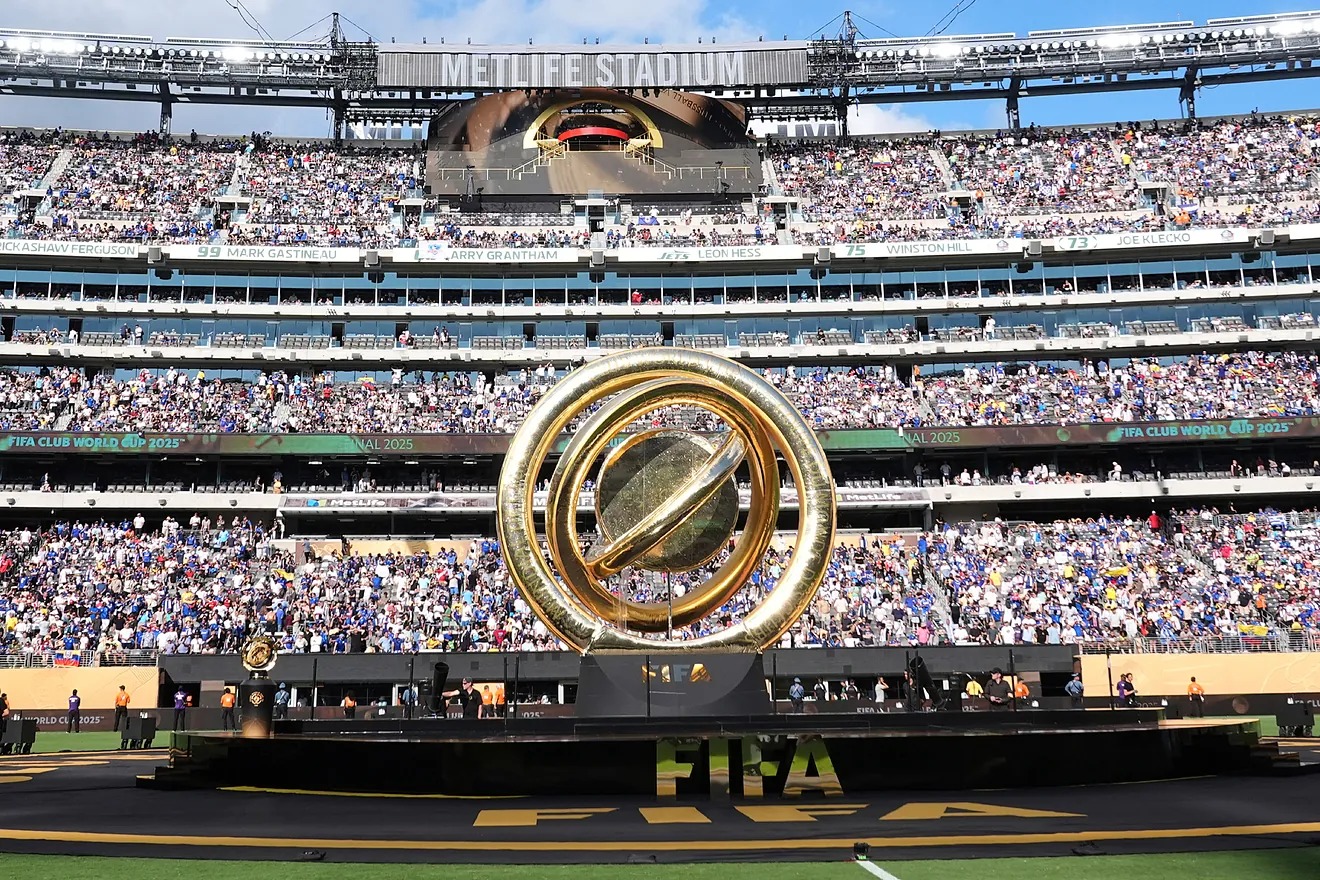 |
The prize money of 995 million USD for participating clubs has been disbursed, with champions Chelsea receiving about 113 million USD. Compared to this figure, the promised support from FIFA may seem like a drop in the ocean, but for clubs in smaller leagues, it could make a significant difference, even serving as a lifeline. Consequently, impatience is growing among these clubs.
An unnamed club executive from a small European league told the Guardian that they have not received any clear answers regarding payment timelines, despite submitting continuous inquiries to FIFA. FIFA, meanwhile, has reportedly postponed meetings on the issue. Nevertheless, some express sympathy for FIFA, citing the complexity and political sensitivity of this task.
The primary obstacle is FIFA's lack of a fair formula to distribute the nearly 250 million USD among the six continental confederations. This challenge stems from significant disparities in the number of representatives each confederation had participating in the Club World Cup, making equal payments to clubs unlikely.
Furthermore, with the exception of the Union of European Football Associations (UEFA), most other continental confederations lack established mechanisms for distributing such payments. UEFA has experience in allocating support funds to clubs that do not reach the group stages of continental competitions, suggesting it may apply a similar formula once the final amount is determined.
The late finalization of FIFA's financial agreements for the Club World Cup also contributed to the slow disbursement process. It was not until 3/2025, just three months before the tournament began in the United States, that prize money and support funds were agreed upon. At that time, a 1.058 billion USD agreement between FIFA and Saudi Arabia-backed streaming platform DAZN, to broadcast all matches for free, allowed the event to proceed.
In another development related to the Club World Cup, UEFA is reportedly ready to support a proposal to expand the tournament to 48 teams in 2029, according to the Guardian. This move is seen as evidence of warming relations between UEFA President Aleksander Ceferin and FIFA President Gianni Infantino.
Previously, UEFA had strongly opposed the Club World Cup's expansion plans, fearing the tournament could threaten the status of the Champions League. However, UEFA has changed its stance and is now willing to back FIFA, in exchange for a commitment that the competition will not be held every two years.
Real Madrid had proposed a biennial cycle for the Club World Cup during discussions with FIFA in Miami, United States, in 6/2025. However, due to strong opposition from UEFA and European national leagues, this idea did not progress.
FIFA had also considered expanding the Club World Cup to ensure the participation of more European giants, after prominent names like Barca, Liverpool, and Man Utd missed the summer 2025 tournament due to not meeting qualification criteria.
Some UEFA members remain concerned that the enormous profits from the Club World Cup could destabilize the structure of European football. However, expanding to 48 teams is still considered less disruptive than making the tournament a biennial event.
Spain and Morocco are currently the leading candidates to host the FIFA Club World Cup 2029, one year before they co-host the World Cup 2030.
Hoang Thong (according to Guardian)