 |
The classic lie about penalty shootouts is to view them as a lottery. Taking a penalty is a skill that can be identified and practiced. It is not just a test of shooting ability or angle selection, but also a battle of analytical data, psychological warfare, and steely resolve under immense pressure.
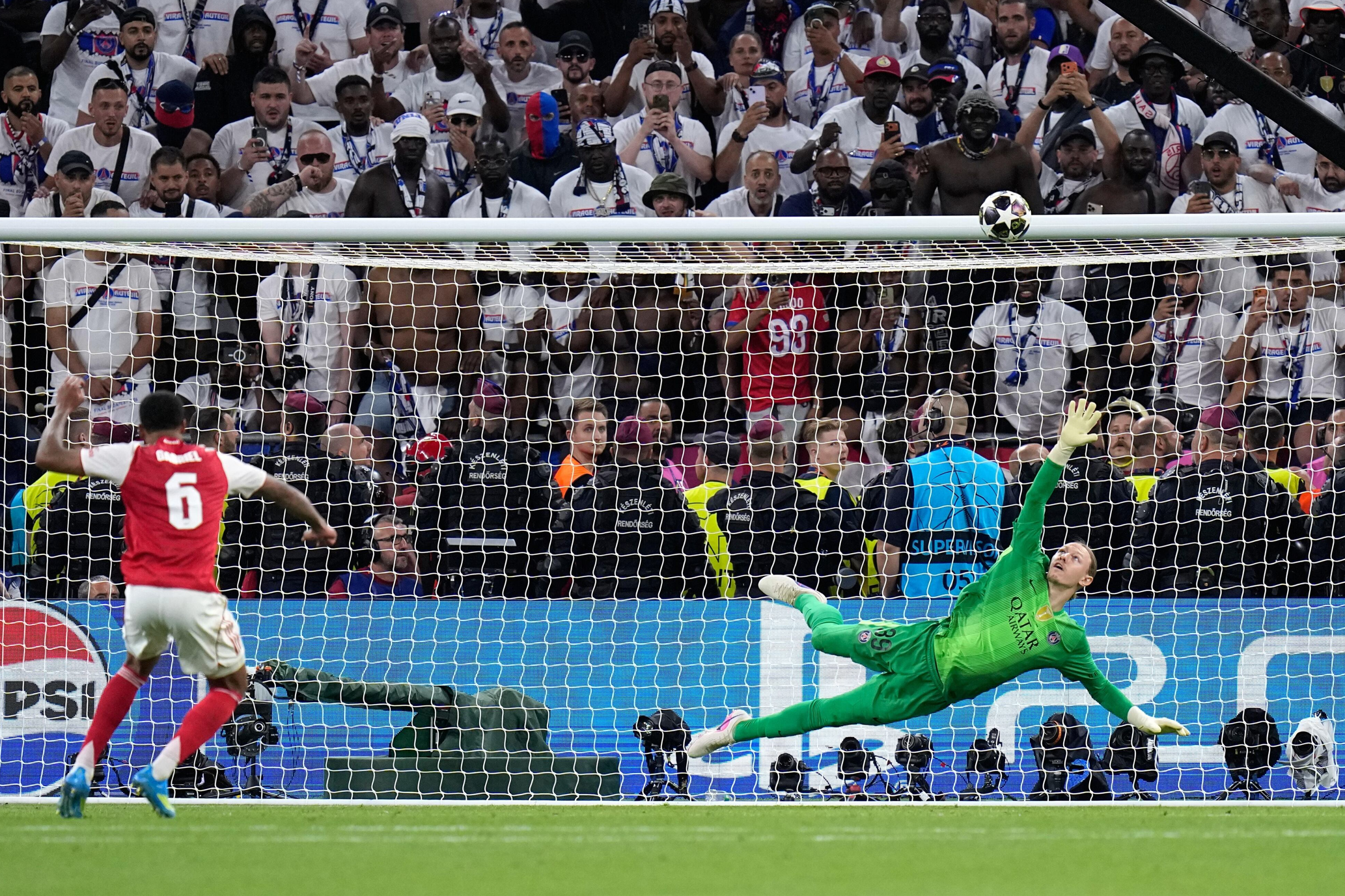
When Eberechi Eze shot wide, or Gabriel Magalhaes sent the ball flying straight towards the danube river in Budapest, Hungary, it was a defeat in the cruelest way. But regardless, it was still an arsenal defeat.
Parallel to this, the second classic lie about penalty shootouts is the prejudice that luck plays no role. Any match decided by ten penalty kicks will inevitably be subjected to the unfair whims of random factors. This could be an uneven pitch, a miskick, or a lucky touch from a goalkeeper's guess – because no matter how well prepared, saving penalties still involves an element of guesswork.
The fact that football, a game already "barren" of goals, with fine margins and countless variables, chooses to decide its most prestigious titles through such minor details, is one of its most brutal beauties.
So, was arsenal truly unlucky in budapest? When setting aside the understandable indignation, the endless "what-if" scenarios, or the trivial arguments about referee decisions, arsenal probably received the result they deserved.
Losing on penalties after making the defending champions sweat and struggle for 120 minutes is certainly a painful outcome. But on the other hand, it is difficult to deny that from tactics, match approach, to ideology, arsenal largely brought this situation upon themselves.
In essence, and when facing the toughest opponents, Mikel Arteta's football philosophy is designed to minimize potential scenarios, then capitalize on the opponent's few remaining vulnerabilities to decide matches. But a strategy calibrated only to seek and protect a one-goal lead, with four center-backs and a deep defensive block, will succeed or fail by that harsh measure. This football of "fine margins" will always be stable, until it is brought down by those very small details.
Did arsenal have another viable approach? Perhaps not. Bayern Munich in the semi-finals exposed the limitations of playing an open, attacking game against PSG, which is PSG's strength. And arsenal does not possess players like Michael Olise, Harry Kane, Luis Diaz, or a philosophy based on relentless, surging, uncompromising attacks. They also lost two excellent right-backs and finished the match with a front three of Gabriel Martinelli, Noni Madueke, and Viktor Gyokeres. This detail at least needs to be considered to fairly assess what could be expected of Arteta in the final.
Arsenal's recent transfer windows have prioritized reinforcing the defense, increasing squad depth, and raising the overall quality of the team, rather than bringing in "X-factor" stars who can decide a big match with a moment of genius.
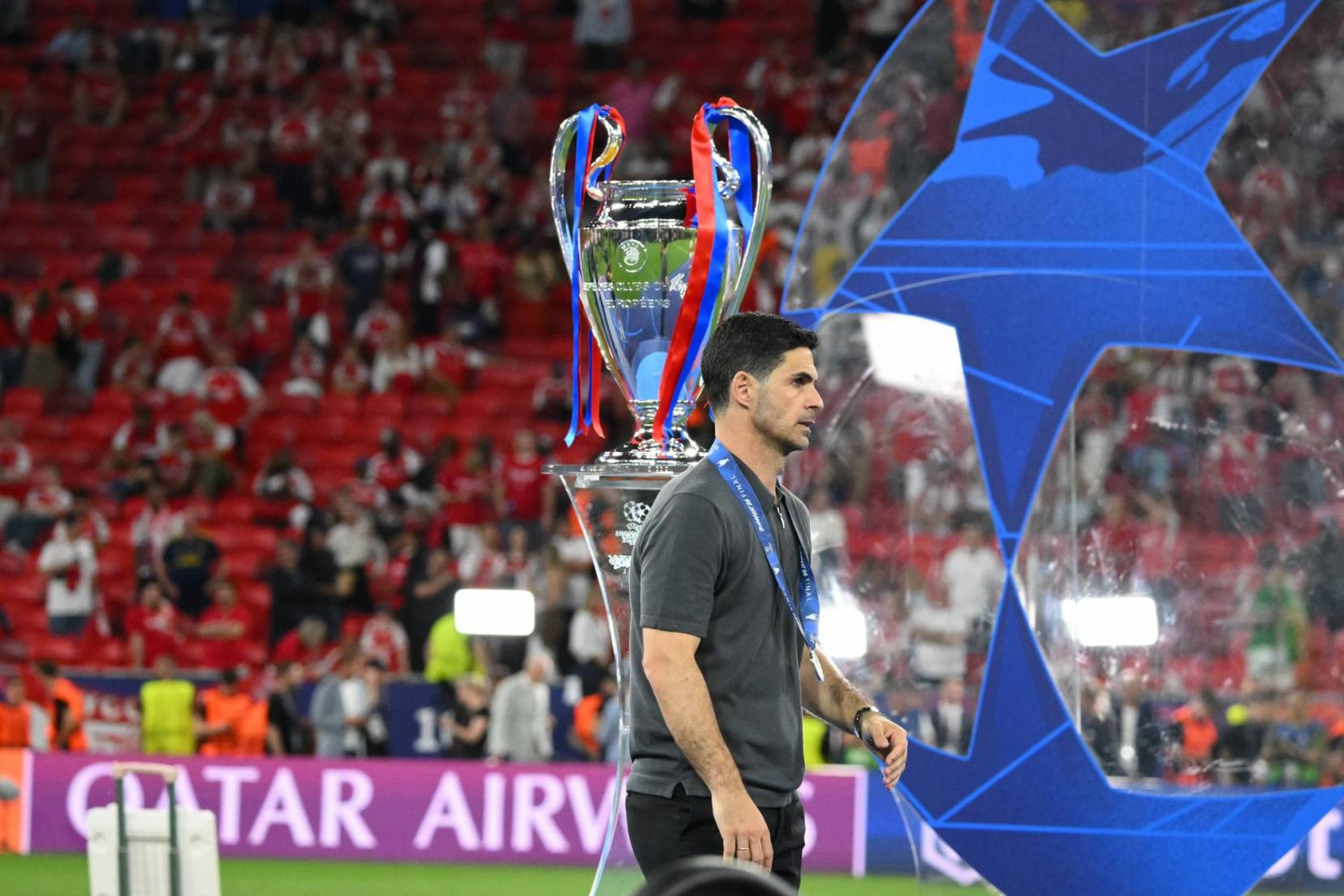 |
Mikel Arteta received the Champions League 2025-2026 runner-up medal after arsenal lost to PSG in the final on penalties (a 1-1 draw in 90 minutes and extra time) on 30/5 in Puskas Arena, Budapest, Hungary. Photo: L'Equipe
That also seemed to be the implicit message in Arteta's post-match reflections when he spoke about "needing to improve" and "finding different margins." The Spanish coach praised the stars Luis Enrique had at his disposal, speaking about how PSG choked space at will and forced opponents to play in areas they disliked most on the pitch.
There is an assumption that after finally ending their Premier League drought, with a squad entering their prime, and having pushed what is considered the strongest team in the world to its limits, arsenal will surely make the final leap soon. That this is just the beginning of Arteta's golden era. All these things could come true. But what if they do not? What if this is the highest peak arsenal can reach?
Because there is a paradox. On the one hand, some argue that arsenal, thanks to good coaching, a strong culture, and standard processes, has squeezed every last drop of performance from its available resources, allowing them to compete equally with continental super-giants and state-backed machines. But on the other hand, some say this is a team with abundant potential for improvement in the coming years.
Can both these things be true at once? If Arteta has extracted every last drop of potential from this squad, how likely are they to find higher levels? What if this club is already operating at 105% of its capacity?
The desire for innovation and further growth is immense. New signings will certainly help close the gap, but the cautionary tale from Liverpool last summer is a reminder that this process is rarely smooth or risk-free. World-class players demand an upgraded wage structure, new tactical approaches, and a slightly different dressing room atmosphere. A well-run club like arsenal can be confident they will have more successful signings than failures. But the bigger the gamble, the higher the risk.
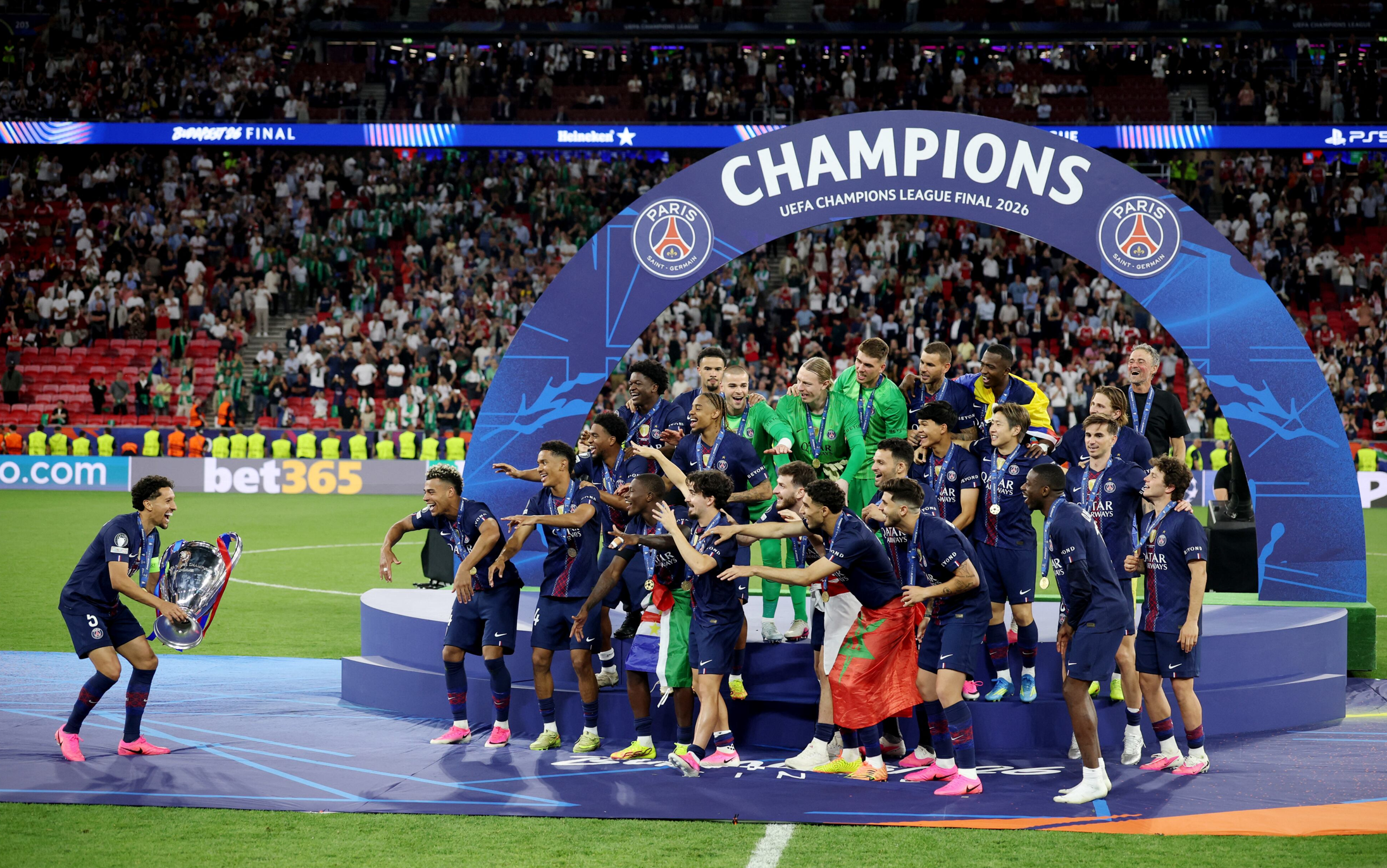 |
PSG players lifted the Champions League 2025-2026 trophy after defeating arsenal in the final on penalties (a 1-1 draw in 90 minutes and extra time) on 30/5 in Puskas Arena, Budapest, Hungary. Photo: Reuters
Meanwhile, clubs that can rely on a nation's generous coffers have a much larger margin for error. An expensive move like the Neymar, Kylian Mbappe, or Lionel Messi transfers, yet still failing to bring home the Champions League, could derail most clubs for a decade. PSG, conversely, simply shrugs and starts over. Man City can spend nearly 80 million USD on Omar Marmoush, 67 million USD on Nico Gonzalez, 62 million USD on Tijjani Reijnders, 36 million USD on James Trafford without the clear pressure that any of them must play regularly and shine.
Looking beyond these two clubs, many sleeping giants of europe still have room for improvement. Bayern and Barca are very close. Man Utd, Chelsea, Liverpool, and Real Madrid all have the potential to awaken from their slumber quickly. Later generations might feel arsenal was fortunate to reach the Champions League final via a draw that included Bayer Leverkusen, Sporting Lisbon, and Atletico Madrid. Will circumstances truly be more favorable for them next time?
Arsenal has every reason to consider themselves one of the best teams in europe this season. And while coming so close to ultimate glory may offer some solace to fans and management, they also need to recognize that the window of opportunity at this elite level is extremely small, dependent on both luck and talent, and there is no guarantee it will reappear.
Hoang Thong (according to Guardian)