In a joint statement released on 3/4 through the International Federation of Professional Footballers (FIFPro), the two teams criticized the recently concluded Women's Asian Cup for having "the lowest prize money among continental tournaments", despite its professional and commercial success. Japan defeated host Australia 1-0 in the final in Sydney on 21/3, a match that drew over 74,000 spectators, a tournament record.
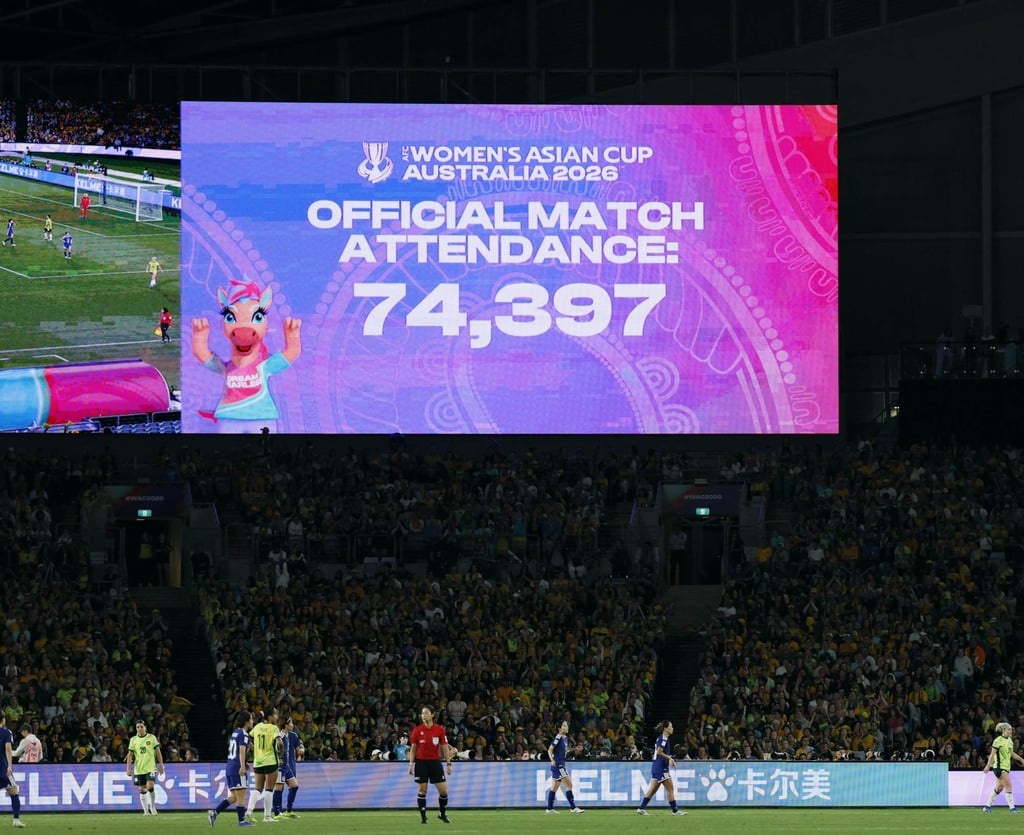 |
74,397 spectators attended the women's asian cup 2026 final between Japan and Australia at Australia Stadium, Sydney on the evening of 21/3. *Photo: Kyodo*
The total prize money for the Women's Asian Cup 2026 was 1,8 million USD, unchanged from 2022. This amount pales in comparison to the 14,8 million USD offered for the men's tournament. This significant financial disparity has become a focal point of criticism, as players argue that the women's tournament's scale and appeal have changed considerably. "Despite the tournament's success, the prize money remains the lowest, and inequality between men's and women's football persists", the two teams stated.
The teams revealed they had submitted proposals to the AFC prior to the tournament, advocating for collaboration towards equal prize money. They aimed to ensure a share of revenue for players and to jointly build a lasting legacy for women's football. However, these proposals were ignored.
A FIFPro report published in February indicated that the Women's Asian Cup 2026 could generate revenue of up to 82,4 million USD. During its three weeks of competition, the tournament attracted approximately 350,000 spectators in total. These figures serve as a basis for players to demand changes in financial allocation, rather than maintaining the previously low prize money.
Japan and Australia believe that increasing prize money holds long-term significance for the entire women's football ecosystem in Asia. "Equal prize money will help raise standards at all levels across the region", the statement read. "We want financial equality, as well as respect and playing conditions".
The Women's Asian Cup 2026 concluded with several non-sporting issues. The Iranian team garnered attention when seven players sought asylum after being criticized at home for not singing the national anthem; two of them remained in Australia. The Indian team faced difficulties with unsuitable playing kits. Meanwhile, the South Korean team had threatened to boycott the tournament, citing poorer treatment compared to the men's team.
Japan and Australia also urged FIFA to fulfill its commitment to equal prize money at the Women's World Cup 2027. They view this as a crucial step to close the gender gap in football, while simultaneously pressuring continental federations like the AFC to implement changes.
The AFC, headquartered in Kuala Lumpur, has not yet issued an official response to the criticisms from the two teams.
By Hoang An (Source: SCMP)