 |
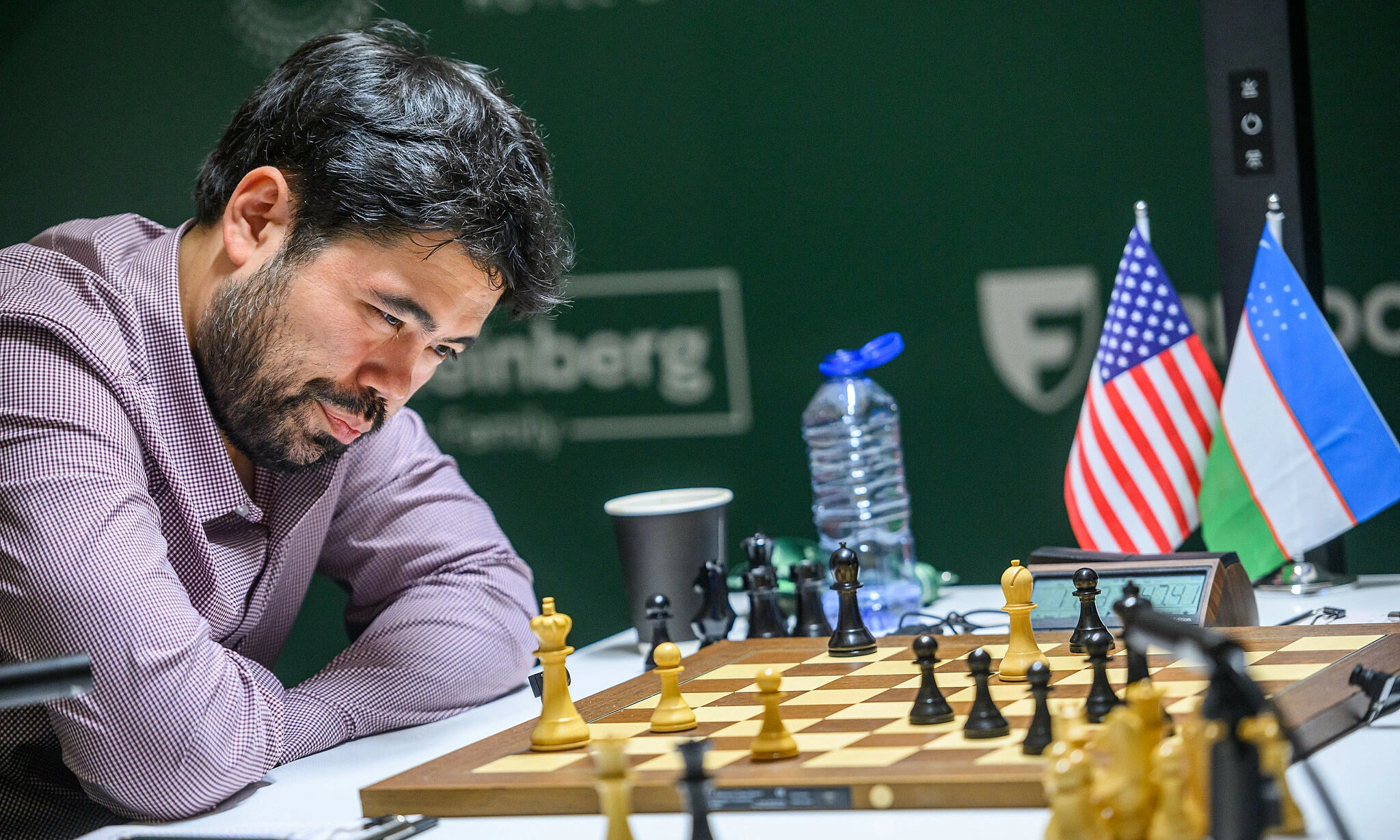
Hikaru Nakamura pondered during his game against Javokhir Sindarov in round 5 of the Candidates in Cyprus on 3/4. Photo: FIDE
The highly anticipated game between Nakamura and Sindarov unfolded dramatically, with a turning point emerging on the 13th move. Unexpectedly choosing the Marshall Gambit and sacrificing two pawns early, the US player steered the game into a complex position as he intended. However, when Sindarov responded with 12...0-0, accepting the risk of a kingside attack, the 38-year-old found himself in a difficult position despite playing with the white pieces.
In this critical position, Nakamura spent 67 minutes 44 seconds, more than half of his allotted time for a single move. He considered two options, with 13.Ne4! being the correct choice, but ultimately played 13.h4?. This move gave black a clear strategic advantage, as white could not compensate for the two lost pawns.
"He thought for over an hour on one move, but then he played the wrong move", Sindarov said after the game. "After that, I capitalized on the advantage and played very well".
While Nakamura was deep in thought for his 13th move, Sindarov retreated to the waiting room, yawning multiple times and leaning back in his chair. The waiting room, separated from the playing area, features a screen for players to monitor their opponent's moves. After Nakamura's 13th move, Sindarov took only two minutes to respond with the best move.
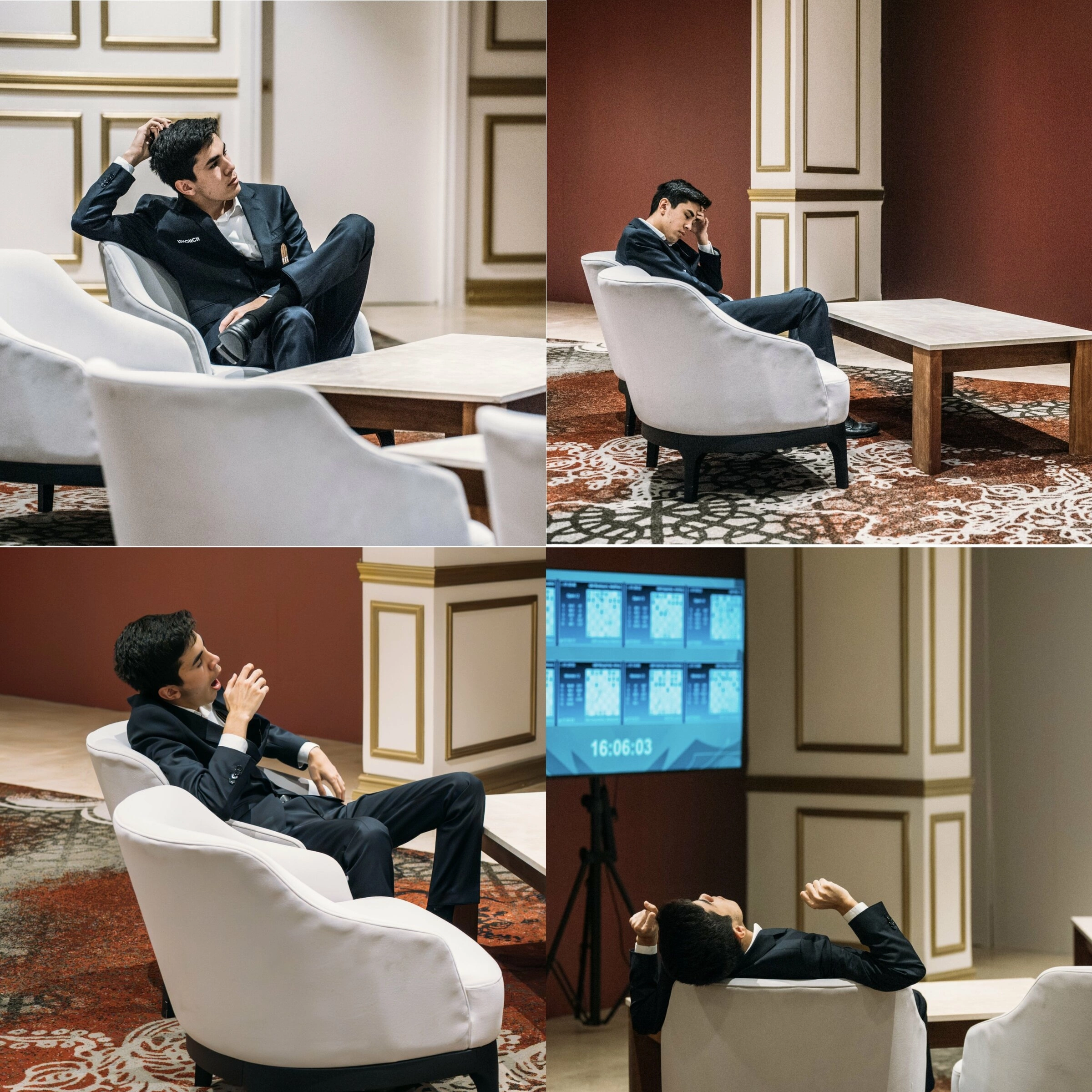 |
Sindarov in the waiting room while Nakamura spent 67 minutes on his 13th move. Photo: FIDE
Following Nakamura's mistake, the game became largely one-sided. Sindarov played methodically, consolidating his advantage and minimizing any counterplay from his opponent. The 20-year-old then exchanged most of the pieces, entering an endgame with an advantage of three pawns, despite opposite-colored bishops. This significant lead allowed the Uzbekistan player to win in 41 moves.
After the match, Nakamura candidly attributed his defeat to inadequate preparation. He revealed that Sindarov's 12...0-0 variation was not in his team's preparation materials, leaving him completely surprised. "This is entirely the fault of the preparation team", the US player stated. "It is very difficult to find the correct Ne4 move at the board without prior knowledge of the idea".
The Candidates tournament is of paramount importance in the chess world, so participating players typically have high-level support teams. These teams research and anticipate opening variations opponents might use or prepare to surprise them.
Nevertheless, in his subsequent analysis, Nakamura acknowledged his own responsibility for not finding the correct solution during the game. This loss placed him significantly behind in the race, trailing Sindarov by three points after five rounds.
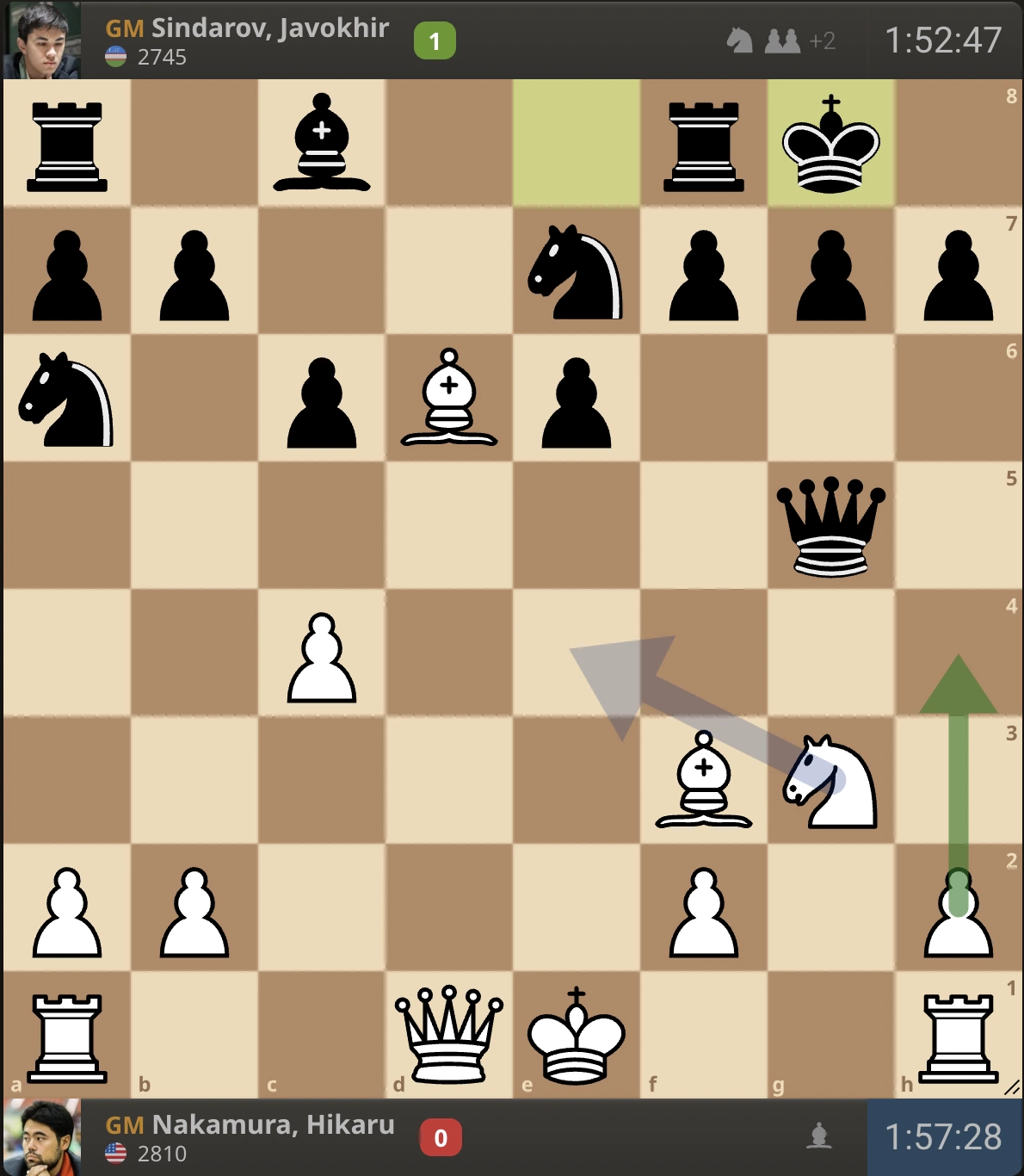 |
The chess position that caused Nakamura to think for over 67 minutes before playing h4. The best move was Ne4.
Conversely, this victory propelled Sindarov to +4 (four wins, one draw), a near-perfect performance in the early stages of the Candidates. The Uzbekistan player also rose to world number five in the live Elo ratings, becoming a strong contender to challenge World Champion Gukesh Dommaraju.
Meanwhile, Caruana demonstrated his determination to remain in the race. After his defeat to Sindarov in round 4, the US player quickly bounced back with a win against Matthias Bluebaum. Playing with the white pieces, Caruana actively prepared a response against the Petroff Defense.
Caruana's idea of 9.f4! proved highly effective as Bluebaum appeared disoriented from the outset. The German player admitted after the match that he was unfamiliar with this variation and felt all his moves were subpar. A series of errors quickly led to the position spiraling out of his control, allowing Caruana to launch an attack.
Unlike many top-level games that often conclude with a resignation, this game ended in a checkmate on the board, a rare sight at the Candidates. Caruana sealed his victory with a decisive checkmating move, completing a convincing performance and raising his total score to 3,5 points, remaining one point behind Sindarov.
In the two remaining matches, Anish Giri drew with Wei Yi in a game without significant breakthroughs. Similarly, Praggnanandhaa Rameshbabu and Andrey Esipenko also split the point after repeating moves, despite many pieces still on the board.
After five rounds, Sindarov leads with 4,5 points, establishing a significant gap over the rest of the field. Caruana holds second place with 3,5 points, while the trailing group, including Giri and Praggnanandhaa, has 2,5 points. Given his current form, Sindarov may only need to maintain solid play to preserve his advantage in the remaining rounds.
In the women's Candidates 2026, the race intensified with three players sharing the lead. Kateryna Lagno defeated Bibisara Assaubayeva to rejoin the race, while Zhu Jiner won her second consecutive game against Vaishali Rameshbabu.
Lagno exploited an opening error by Assaubayeva to gain an advantage, which she then converted into a victory. The Kazakhstan player admitted she calculated many variations but ultimately made a mistake. Meanwhile, Zhu displayed solid and precise play, steadily improving her position to secure a full point in a strategically well-played game.
Anna Muzychuk could not pull ahead, drawing quickly with Aleksandra Goryachkina, allowing Lagno and Zhu to catch up. In the other game, Tan Zhongyi split the point with Divya Deshmukh.
After five rounds, Muzychuk, Lagno, and Zhu jointly lead the women's standings with three points. Goryachkina and Assaubayeva closely follow with 2,5 points.
The Candidates is the most important tournament in the elite chess cycle, where 8 players compete in a double round-robin format to determine the challenger for reigning World Champions Gukesh Dommaraju and Ju Wenjun. Round 6 will take place from 19:45 today, 4/4, Hanoi time.
Xuan Binh compiled