The 1-1 draw against Fulham at Craven Cottage last weekend helped Man Utd avoid another defeat, but it was not enough to dispel the gloomy atmosphere surrounding the team. Michael Carrick remains calm, believing this is just a temporary slump. However, fan confidence is eroding.
Man Utd has won only one of their first five Premier League matches this season, averaging one point per game, a rate typically associated with relegation-threatened teams. This figure is significantly lower than the 2,2 points per game the team achieved under Carrick last season.
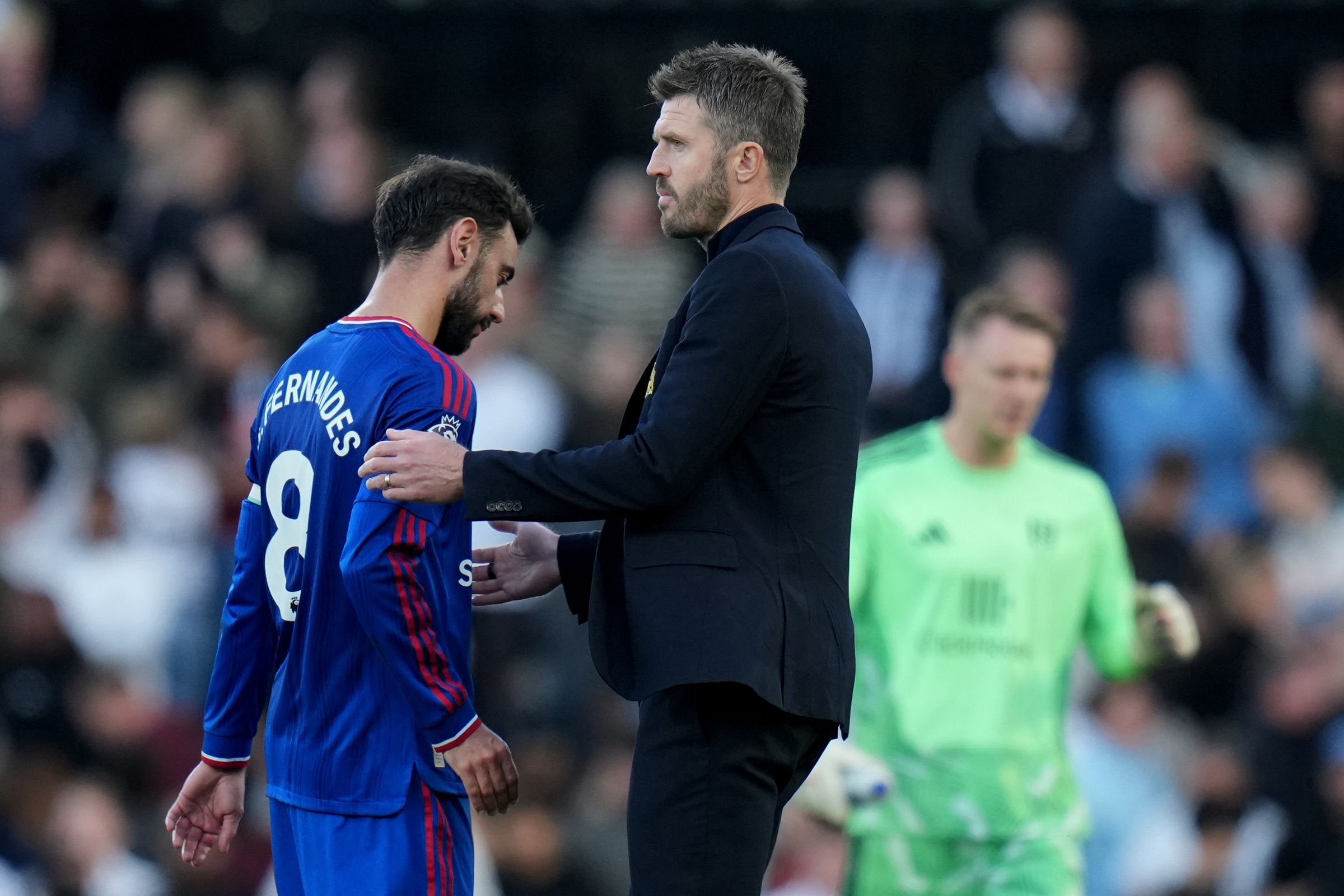 |
Head coach Michael Carrick (right) speaks with Bruno Fernandes of Man Utd after the match against Fulham in the Premier League at Craven Cottage, London, England, 20/9. Photo: AP
Matheus Cunha's equalizer at Fulham provided temporary relief. Man Utd began the season with hopes of a sustained revival, but the start has not met those expectations.
Carrick still believes the team can recover. Players also think that once things click, Man Utd will perform better. Yet, the mood among fans is low and uninspired. The problem is larger than recent results.
A clear manifestation of this is the change in the fanbase itself. One supporter, who used to attend Man Utd's home, away, and European matches, even owning a large flag that once draped the Stretford End stands, stopped following the team in 2007. This person then switched to watching Millwall and can now buy tickets for just 13 USD.
This story illustrates the long-standing disconnect between Man Utd and a segment of its supporters.
The Glazers have been involved with Man Utd since 2004. The American family acquired the club through a leveraged buyout, which fans strongly protested at the time. Yet, arguments surrounding ownership have not disappeared after two decades.
David Gill, former chief executive of Man Utd, once stated that fans would judge owners based on investment in the team, the squad's quality and appeal, and the ability to compete for titles. These criteria remain valid, but Man Utd's status has changed significantly.
Previously, Man Utd led the Premier League in many metrics, owned an continuously expanded Old Trafford stadium, and frequently recruited top players. The team continued to win titles after the Glazers' takeover, but success began to decline after head coach Alex Ferguson's departure in 2013.
During this period, rivals improved. Clubs backed by substantial resources, wealthy owners, or more effective operational models closed the gap with Man Utd.
The size of Old Trafford once symbolized the club's status. In 2006, the stadium had a capacity of 76,500 people, at least 24,000 more seats than any other Premier League ground. Currently, five other clubs have stadiums with capacities over 60,000 people.
Old Trafford still holds significant appeal. The match against Brighton in the third round of the League Cup on 16/9 attracted 73,670 spectators, while Man City's match against Norwich in the same round one day later drew only 32,451 people.
However, large attendance does not equate to on-field success. Man Utd has spent significant money to return to the top, but these investments have not always been effective. Alexis Sanchez, Angel Di Maria, Bastian Schweinsteiger, and Radamel Falcao were all big names, but they did not make a corresponding impact at Old Trafford.
This is also part of Man Utd's prolonged recruitment problem. The team can spend a lot of money but does not always use resources effectively.
Meanwhile, the competitive environment in the Premier League has changed. Bournemouth, Brighton, and Brentford, clubs that had very small fanbases when Man Utd won the treble in 1999, are now capable of defeating big teams.
The league's competitiveness has also clearly increased. According to Opta's power rankings last season, Borussia Dortmund ranked 15th, behind both Brighton and Brentford. Only Inter represented Serie A above the Premier League average, along with Barca, Real Madrid, and PSG.
This makes Man Utd's task harder. Teams once considered small now possess enough quality to challenge the giants. However, expectations for Man Utd remain almost unchanged. They are still expected to beat Bournemouth, Brentford, or Brighton, even if the gap between teams is no longer as wide as before.
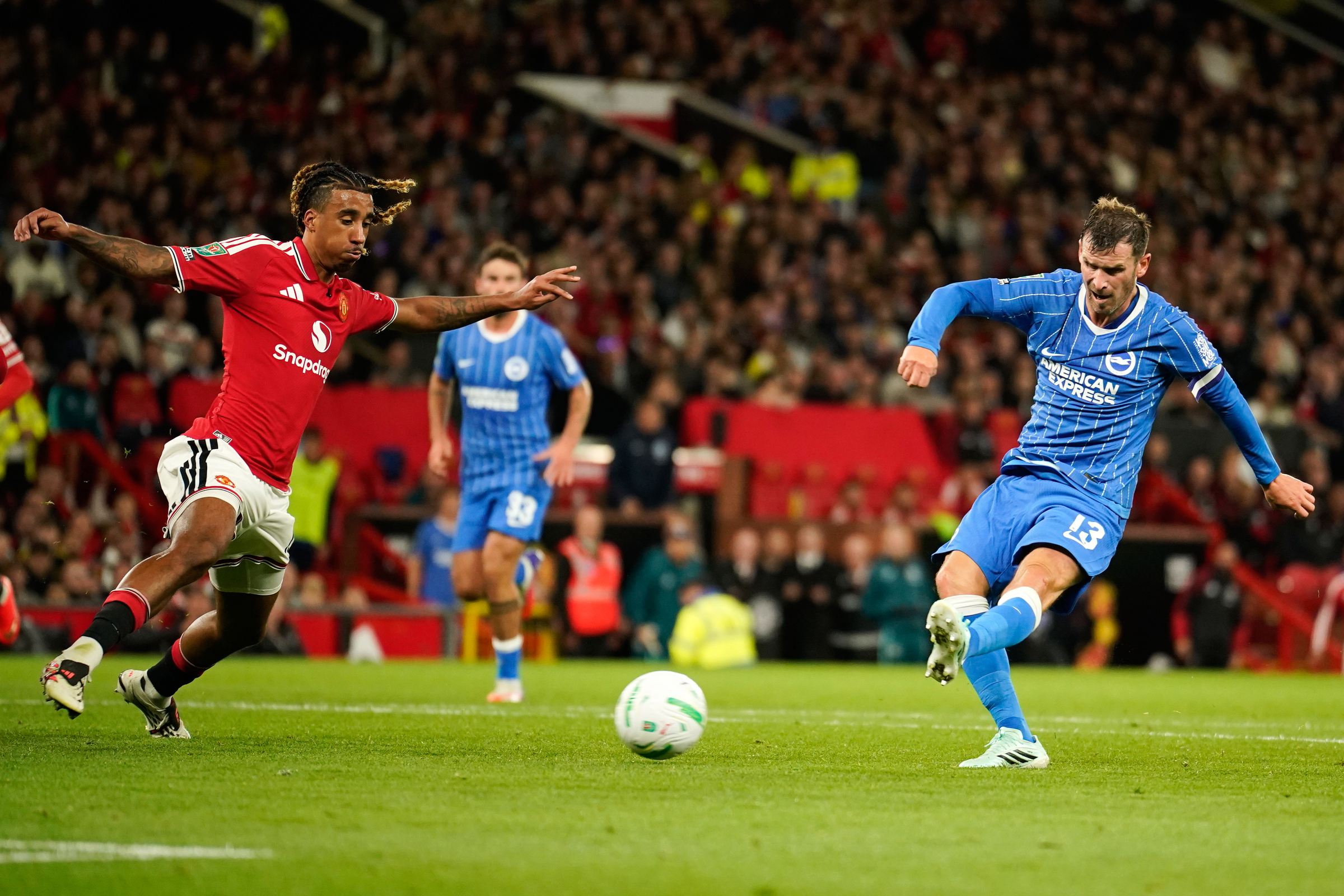 |
Pascal Gross scores Brighton's second goal against Man Utd in the third round of the League Cup at Old Trafford, Manchester, England, 16/9. Photo: AP
Smaller clubs are also taking more points from the top teams. Last season's Premier League champions Arsenal had only 85 points, while Man City finished second with 78 points. Liverpool once reached 92 points to finish second five seasons ago. Man Utd finished third last season with 71 points, and Liverpool earned 82 points when they finished third two years ago.
These figures reflect an increasingly competitive league, and show that Man Utd cannot rely solely on its name and past expectations.
The INEOS group has been making key decisions at Man Utd since 2024 and is committed to changing the club's operations. Some insiders still believe this process requires time. But errors have emerged, and the period of goodwill from fans towards the new setup seems to be over.
Meanwhile, the Glazers family retains partial ownership of the club and shows no signs of leaving. The debt burden arising from the 2005 takeover continues to be part of Man Utd's financial issues.
In the short term, Carrick still has a squad rated capable of finishing third last season, even without Casemiro. But Man Utd needs results to restore confidence. Investments in training facilities and youth academies may yield long-term results, but they are not an immediate solution for current frustrations.
Results remain the decisive factor for morale at Man Utd. Victories can improve confidence, reduce anger, and buy more time for Carrick and his team. Key players must also prove their worth through on-field performances.
Man Utd has faced tougher periods and still recovered. Sir Matt Busby saw about one-third of his 24 years leading the team end outside the top 6. Ferguson also faced pressure to be sacked in 1990 before building a successful era.
But modern football generates different pressures. Head coaches face significantly more information, emotions, and expectations.
Man Utd has only played five Premier League matches this season, so there is still time to change the situation. But the biggest problem is the team must regain fan confidence, while questions about ownership, recruitment, culture, and operations remain unanswered.
Hoang An compiles