Following the match, Egyptian players, coaching staff, and media criticized the officiating, with some even alleging the game was "rigged" to protect the defending champions and Lionel Messi. Their accusations center on six specific incidents.
**Penalty Awarded to Argentina**
The first controversy arose in the 19th minute. From an Enzo Fernandez through ball, Nicolas Tagliafico entered the penalty area and fell after a challenge from Haissem Hassan. Referee Letexier immediately pointed to the penalty spot. Messi took the penalty kick but could not beat goalkeeper Mostafa Shobeir.
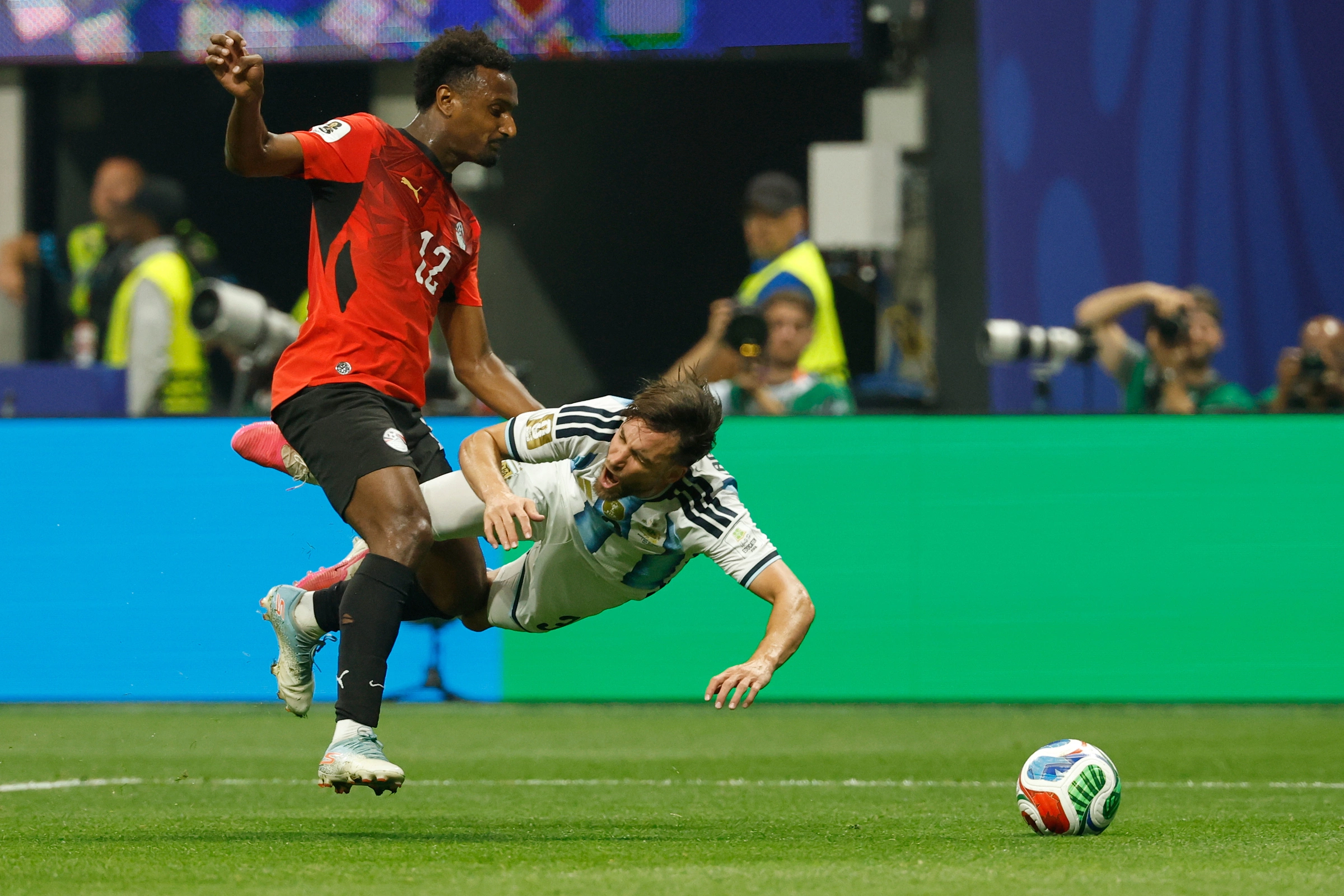 |
Haissem Hassan (12) fouls Nicolas Tagliafico (3) during Argentina's 3-2 victory over Egypt in the World Cup round of 16 at Atlanta Stadium on 7/7/2026. Photo: AP |
Despite Argentina failing to convert the opportunity, the penalty decision drew strong reactions from the Egyptian side. The contact was deemed insufficient for a penalty, marking the first indication that crucial decisions were favoring Argentina, according to Brazilian newspaper Correio do Povo.
However, former FIFA referee Miguel Scime, writing for Argentine newspaper Infobae, stated that Hassan's challenge was late; he did not touch the ball first and collided with Tagliafico. Therefore, the decision to award Argentina a penalty was consistent with the rules.
**VAR Disallows Egypt's Goal to Make it 2-0**
This was the most controversial moment of the match. Early in the second half, Hassan dribbled past several Argentine players, nutmegged Tagliafico, and combined with Mohamed Salah before Mostafa Ziko scored, seemingly putting Egypt up 2-0. The referee initially allowed the goal.
However, French VAR official Jerome Brisard advised Letexier to review the incident. After consulting the monitor, the French referee determined that Marwan Attia had fouled Lisandro Martinez at the start of the counter-attack, before the entire scoring sequence unfolded. The goal was subsequently disallowed.
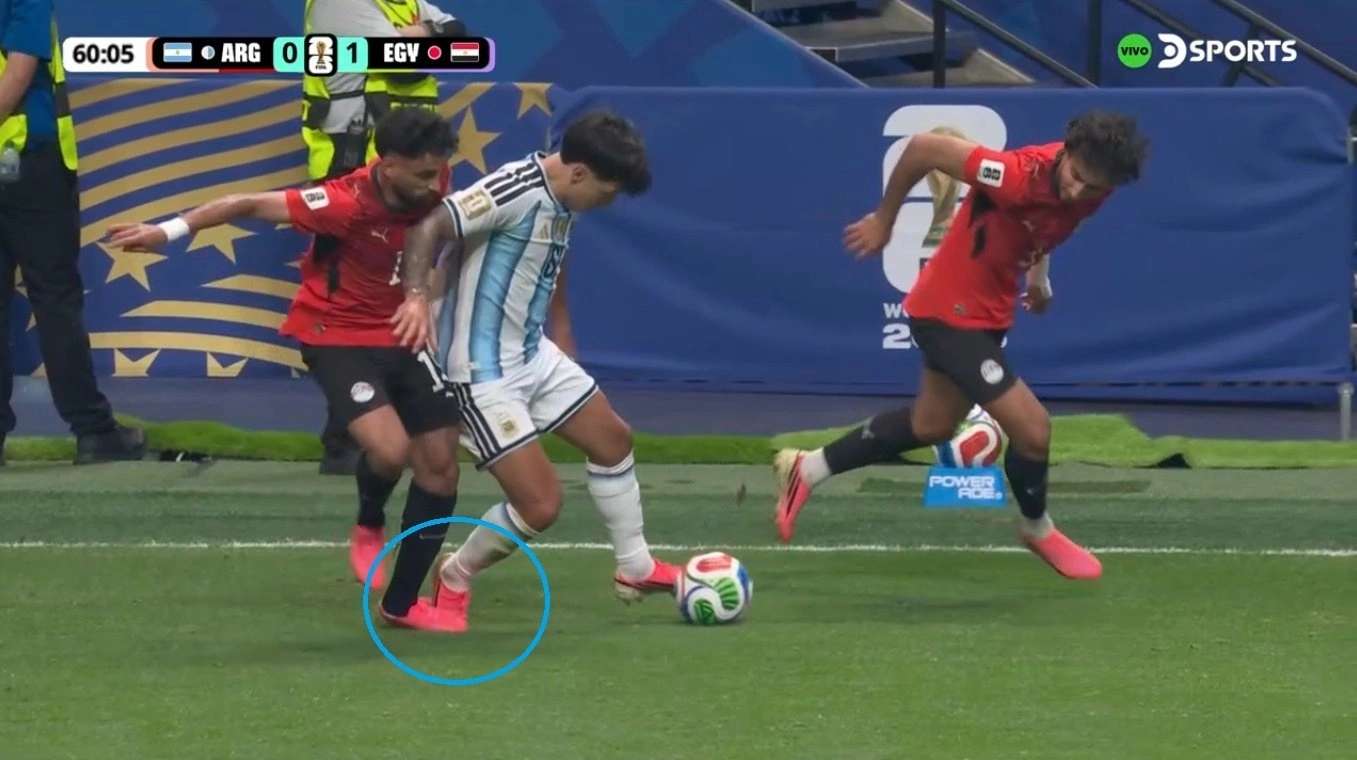 |
The incident where Attia stepped on Lisandro Martinez's foot before Egypt scored. Photo: screenshot |
According to Radio Marca, former referee Eduardo Iturralde Gonzalez commented that Attia stepped on Lisandro's foot, giving VAR a basis to call the referee for a review. Although the foul was subtle and only clearly visible from a slow-motion replay, VAR has the authority to intervene if it identifies a foul directly leading to a goal.
The Egyptian side argued that Attia's contact was minimal, a normal challenge, and not significant enough to nullify the entire play. Coach Hossam Hassan and many players believed this decision altered the game's dynamics. This foul also occurred at the opposite end of the field. In contrast, during a group stage match against Austria, Messi's record-breaking goal was controversial because Alexis MacAllister may have fouled Xaver Schlager at midfield.
**Molina Avoids Red Card for Off-the-Ball Incident**
Another incident that angered Egypt was the clash between Nahuel Molina and Emam Ashour in the sixth minute. While the ball was not nearby, the Argentine defender pushed his hand into the face of the Egyptian midfielder.
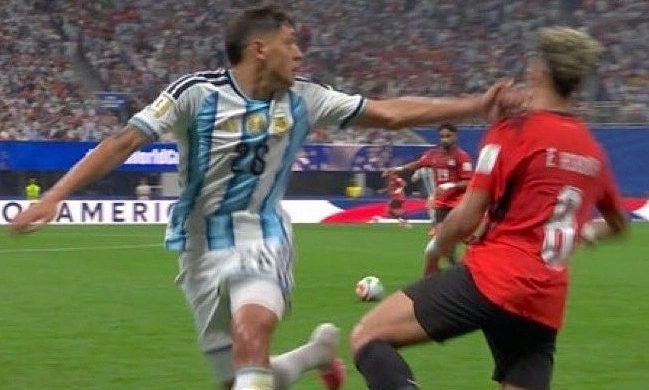 |
Molina pushes his hand into Ashour's face. Photo: screenshot |
According to Cairo24 newspaper, this action was serious enough to warrant a direct red card. However, Letexier did not blow his whistle, and VAR did not request a review.
**Two Egyptian Penalty Claims Ignored Before Argentina's Decisive Goal**
Controversy flared again in second-half stoppage time. With the score at 2-2, Egypt believed they deserved at least one, if not two, penalties. First, Mohamed Salah fell in the penalty area after a challenge from Julian Alvarez while trying to retain possession.
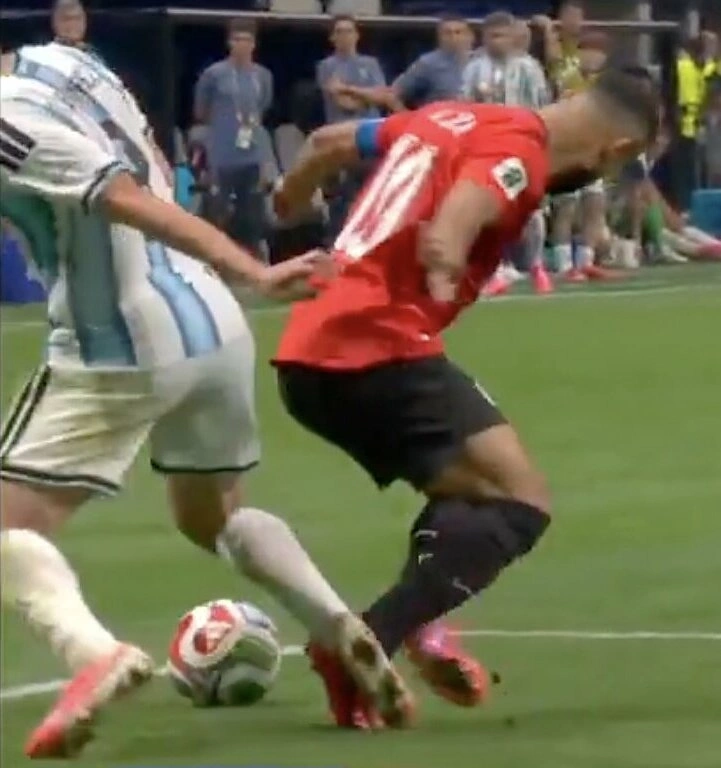 |
Salah falls after Alvarez's challenge. Photo: screenshot |
Immediately before that, MacAllister was also accused of pulling Hamdi Fathy's shirt, causing the Egyptian midfielder to fall in the penalty area. Letexier did not blow his whistle for either incident, and VAR did not request a review. Just seconds later, Argentina launched a quick counter-attack. Lautaro Martinez crossed the ball for Enzo Fernandez to head in the winning goal, making it 3-2.
This incident provoked the strongest reaction from the Egyptian side after the match, according to Brazilian newspaper Globo Esporte. Coach Hossam Hassan argued that if VAR had reviewed these incidents as it did with Ziko's disallowed goal, Argentina would not have been able to score the decisive goal.
**Referee Ignores Anti-Racism Protocol Activation**
After conceding the third goal, Coach Hossam Hassan vehemently protested to the referee and received a yellow card. Immediately afterward, he crossed both hands across his chest, the official signal to activate FIFA's anti-racism protocol.
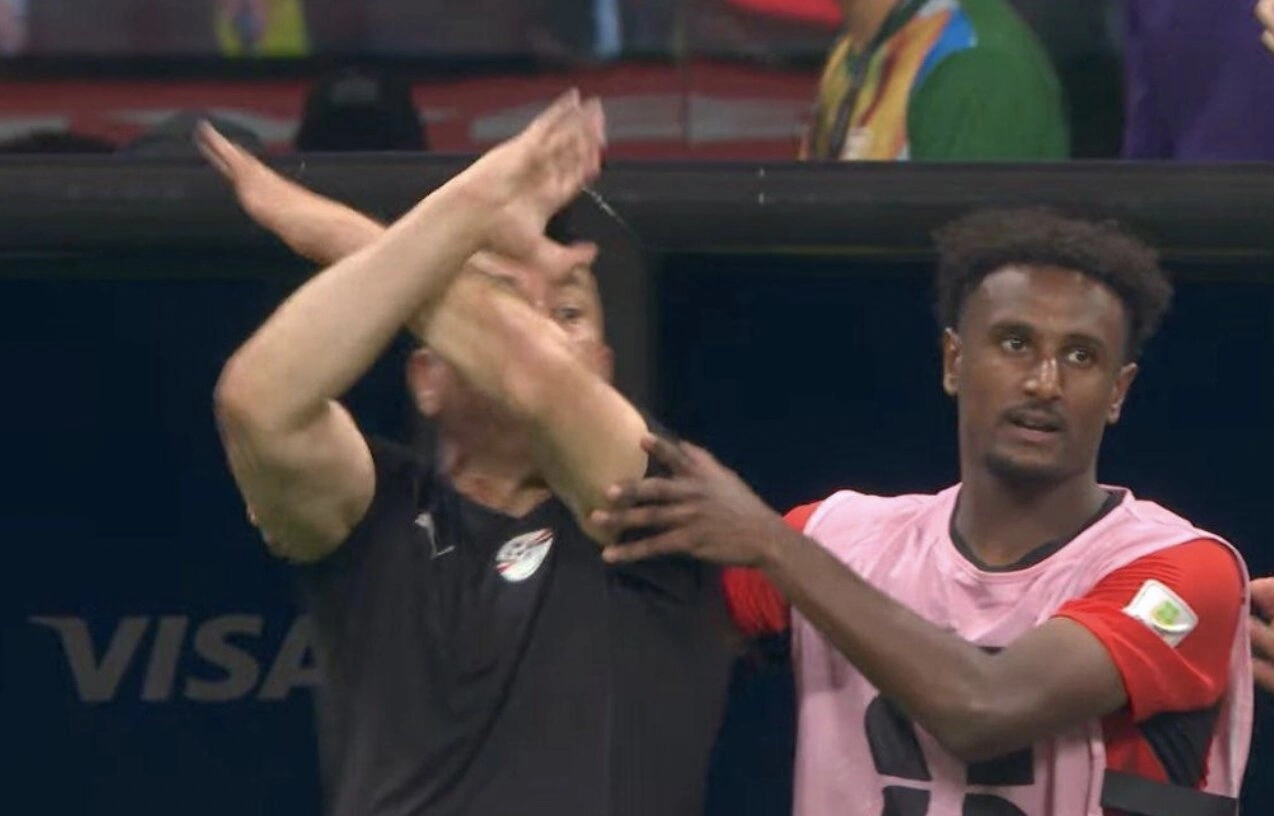 |
Coach Hossam Hassan signals the anti-racism protocol. Photo: screenshot |
According to FIFA regulations, the anti-racism gesture allows players, coaches, and officials to report racist incidents directly to the referee, thereby triggering a three-step anti-discrimination procedure, which includes temporarily stopping the match.
However, Letexier neither stopped the match nor initiated the relevant procedure. Currently, there is no evidence of any racist behavior occurring on the field. Therefore, the reason for Hossam Hassan making this signal remains unclear.
**Series of Cards Against the Egyptian Side**
The tense atmosphere continued into the final minutes. Goalkeeper Mostafa Shobeir and Hamdi Fathy received yellow cards for protesting to the referee. Attia was also cautioned after a foul. Most severely, goalkeeper coach Saafan Elshaghir was sent off after rushing onto the field during the chaos.
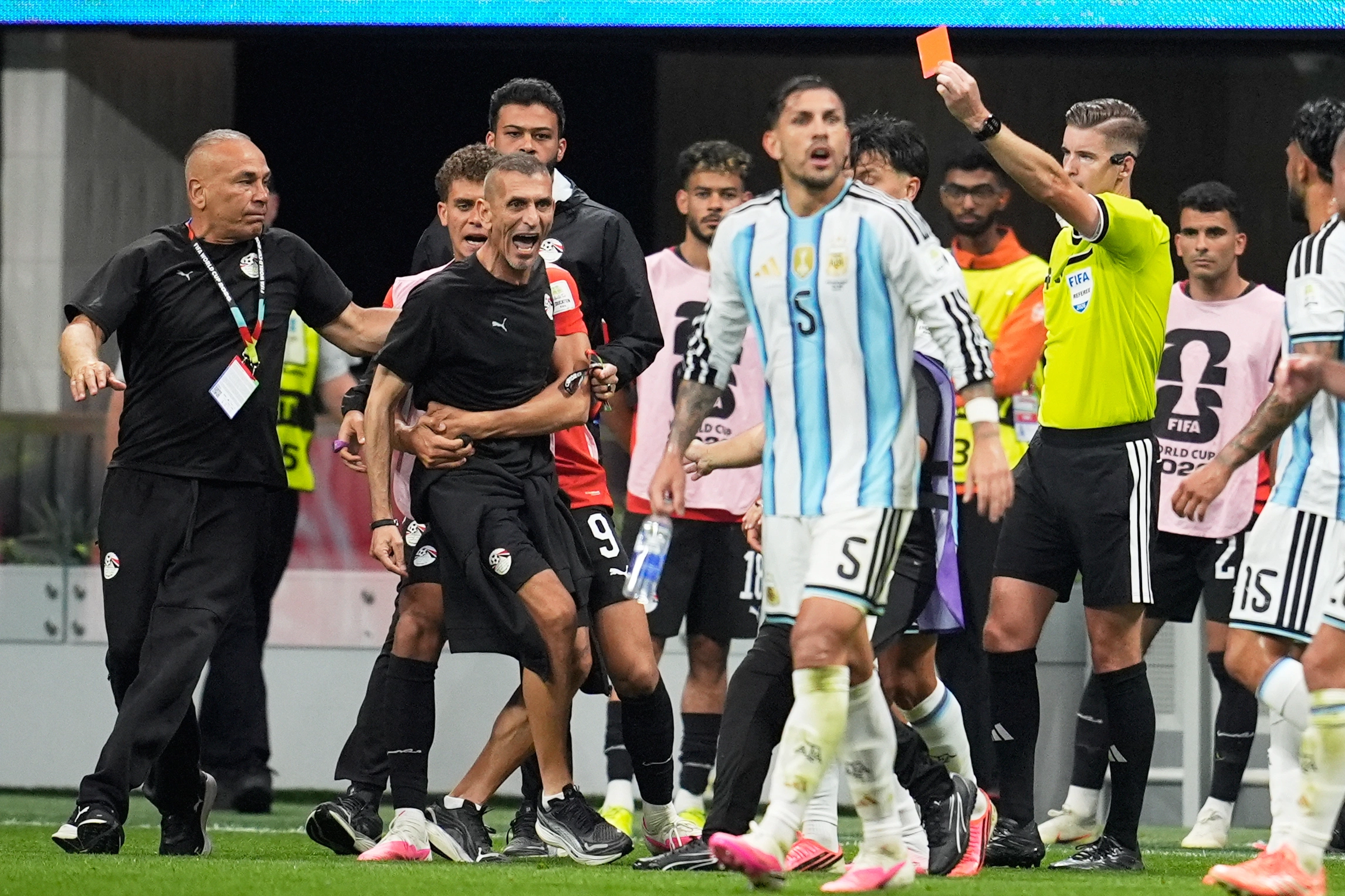 |
Referee Francois Letexier shows a red card to Egypt assistant coach Mohamed Abdel Wahed during Argentina's 3-2 victory over Egypt in the World Cup round of 16 at Atlanta Stadium on 7/7/2026. Photo: AP |
After the match, forward Mostafa Ziko declared that the World Cup was "rigged," while Coach Hossam Hassan suggested that FIFA wanted to keep Messi and Argentina in the tournament for commercial reasons. Mohamed Salah simply stated, "Everyone saw what happened."
Commenting on ITV, Gary Neville remarked that if the disallowed goal situation had occurred with Argentina, the outcome likely would have been different. Roy Keane also suggested that major teams often receive more favorable decisions in sensitive situations, though he still praised Argentina's comeback.