Aquathlon, a combination of swimming and running, demands not only physical training for each sport individually but also strategic approaches to save time during transitions. This is the period when athletes finish the swim segment. They need to move several hundred meters to the designated area to retrieve running equipment such as shoes, bibs, and running glasses.
Typically, an athlete spends about two minutes on the transition phase. However, those who prepare thoroughly beforehand gain a significant advantage in overall performance. Conversely, fumbling or spending too much time in the T1 area will significantly reduce race results, regardless of how well an athlete performs in the swim or run segments.
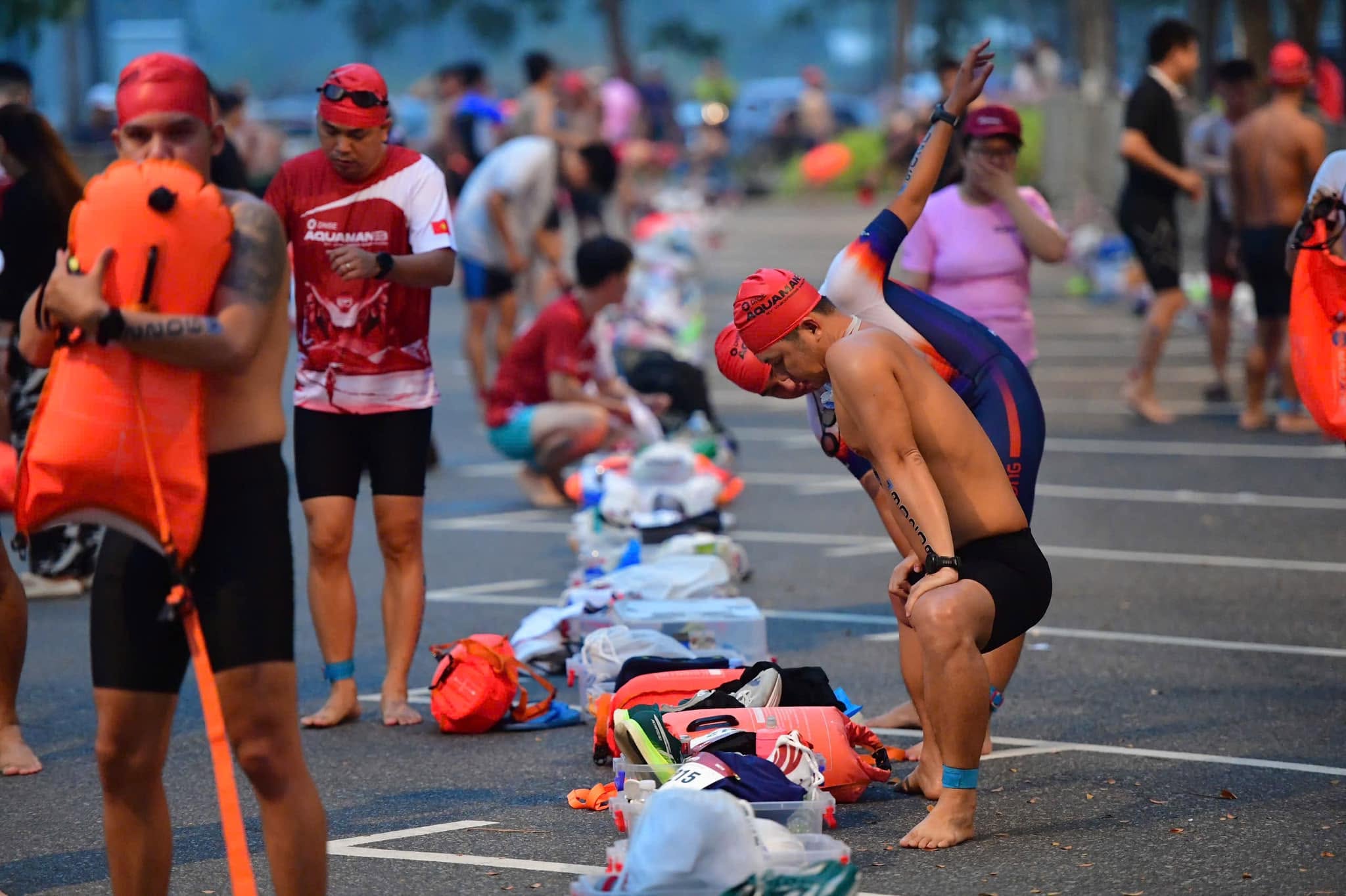 |
Athletes change gear in the transition area at Aquaman Vietnam 2024. Photo: VnExpress Marathon
Remembering the process step by step
Excitement or stress during a race can easily cause athletes to forget technical details. Therefore, establishing a clear action plan beforehand is crucial. This helps athletes stay focused after a long swim and avoid confusion when facing race variables.
Some multisport specialized websites advise athletes to follow four steps: focus on running into the transition area immediately after exiting the water, remove swim goggles and swim cap while moving, place all swim gear in the referee's designated spot, and only then put on running shoes.
To optimize time, athletes should arrange their gear in the storage area minimally to reduce unnecessary actions. Shoes should be fully open, with the toes pointing towards the running exit, allowing for immediate insertion of feet. Caps and running glasses should be placed inside or directly on top of the shoes. This helps athletes easily see and access them without needing to open bags or spend time searching for equipment.
Marking gear location
The transition area is often crowded and looks similar, making it easy for tired athletes to get confused. A small tip is for athletes to mark their gear rack with a distinctive colored ribbon or towel. On the morning of the event, athletes should walk the route from the water exit point to their gear location and then to the running exit. Finding additional fixed landmarks, such as a trash can at the end of a row or a colored pole, will help with more accurate spatial orientation.
Athletes should replace regular shoelaces with elastic ones. This detail significantly saves time when putting on shoes, especially when hands and feet are still wet. For those prioritizing speed, skipping socks can save an additional 30 to 60 seconds. If choosing to wear socks for comfort, athletes should roll them into a circle beforehand; when used, simply place them on the toes and smooth them up to the ankle.
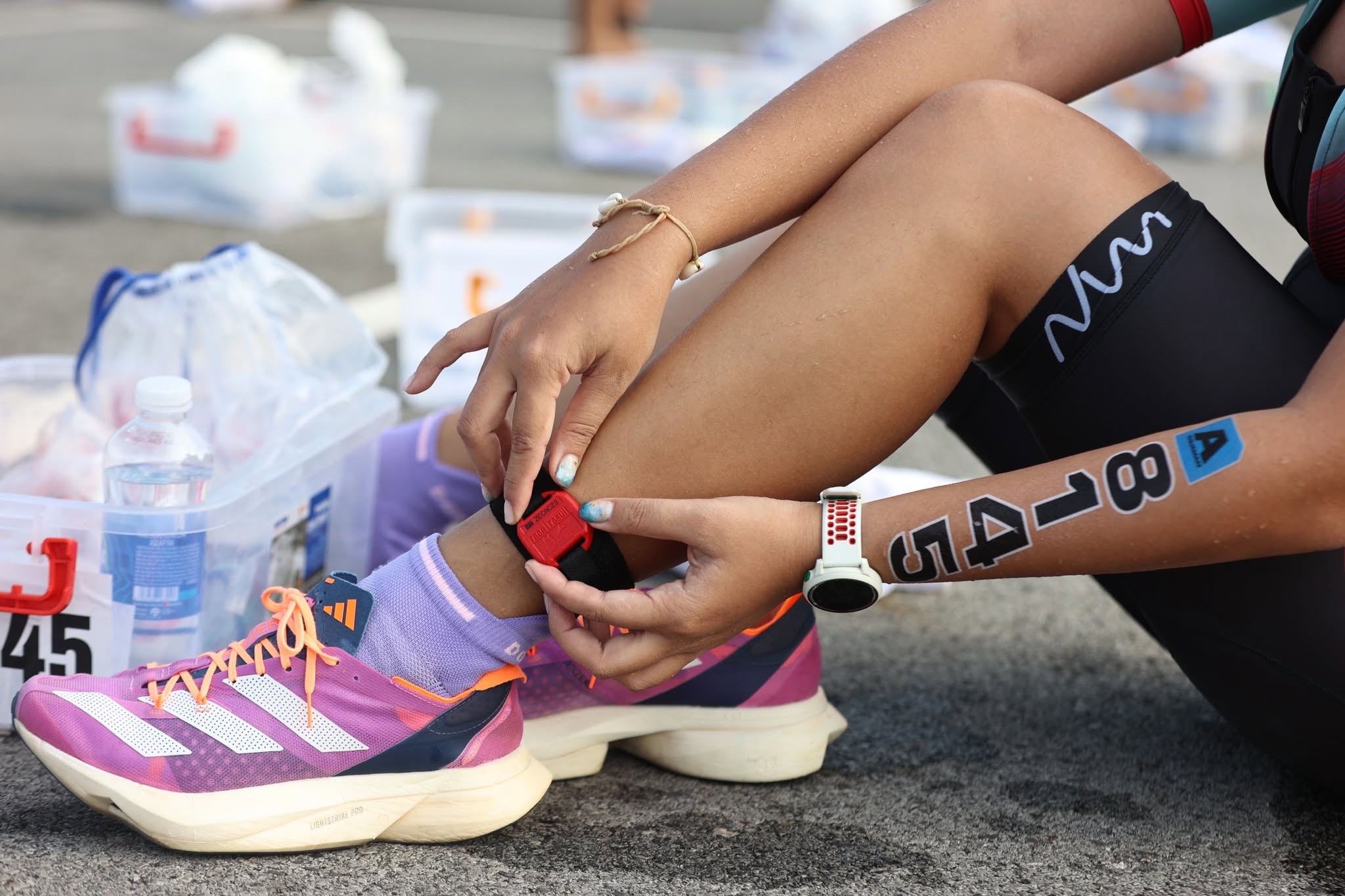 |
Athletes put on shoes and gear in the Aquaman Vietnam 2023 transition area. Photo: VnExpress Marathon
Practicing T1 operations before race day
Many athletes with strong physical foundations fail to achieve expected results due to insufficient structured training for the transition phase. To overcome this, athletes can apply a combined exercise: swim a short distance of about 200 meters, immediately run quickly into a simulated T1 area to practice putting on shoes, then switch to running one to two kilometers.
This exercise helps the nervous system and muscle groups adapt to the sensation of running immediately after exiting the water, reducing the "jelly legs" feeling during the transition. This is also how athletes train their reflexes to operate faster in this area that demands high concentration.
On days when water training conditions are unavailable, athletes can still perform a simulated exercise at home the evening before race day. Athletes should lay out all running gear on the floor according to their minimalist setup, then repeatedly practice the transition process five to six times.
The T1 transition area in aquathlon is not merely a place to change clothes; it is an intersection of technical preparation and mental control. Simplifying gear, remembering the route, and training muscle memory help athletes overcome natural physiological limits when leaving the water. This saves time and conserves energy, allowing athletes to excel in the running segment.
Minh Khang
Hoiana Aquaman Vietnam 2026 takes place on 26/7 at Hoiana Resort & Golf, Da Nang. This is the first swim-run duathlon in Vietnam, organized since 2022. The event features diverse distances such as Sprint Aqua, Aqua Kid, Flash Aqua, Rush Aqua, Half Aqua, and Aquaman individual or relay. Registration is currently open; interested athletes can view details here.