In the 18th minute on the Dallas pitch, Lamine Yamal challenged Lucas Digne in France's penalty area. As both players attempted to control the ball, the French defender swung his leg to clear it but instead kicked the Spanish forward's thigh and hip. Referee Ivan Barton immediately awarded a penalty.
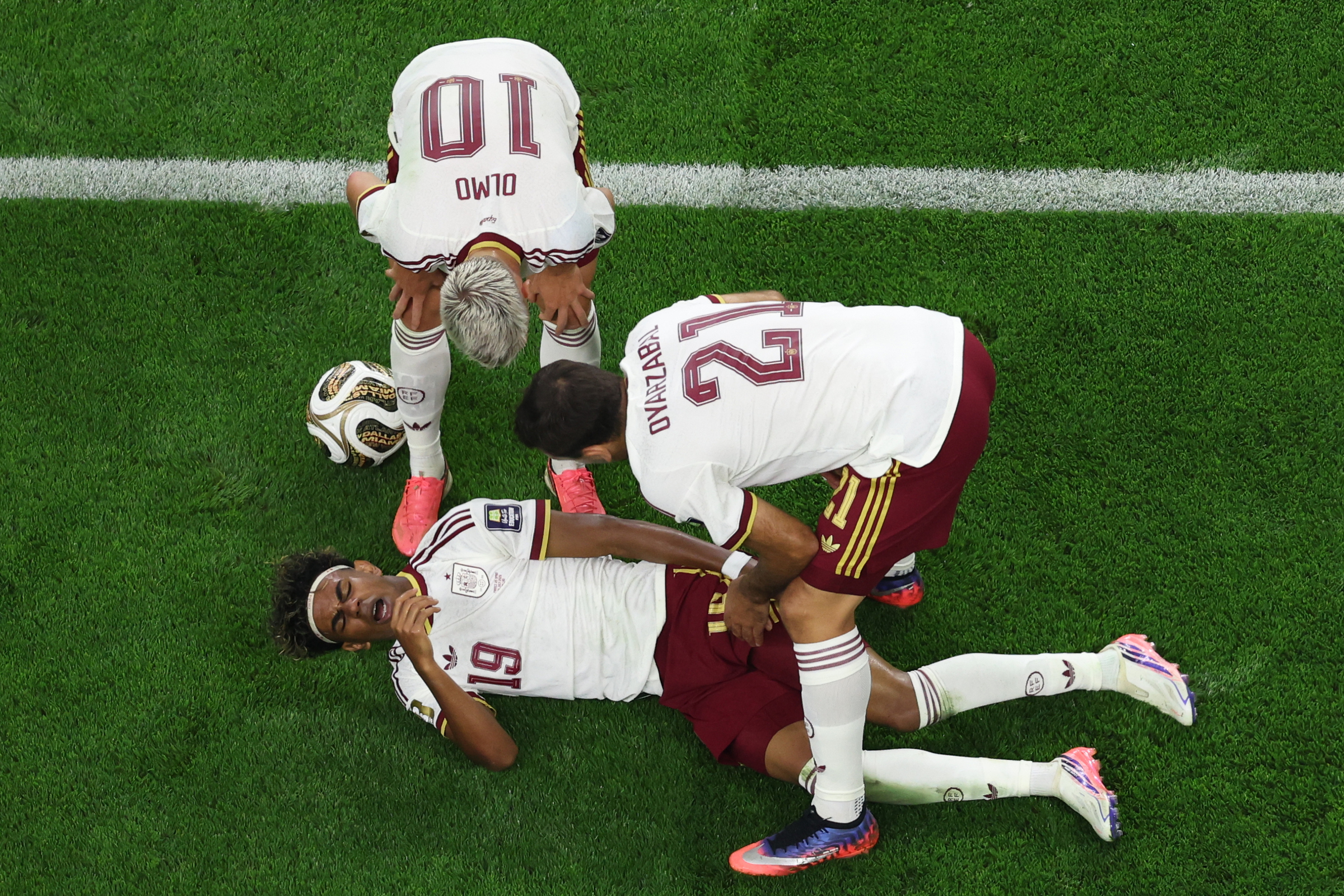 |
Mikel Oyarzabal (21) and Dani Olmo (10) of Spain check on Lamine Yamal (19) after the foul that led to Spain's penalty during the World Cup semi-final between France and Spain in Arlington, Texas, near Dallas, 14/7/2026. Photo: AP
France protested the decision, arguing that the ball had touched Yamal's hand before Digne's foul. They contended that the situation should have been ruled a handball by the Spanish forward.
VAR reviewed the incident for several minutes but did not instruct the referee to check the monitor. The penalty decision stood. Mikel Oyarzabal subsequently converted the penalty, powerfully striking the ball into the right corner to give Spain the lead.
The controversy stemmed from slow-motion replays that seemingly showed the ball contacting Yamal's right arm. However, according to football law experts, this specific point of contact does not constitute a handball foul.
Christina Unkel, a former FIFA referee and ITV Sport legal expert, clarified that the ball touched Yamal's "sleeve area." Under the Laws of the Game, this region is considered part of the shoulder, not the arm.
"That was not a handball. The ball touched Yamal's sleeve area, so the penalty decision had to stand," Unkel remarked.
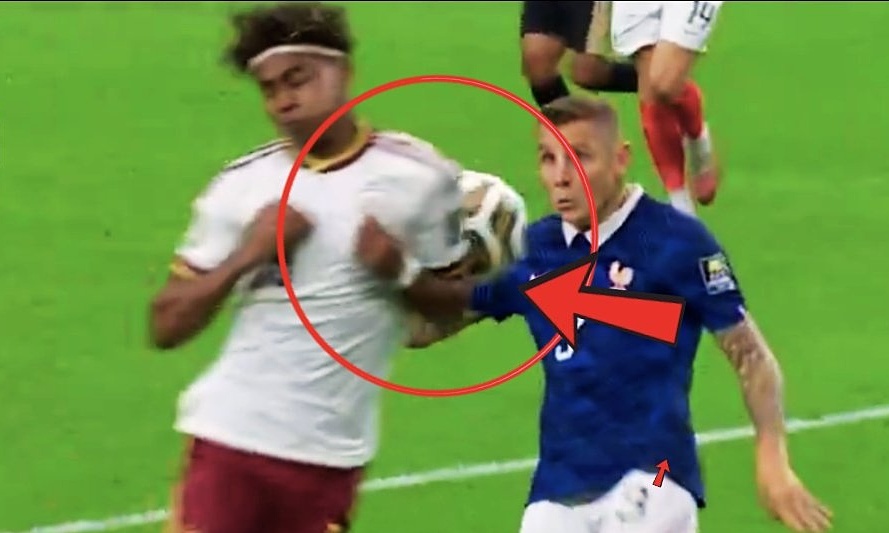 |
The situation where the ball might have touched Yamal's hand. Photo: screenshot
According to Law 12 of IFAB, the International Football Association Board, the boundary between the shoulder and the arm is defined by the sleeve line. If the ball touches the shoulder or the area above this line, a player is not considered to have handled the ball.
This distinction often confuses many viewers. On television, camera angles can create the impression of an elbow contact, but from multiple perspectives and when compared with regulations, the contact point was in a legal area.
Yamal's posture was another crucial factor in the decision.
Expert Robert Zeglinski, writing for USA Today, analyzed that the 19-year-old forward's elbow was pressed close to his body during the challenge. IFAB's laws only deem it a foul if a player intentionally handles the ball or makes their body "unnaturally bigger" to block or control it.
In this situation, Yamal did not extend his arm, did not enlarge his body area, and did not actively use his hand to control the ball. Thus, even if the ball contacted the area near his arm, it was not enough to award a foul against him.
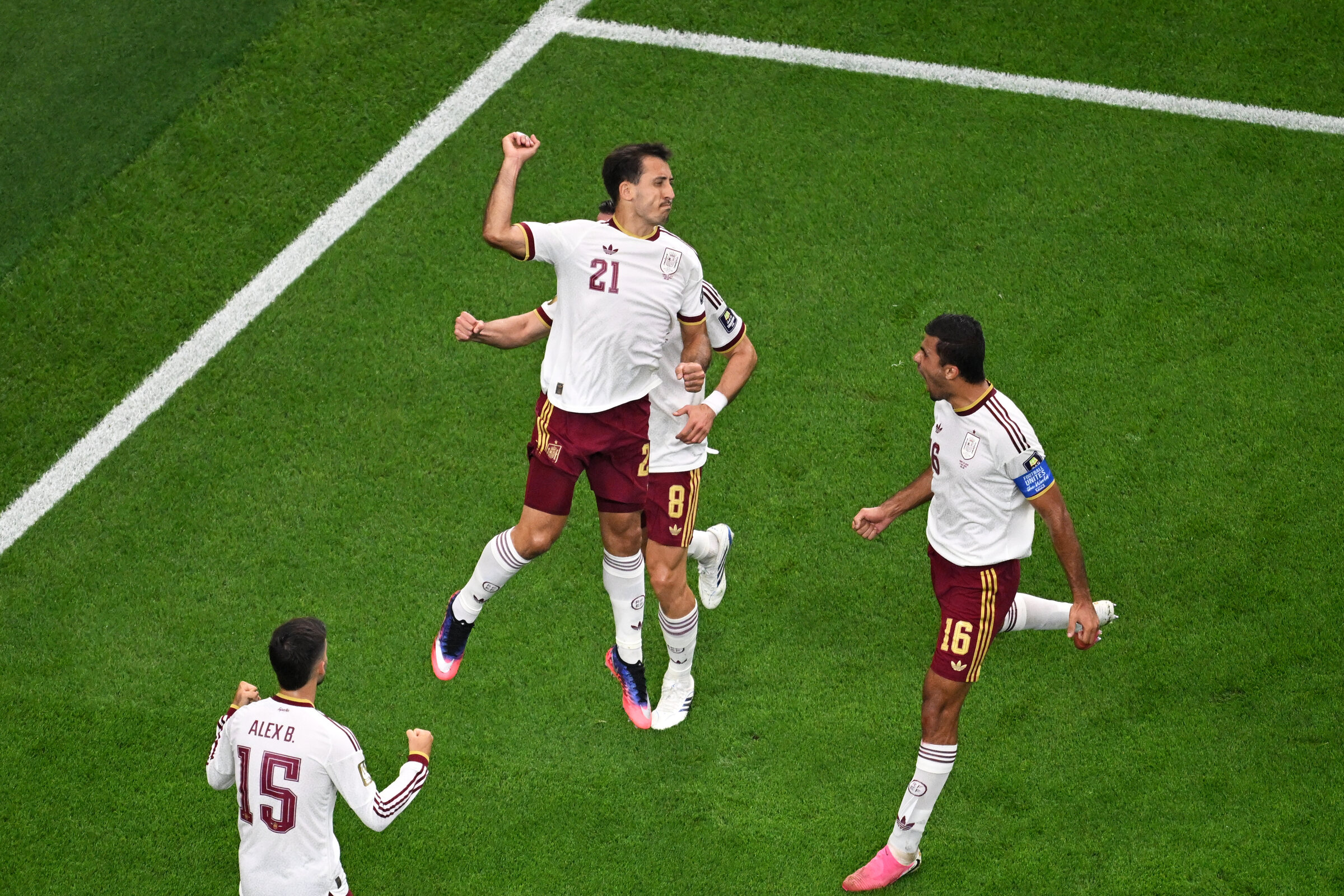 |
Mikel Oyarzabal (21) of Spain celebrates the opening goal from the penalty spot in the World Cup semi-final against France in Arlington, Texas, near Dallas, 14/7/2026. Photo: AP
After ruling out any foul by Yamal, Digne's actions became the sole factor for consideration.
The French defender did not appear to be aware of Yamal's presence behind him when attempting to clear the ball, resulting in him kicking the opponent's leg directly in the penalty area. Former England striker Chris Sutton commented on BBC that this was "a very clear penalty," because Digne "kicked Yamal's hip and leg instead of the ball."
Former defender Gary Neville also asserted that Digne bore full responsibility. He stated that defenders facing a skillful player like Yamal must be aware of their opponent's position before attempting to clear the ball.
Unkel drew comparisons to two prior incidents at World Cup 2026. In the England versus Mexico match, Harry Kane was fouled during a challenge where the ball also touched his sleeve area, and England was awarded a penalty. A similar situation occurred in the England versus Croatia game, when Luka Modric kicked Noni Madueke in the penalty area, also resulting in a penalty.
In the second half, Spain secured another goal courtesy of defender Pedro Porro, advancing to the final for the second time, following their victory in 2010.
Hoang An (according to Independent, USA Today)