|
A ranking conducted by Time Out, a leading travel magazine in the UK, was published on 13/10. It is based on over 24,000 resident reviews of public transport systems, using a scale from one to 5, corresponding to "very poor" to "excellent." Below are the 10 highest-rated cities. Each country is represented by only one city, its highest-scoring one. This ranking offers suggestions for travelers choosing their next destination.
Taipei (Taiwan)
Public transport rating: 95%
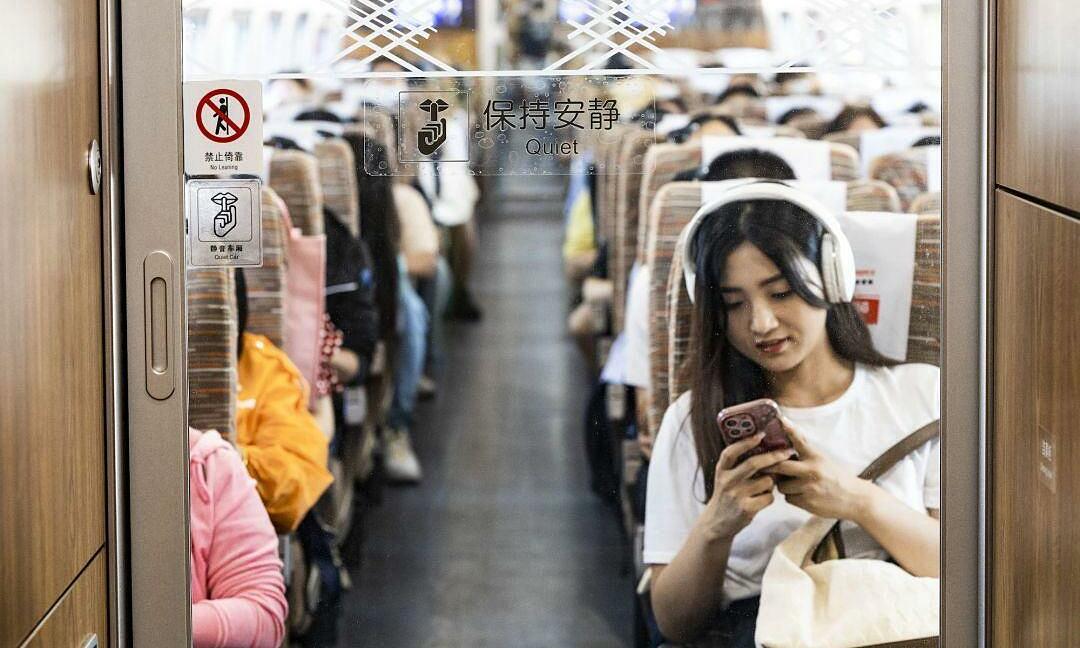
If you have ever had to squeeze onto a train during rush hour, you might envy Taipei's MRT system. Its stations are clean, queuing lines are orderly, and trains run on time.
The MRT operates on a large scale, serving over 767 million passengers in 2025, which averages about 2,1 million rides daily. The EasyCard can be used on the MRT, buses, YouBike rental services, and even for purchasing snacks at 7-Eleven stores.
The transport network continues to expand. Last year, New Taipei's light rail and circular line recorded a total of 30 million rides, a record high. Photo: WAUG
 |
Singapore
Rating: 93,5%
Singapore's MRT metro system has long been considered a model for urban transport. With 146 stations, the MRT serves about 3,5 million rides daily. According to the Land Transport Authority (LTA) of Singapore, approximately 99,4% of train journeys ran on time in 2025.
In 7/2026, three new stations—Keppel, Cantonment, and Prince Edward Road—will open, completing the Circle Line into a closed loop. Acting Minister for Transport Jeffrey Siow humorously remarked that from now on, people can stop asking the LTA why the Circle Line is not circular. Photo: Land Transport Guru
 |
Hong Kong
Rating: 92,8%
For those who have lived in Hong Kong, the MTR metro system is more than just a means of transport; it is part of daily life. According to MTR's 2025 business report, 99,9% of journeys on the city's high-frequency urban rail network were on time. Throughout the year, the system served nearly 2 billion rides.
A distinctive feature is the diversity of transport options. Few places allow travelers to step off a high-speed train, transfer to a century-old "ding ding" double-decker tram, and then complete their journey with a Star Ferry ride across the harbor—all paid with a single tap of an Octopus card. Photo: T+L
 |
Edinburgh (UK)
Rating: 92,4%
The city with the highest public transport rating in the UK is not London, but Edinburgh. A factor contributing to this success is Lothian Buses, a bus operator majority-owned by the local government. In 2025, the company served 119 million passengers. Meanwhile, the Edinburgh Trams system also recorded a record year with 12,5 million rides.
Edinburgh's tram system faced challenges in its early years. However, passenger numbers have risen since the line was extended to Newhaven, passing through the Leith area and opening in 2023. Passengers can now tap contactless payment cards upon boarding and benefit from daily or weekly passes when using both buses and trams. Photo: Time Out
 |
Seoul (South Korea)
Rating: 91,1%
Seoul's extensive metro system is known for its smooth operation, clean carriages, and mobile phone reception even underground. Fares start at just 1,550 won (nearly 30,000 dong) when paying with a transport card.
Seoul is also a leader in providing affordable transport services. In 1/2024, the city launched the Climate Card, a 30-day pass allowing unlimited travel on the metro, buses, and public bicycles. Seoul also features the Hangang Bus, a water transport service along the Han River. The combination of metro, buses, public bicycles, and river boats makes the city an attractive choice for residents. Photo: Chosun
 |
Zurich (Switzerland)
Rating: 90,7%
Swiss punctuality has long been renowned, but Zurich's distinction lies in the seamless connectivity between its transport modes. Within the city, there is a tram or bus stop approximately every 300 meters.
With a single ZVV ticket, passengers can use trams, buses, S-Bahn suburban trains, mountain railways, and even boats on Lake Zurich and the Limmat River. This convenience and synchronized connectivity are why Zurich is highly rated by locals, with a high satisfaction rate. Photo: TripSavvy
 |
Vienna (Austria)
Rating: 90,3%
For 13 years, Vienna's annual public transport pass cost 365 euro, equivalent to one euro per day. This pricing once made the Austrian capital a model for affordable public transport in Europe.
From 1/2026, the pass price will increase to 467 euro annually. However, residents seem unconcerned by this adjustment: 90,3% still rate the city's transport system as good or excellent.
In 2025, the U-Bahn metro, tram, and bus network operated by Wiener Linien served 903 million passengers. Vienna also made it into the top 5 best cities for cycling in a Time Out survey. This provides residents and visitors with many travel options, from public transport to bicycles. Photo: TripSavvy
 |
Tallinn (Estonia)
Rating: 95,3%
In 2013, Tallinn became the first European capital to implement a free public transport policy for registered residents. Locals only need to tap their personalized travel card when boarding a bus or tram.
Visitors still need to purchase tickets, but prices are low. The Tallinn Card also combines unlimited public transport use with entry to the city's top attractions. Additionally, the medieval Old Town is compact, so visitors may only need a short tram ride to reach it. Photo: Trams Around the World
 |
Helsinki (Finland)
Rating: 83,6%
In Helsinki, with an HSL ticket, passengers can use trams, buses, the metro, suburban trains, and light rail. The ticket also includes the year-round ferry service to Suomenlinna, a sea fortress recognized as a UNESCO World Heritage site, about 15 minutes by ferry from Market Square. This commute offers impressive scenery.
The newest light rail line, number 15, also known as Jokeri, opened in 10/2023. The line connects Helsinki's eastern suburbs with Keilaniemi, in the neighboring city of Espoo. Photo: Visit Finland
 |
Medellin (Colombia)
Rating: 83%
In Medellin, the metro system is a source of local pride. Since its operation began in 1995, the network has been built on the "Cultura Metro" philosophy—a set of rules emphasizing courtesy and respect that passengers diligently follow, helping keep stations clean.
The most distinctive feature is Metrocable, a cable car system connecting residential areas on steep hillsides with the valley below. The first line to Santo Domingo opened in 2004, becoming one of the first urban cable car systems in the world. The network now has six lines, including one that takes passengers up to the forests of Parque Arvi. In 2025, the entire network, including trains, cable cars, trams, and buses, served over 310 million rides. Photo: Uncover Colombia
Tam Anh (according to Time Out)