Norway's return to the World Cup for the first time since 1998 in the 2026 season is drawing attention not just for their on-field performance, but also for their meticulous off-field preparations. The team has shipped nearly 600 kg of food from their home country to their base in Greensboro, North Carolina, United States, to support the squad.
According to Norway's head chef, Aron Espeland, the imported provisions from Northern Europe consist mainly of specialty seafood and traditional cheeses. This shipment includes 300 kg of salmon, 100 kg of halibut, 80 kg of Norwegian brown cheese, and 100 kg of Jarlsberg cheese.
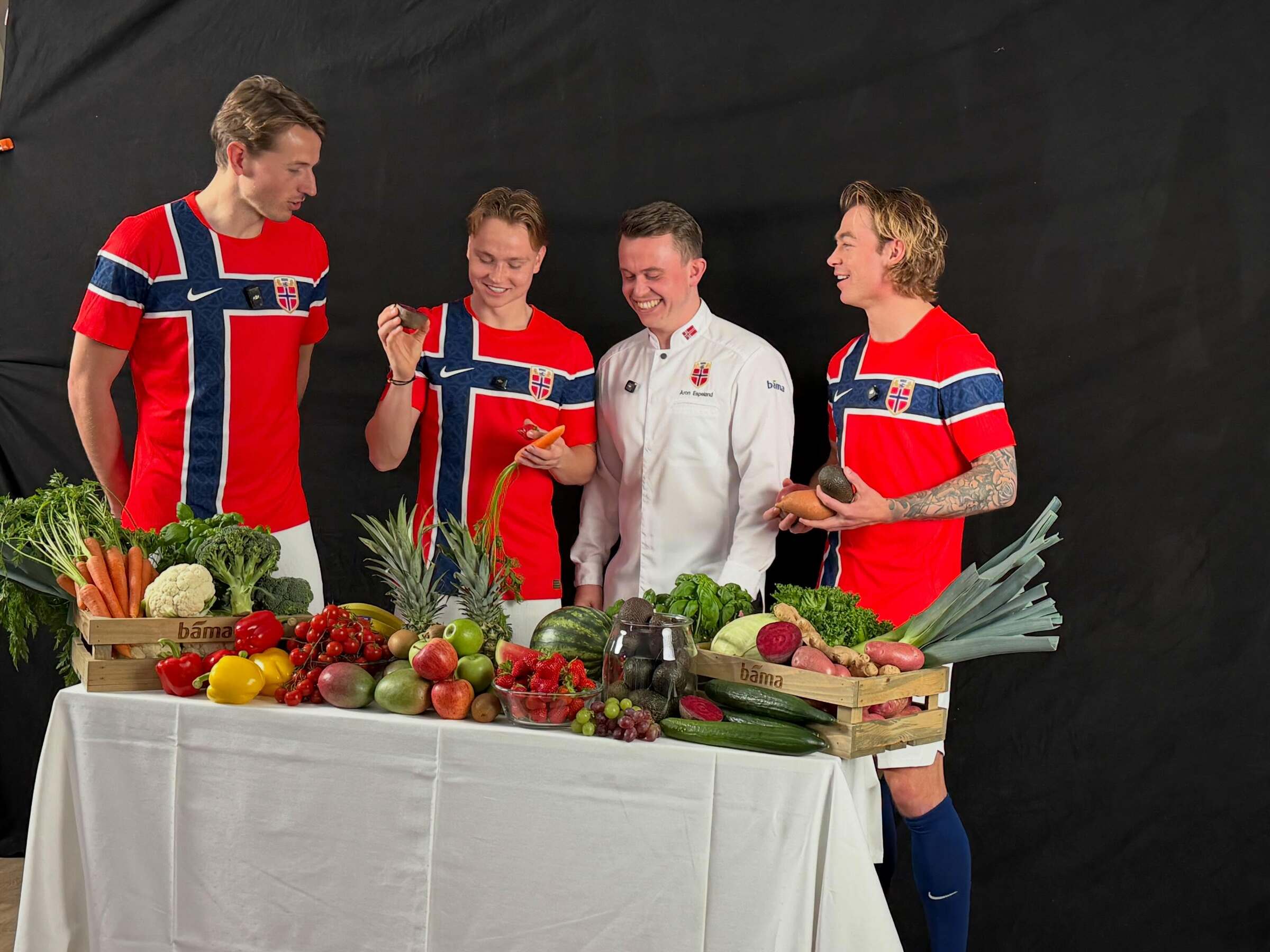 |
Chef Aron Espeland and Norway national team players. Photo: chef_aronespeland |
Chef Aron Espeland and Norway national team players. Photo: chef_aronespeland
The team sources other items like fruits, vegetables, grains, and meats from suppliers in the United States. Addressing rumors that the Norway team imported fresh oranges from Europe, Espeland clarified that players still drink orange juice every morning, but the oranges are grown and harvested in the host country. He explained that the food brought from Norway is not intended to replace local ingredients but to help players maintain a familiar diet.
A logistics team of three Norway national team chefs is responsible for preparing four meals daily for over 60 personnel. The food quantities are scientifically calculated based on the number of individuals, actual playing time, and personalized menus for each player.
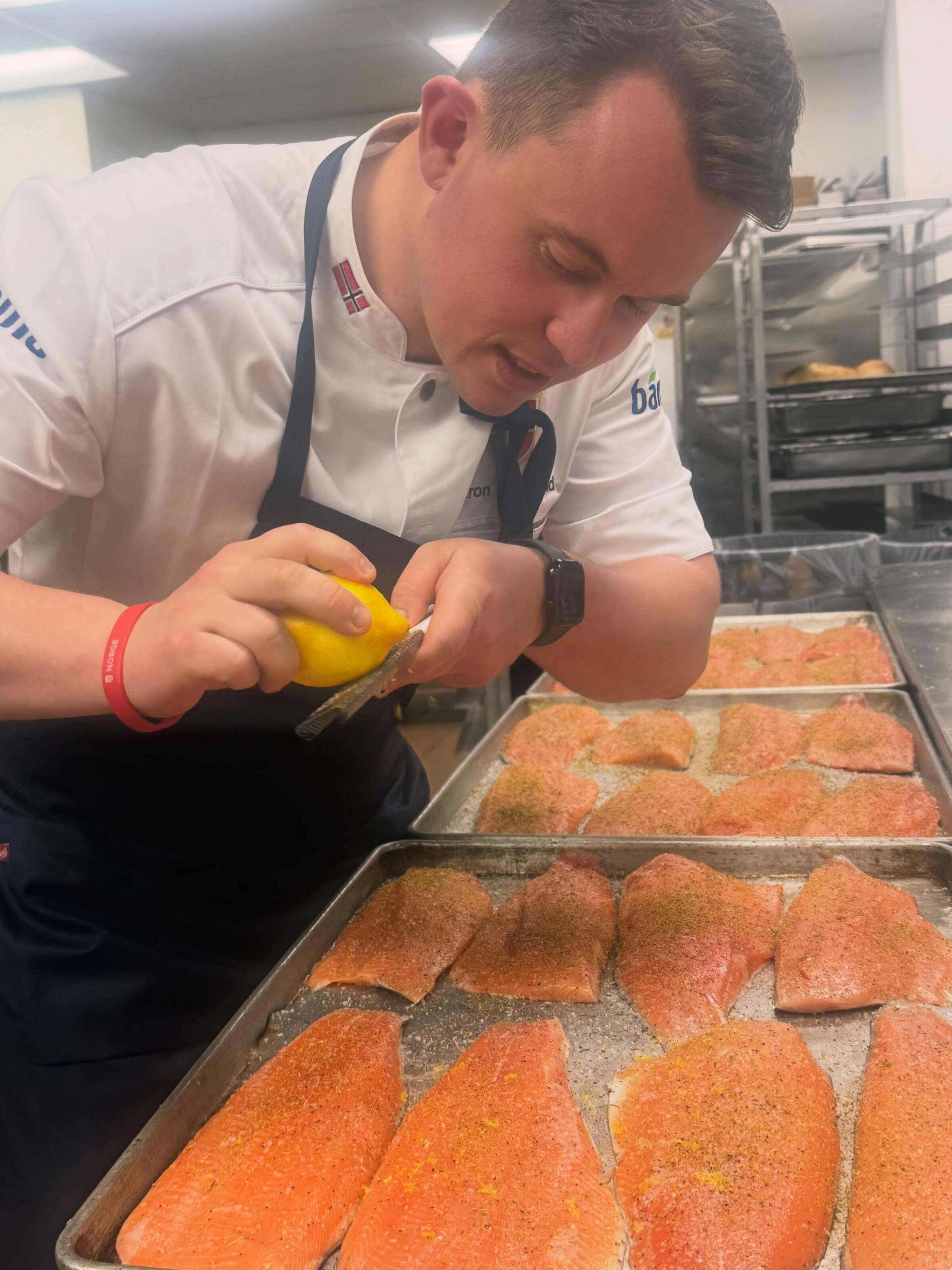 |
Chef Aron Espeland prepares salmon for Norway national team players. Photo: chef_aronespeland |
Chef Aron Espeland prepares salmon for Norway national team players. Photo: chef_aronespeland
Breakfast typically includes oats, eggs, or smoothies. Pre-game lunch and dinner are strategic for energy replenishment, hydration, and muscle recovery. Chicken, beef, salmon, and halibut serve as primary lean protein sources, accompanied by potatoes, pasta, fruits, and green vegetables.
Nutrition experts suggest that bringing familiar foods not only optimizes core nutritional principles – such as complex carbohydrates from grains for energy and lean protein from salmon for muscle recovery – but also helps maintain stable biological habits for players.
Consuming familiar daily meals from home helps players' bodies and digestive systems adapt better, minimizing risks such as bloating, allergies, or digestive disorders due to sudden environmental changes. In elite football, even a minor digestive issue can directly reduce a player's physical condition and performance on the field.
 |
Haaland celebrates a goal in Norway's victory over Brazil in the World Cup 2026 round of 16, at MetLife Stadium, New Jersey, United States on 5/7. Photo: Reuters |
Haaland celebrates a goal in Norway's victory over Brazil in the World Cup 2026 round of 16, at MetLife Stadium, New Jersey, United States on 5/7. Photo: Reuters
Amy Goodson, a sports nutritionist who has worked with many professional sports teams, emphasizes that nutrition directly influences World Cup performance. Players face intense training, travel, and multiple matches in short periods, requiring adaptation to varying weather and time zones. What players eat directly impacts their energy levels, hydration, recovery, immune system, and even on-field decision-making.
While acknowledging the significant challenge of preparing four meals daily throughout the tournament, Chef Aron Espeland believes that meticulous preparation, combined with ingredients brought from home, will provide a solid foundation for Erling Haaland and his teammates to achieve peak performance and advance deep into this year's World Cup.
Establishing "mobile kitchens" during international tours is not uncommon. At the 2014 World Cup, the Italy national team brought parmesan cheese, olive oil, and prosciutto to Brazil. The US team also carried A1 steak sauce, oats, and peanut butter. For the 2022 World Cup in Qatar, the Argentina and Uruguay national teams transported nearly two tons of beef to meet their players' dietary needs.
Mai Phuong (According to Forbes, AP News)