 |
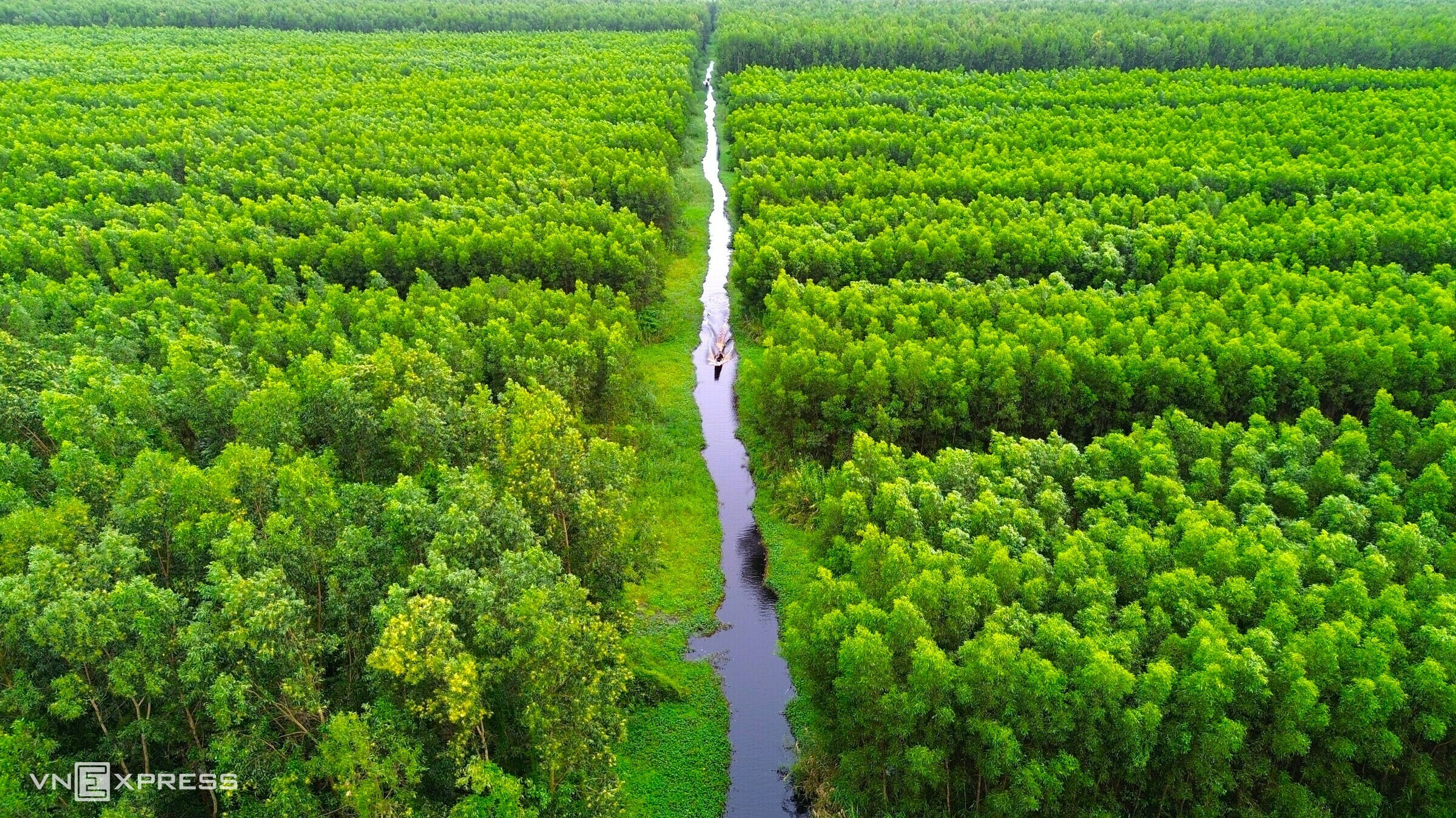
During the rainy season, U Minh Ha melaleuca forest is covered in a lush green. Beneath the forest canopy, a dense network of canals teems with various fish, eels, and natural produce. This is also when forest dwellers begin their eel trapping season, a traditional livelihood deeply intertwined with the lives of people in the region.
U Minh Ha melaleuca forest borders U Minh Thuong forest (An Giang province) and covers about 35,000 hectares. Of this, 8,256 hectares form U Minh Ha National Park. From downtown Ca Mau (formerly Ca Mau city), visitors can travel by vehicle to attractions in the area, distances ranging from 20 to 40 km.
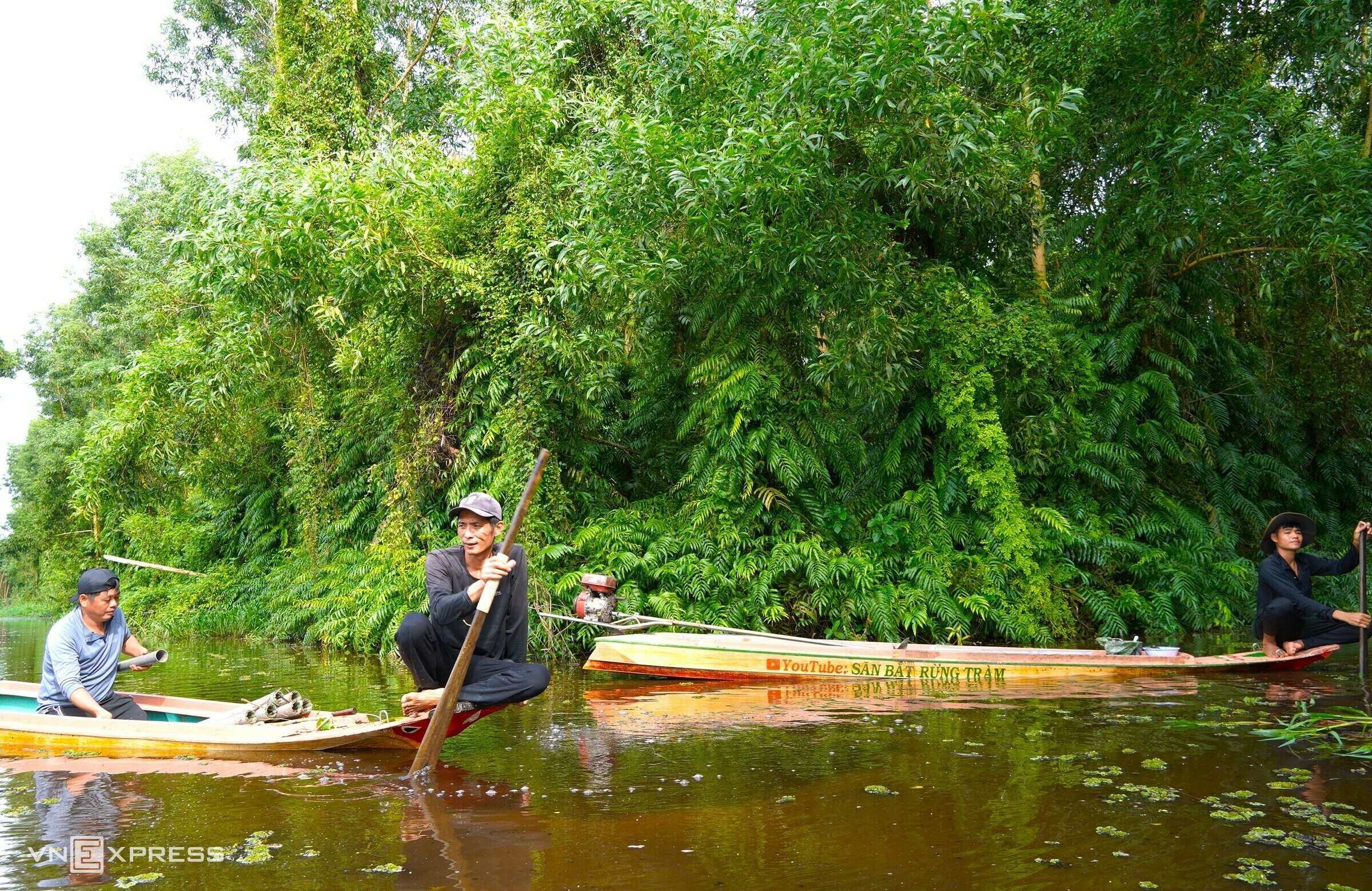 |
Around 15h, motorized sampans carrying groups of forest workers navigate the canals, flanked by melaleuca and acacia forest sections. Experienced trappers observe water color, wind direction, depth, and vegetation to locate prime feeding spots for eels.
Canal edges with grass, bushes, and decaying leaves often attract small fish feeding on plant debris, which in turn draws larger eels to hunt. During rain, eels tend to move into shallower waters, prompting trappers to adjust trap locations according to water levels.
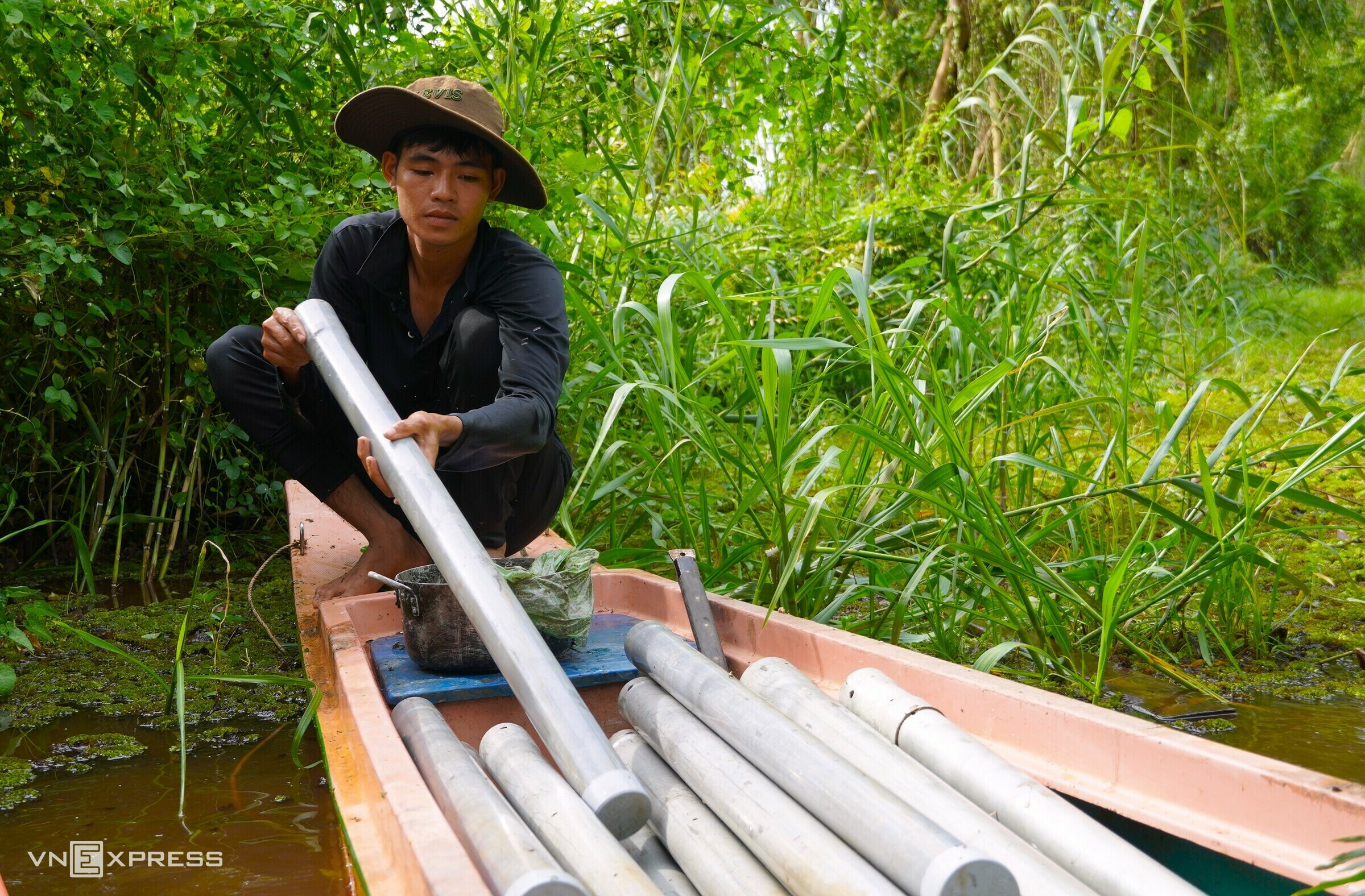 |
Traditionally, eel traps were made from old thorny bamboo. Today, many have switched to plastic pipes to reduce weight and ease movement through the forest. Inside, a bamboo slat funnel, smoothed and structured, allows eels to easily enter but makes it difficult for them to turn around and exit.
Eel bait is considered the secret of the trapping trade. Trinh Trong Tin, an experienced trapper, explains that bait is made from finely chopped snails, crabs, fish, and frogs, mixed with dried coconut pulp. A few sprigs of rice paddy herb (ngo om), sawtooth coriander (ngo gai), and a little fish oil are added, finally combined with fried fish for a strong scent. According to him, the aroma carried by the water travels far, stimulating the eels' sense of smell and drawing them to follow the scent into the traps.
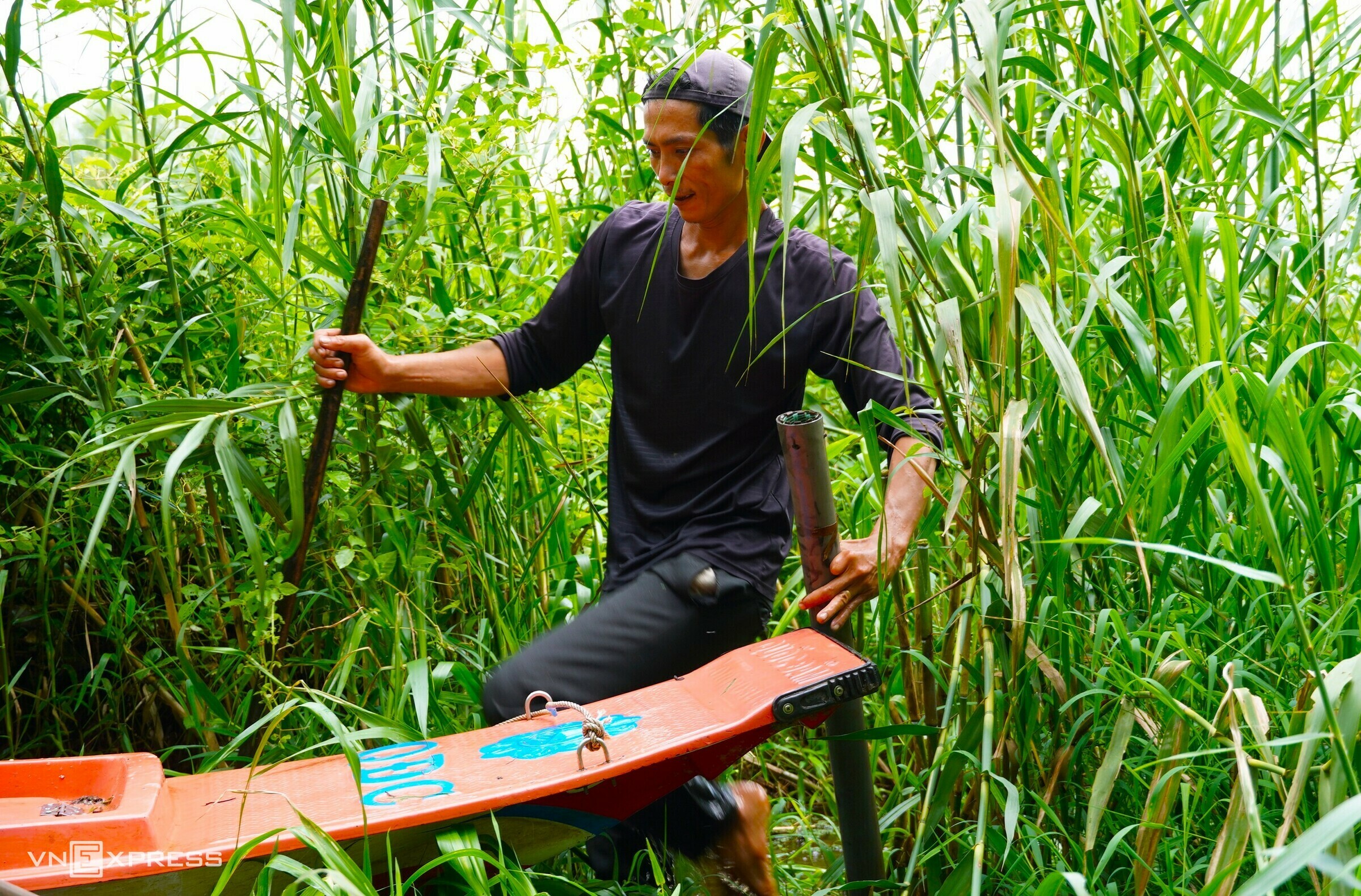 |
After placing the bait inside, trappers lower the traps into chosen canal edges. The trap opening is oriented with the wind to spread the bait's scent widely. The tail end is tied to float about half a hand-span above the water, preventing eels from drowning upon entry. For larger eels, traps are typically set deeper underwater.
Early the next morning, the group returns to the canals to check the traps. Tin's group collected over 10 kg of eels from about 50 traps. Large eels fetch more than 200,000 dong per kg, bringing the group over 2 million dong in revenue after one night of trapping. The process of checking and catching eels requires skill, as wild eels are strong and slippery, making them easy to lose.
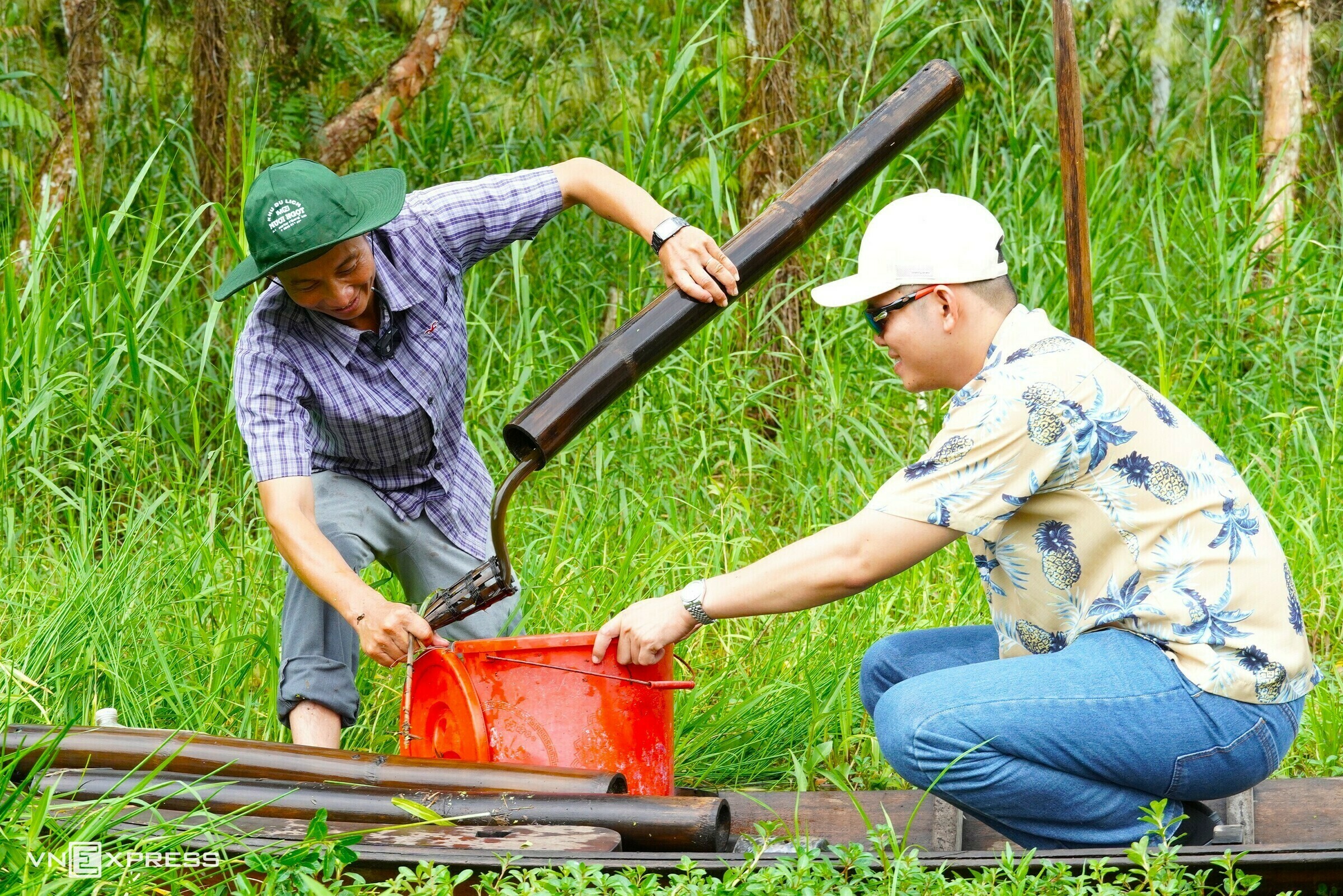 |
Chau Hong Nhi from Tan Thanh ward, experiencing eel trapping for the first time, expressed his delight at personally catching golden wild eels. He described navigating the forest, locating each trap, and the suspense of checking inside for eels as a memorable experience.
 |
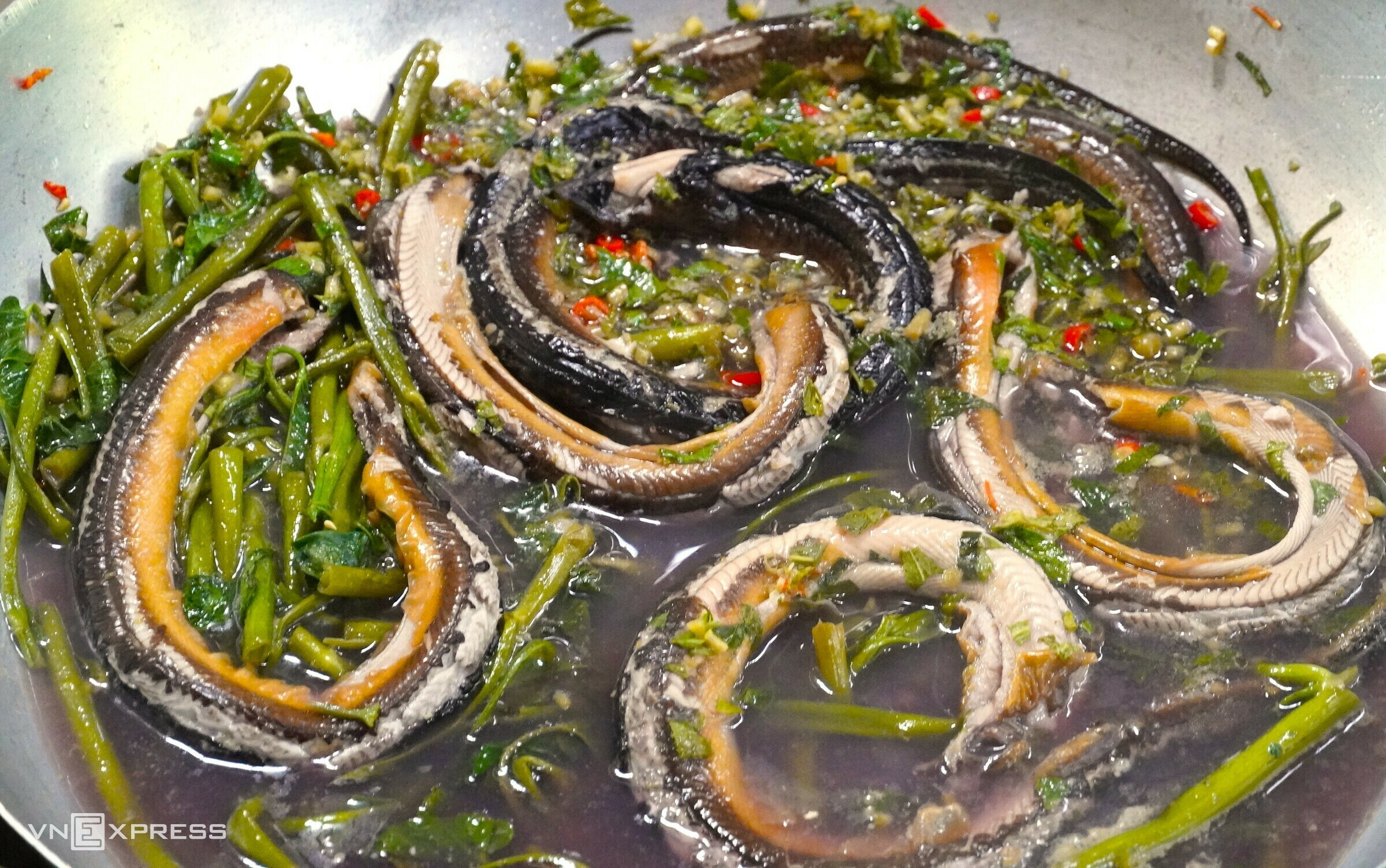 |
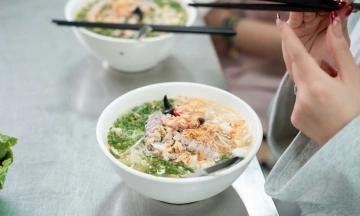
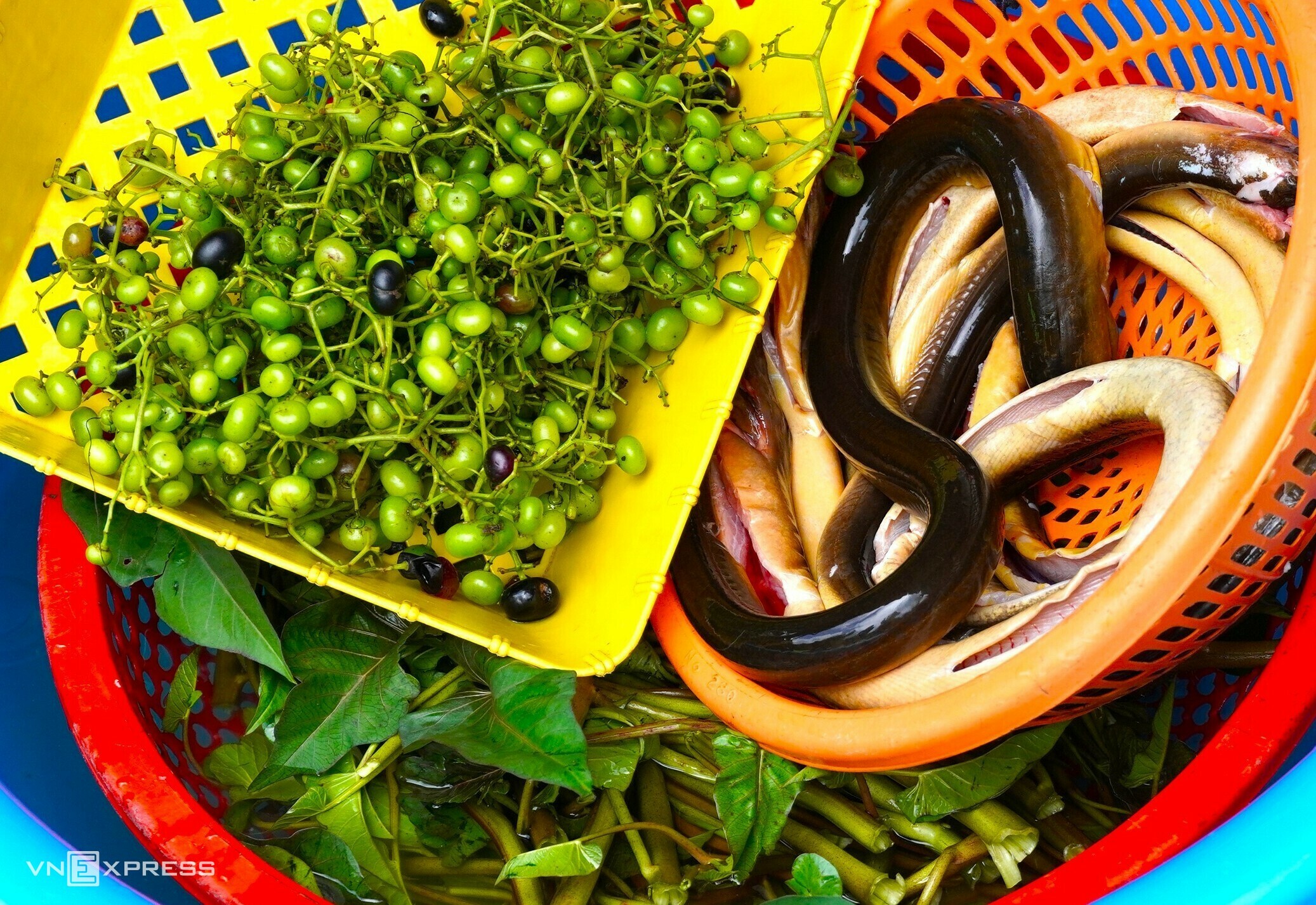
Eels, combined with local produce like giac fruit (a type of wild berry) and water spinach, create a rustic sour soup, a specialty of the U Minh Ha region. Visitors enjoy this dish in the cool, green ambiance beneath the melaleuca and acacia forest canopy.
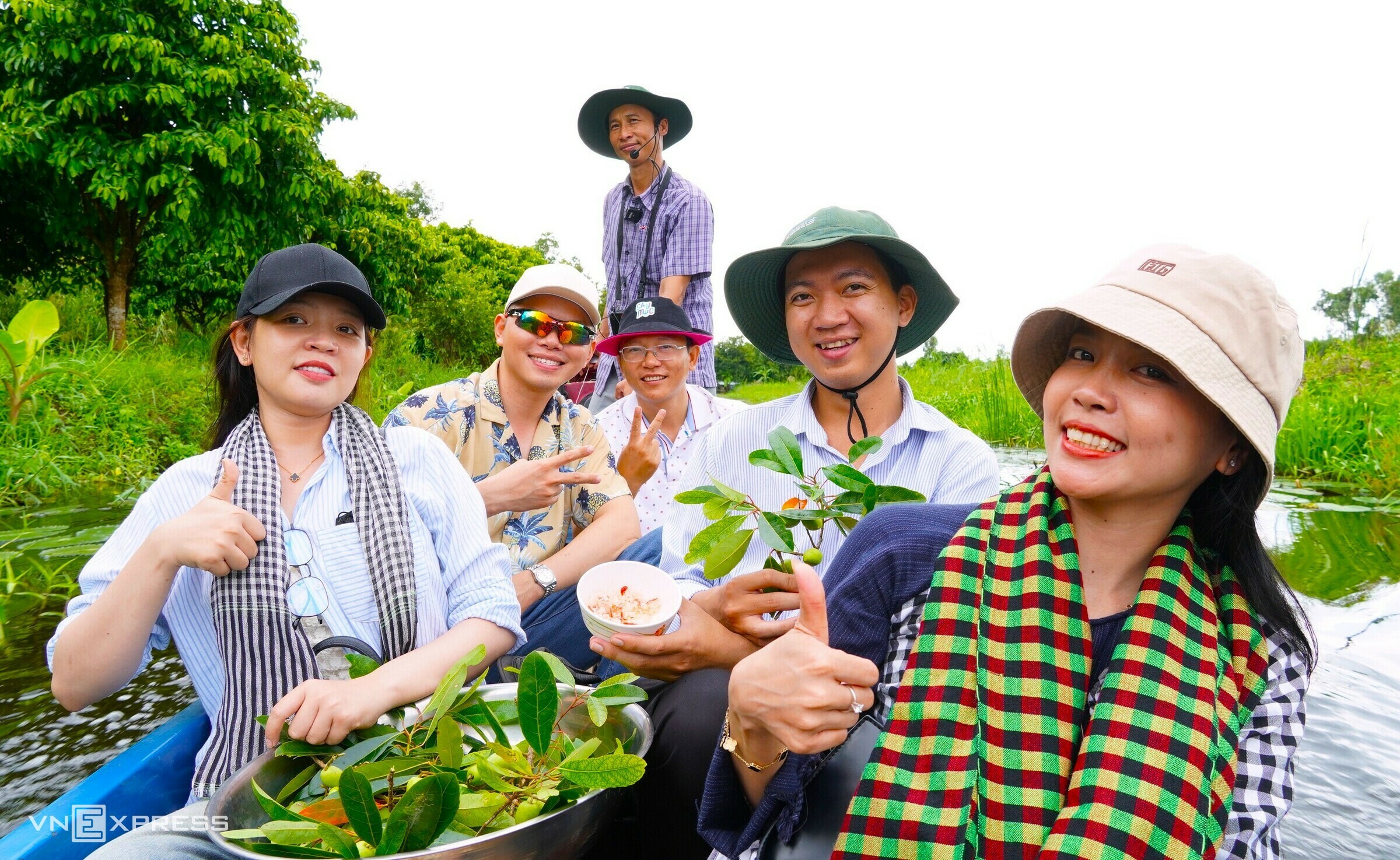 |
At eco-tourism sites in U Minh Ha, in addition to eel trapping, visitors can take motorized sampan rides through the forest to experience setting other types of traps and enjoy dishes made from local produce.
An Minh