 |
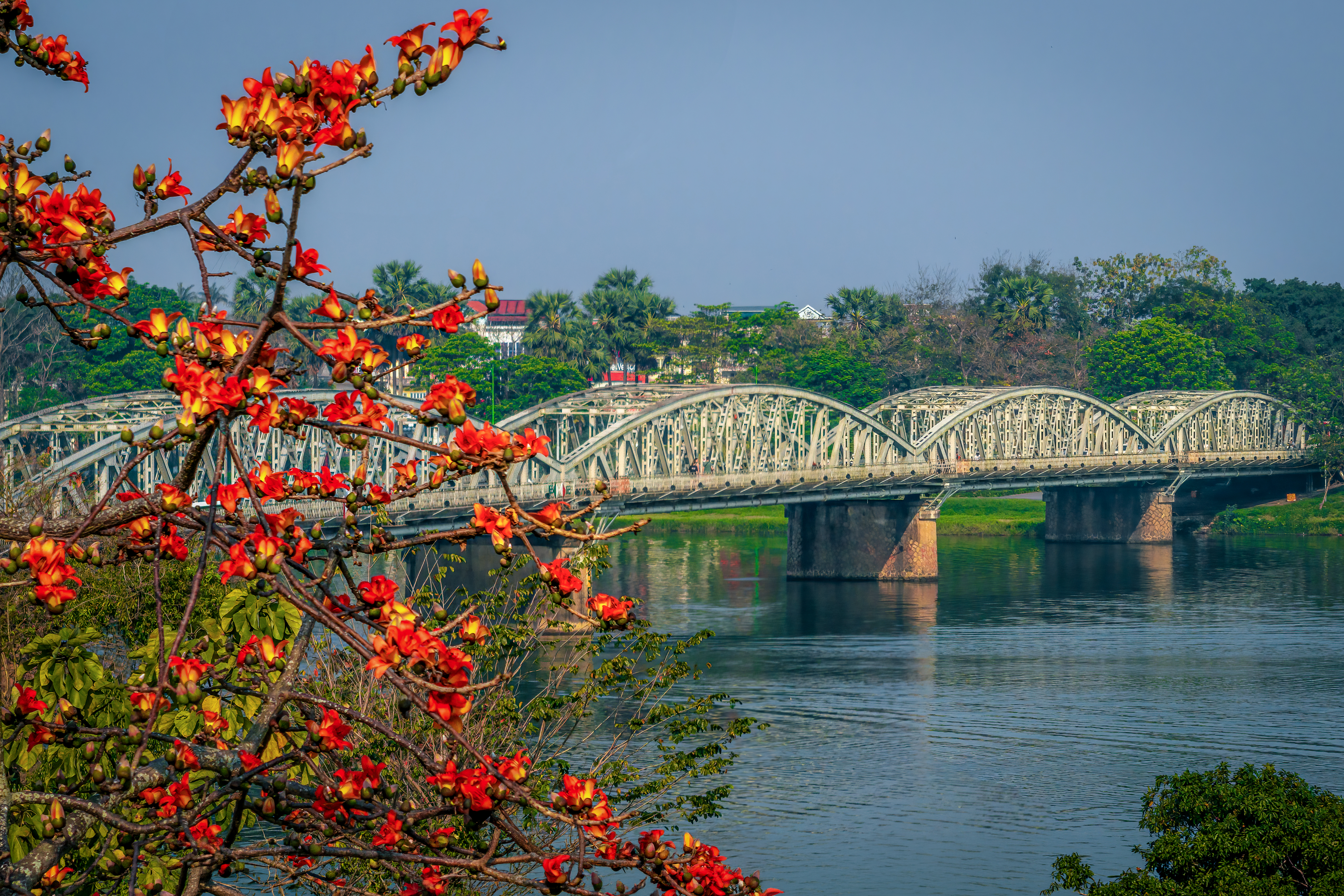
Along several central streets in Hue City, such as Le Loi, Le Duan, and Ham Nghi, silk cotton trees are bursting into bloom simultaneously.
Photographer Nguyen Phong, a resident of Hue City, captured this ancient silk cotton tree blooming a vibrant red by the Huong River during a flower hunting trip in his hometown.
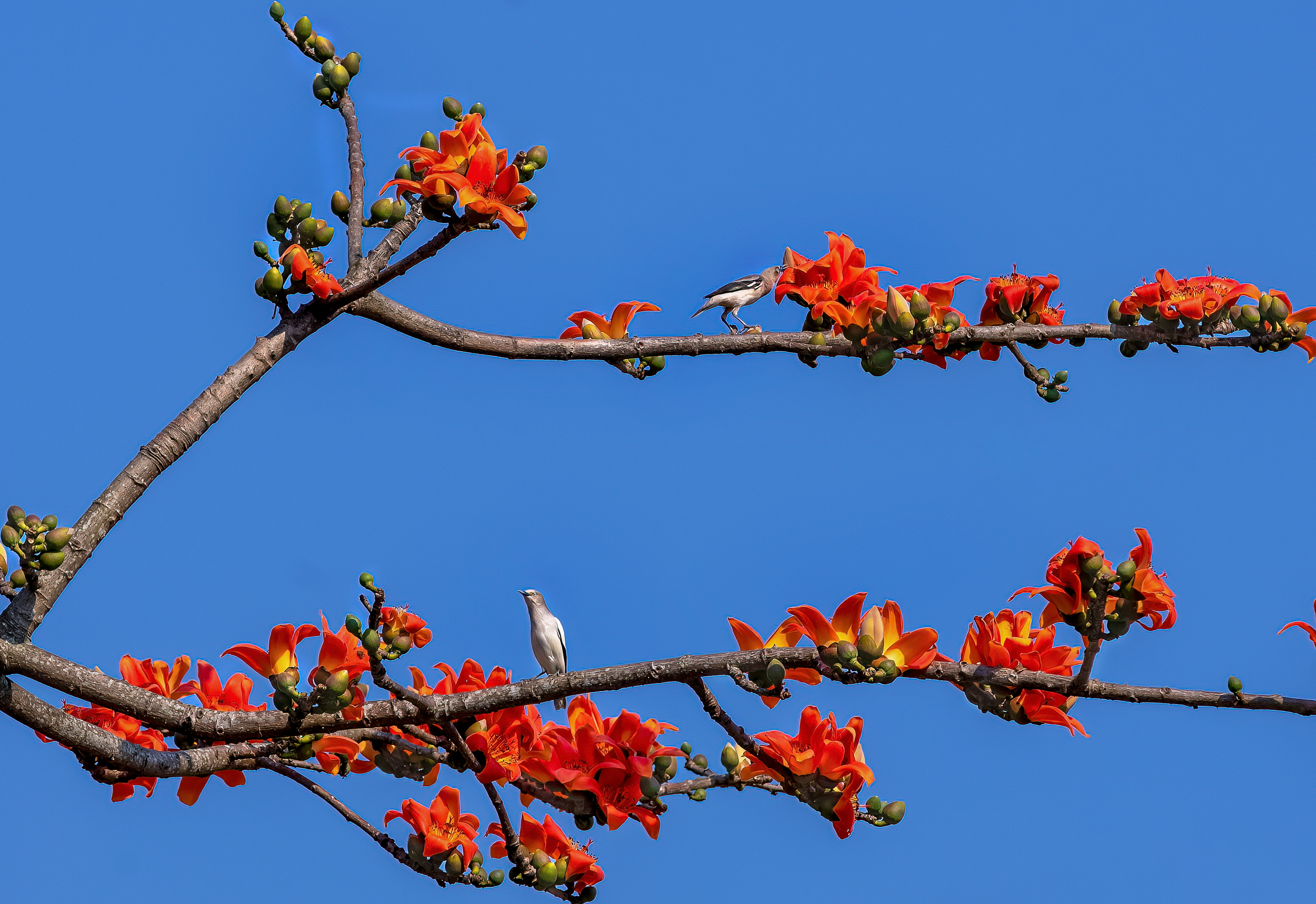 |
The silk cotton tree, or Bombax ceiba, is a woody plant with a round canopy. Originating from India, it is widely cultivated across Asia, including Vietnam, Malaysia, Indonesia, Hong Kong, Taiwan, and southern China.
"Besides the lotus and wutong flower seasons, during silk cotton tree season, I often take my camera to find beautiful angles," Phong said.
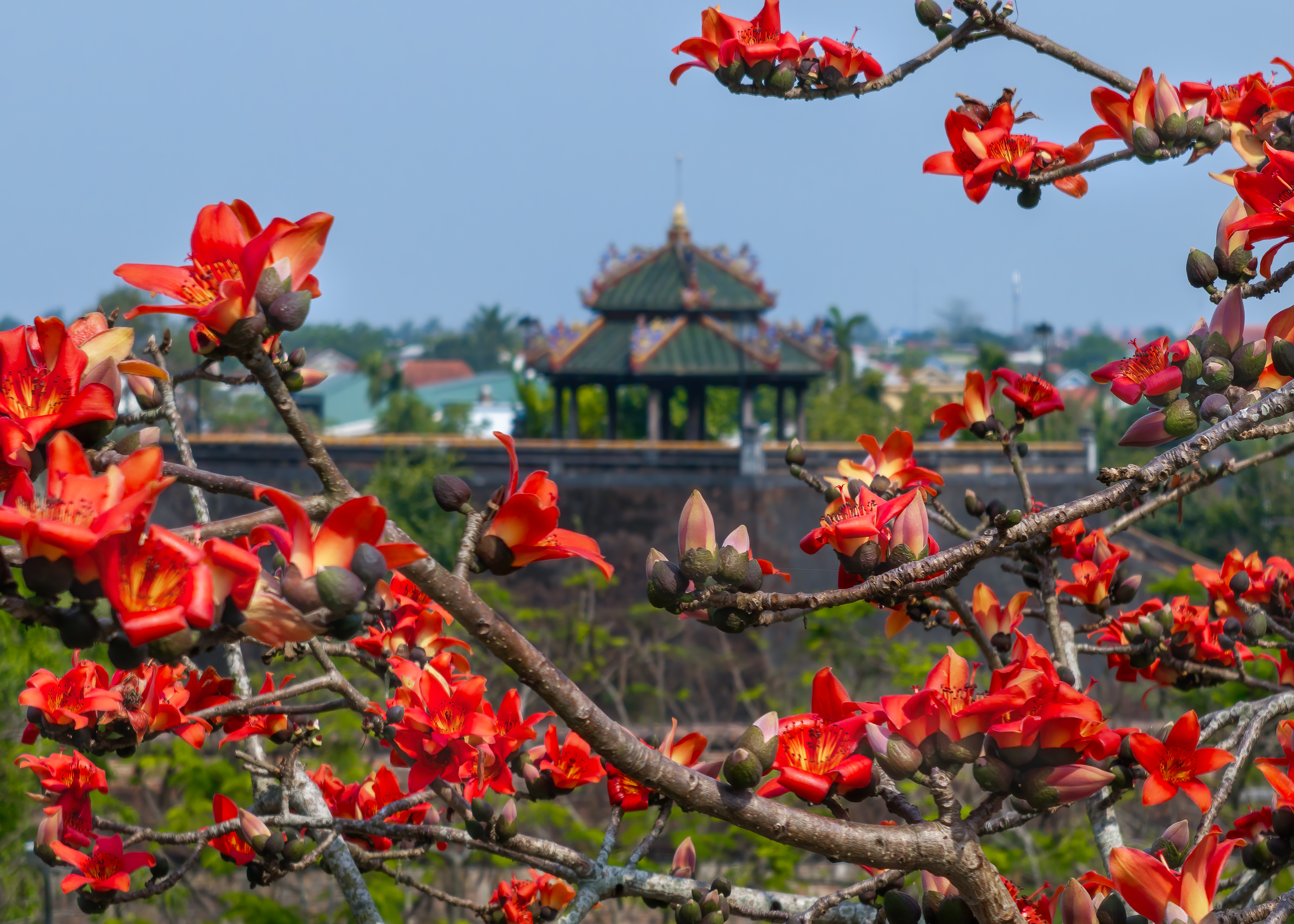 |
A silk cotton tree blooms a vibrant red in front of the Quan Tuong Dai within the Hue Imperial City.
The Quan Tuong Dai was constructed by Emperor Minh Mang in 1827 in the southwestern part of the citadel. Standing approximately 4.2 meters tall, it served as an observatory for astronomy and weather. The imperial court erected a flagpole here to determine wind direction and built an octagonal pavilion, known as Bat Phong Dinh, for observation purposes.
The park along the Huong River on Le Duan Street currently has dozens of silk cotton trees in bloom. In recent years, Hue City has planted more silk cotton trees along the Huong River, in front of the city People's Committee headquarters, and in some public spaces, adding a scenic highlight to the urban area.
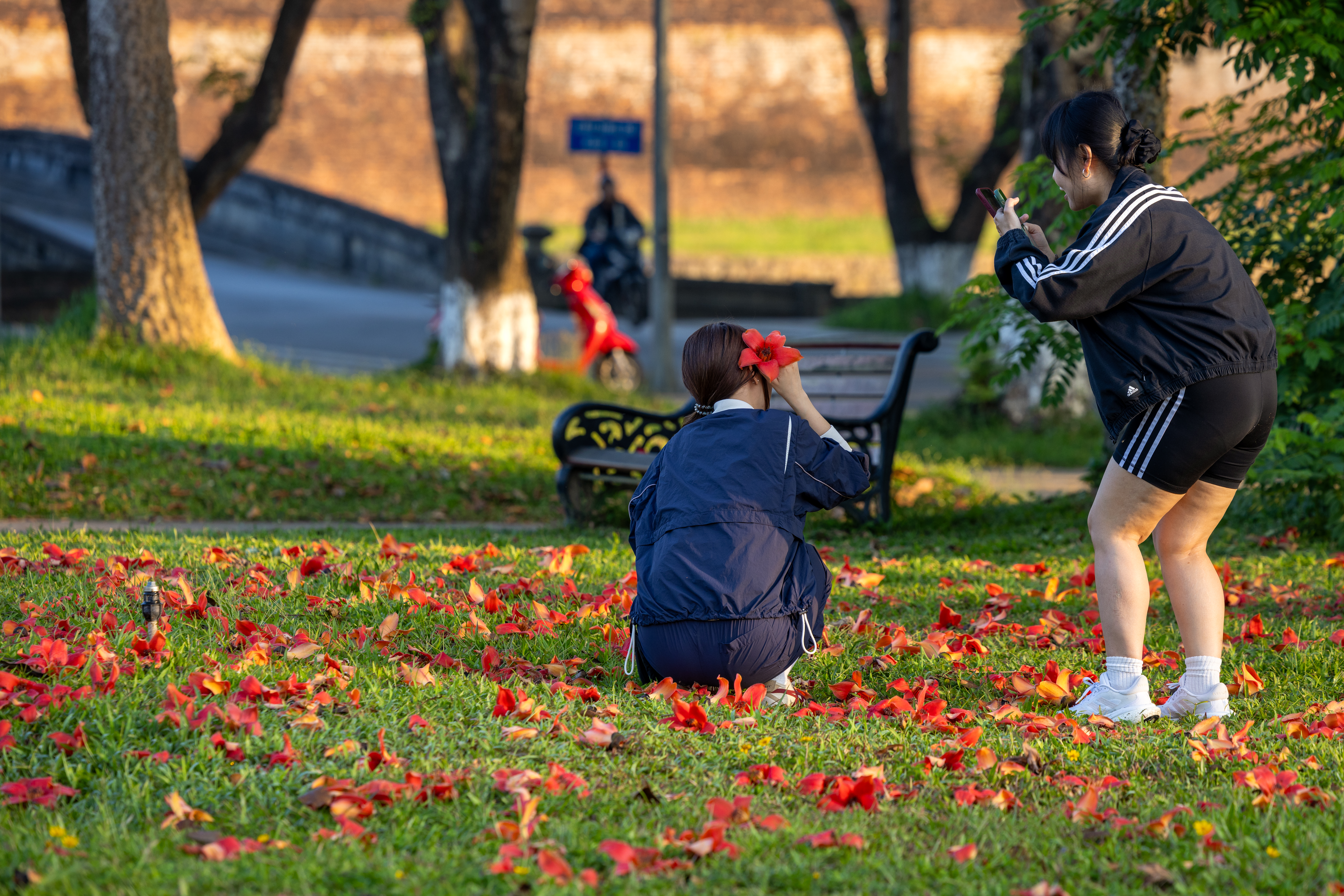 |
Silk cotton tree flowers typically appear around March and April in the Northern and Central regions, usually blooming for about two weeks before the flowers fall and leaves emerge, signaling the arrival of summer.
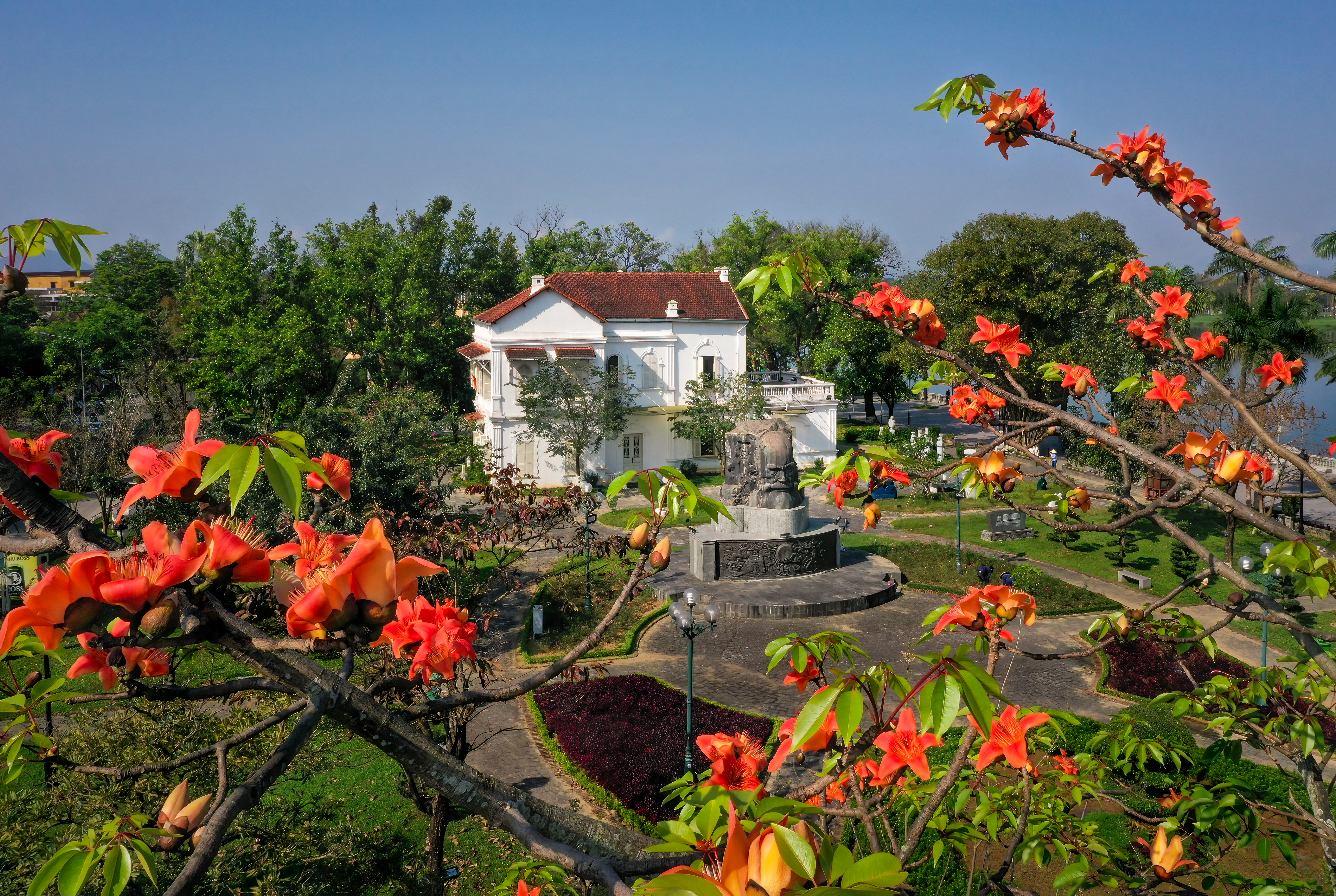 |
Vibrant red flowers bloom in the park featuring the Phan Boi Chau statue on Le Loi Street.
 |
Photographer Nguyen Phong noted that during this year's silk cotton tree flower hunting trip, the tree within the An Dinh Palace complex was in its most abundant and beautiful bloom.
According to him, the palace becomes an attractive destination for many tourists each silk cotton tree season, who come to admire the flowers and take photos amidst the ancient palace setting, seeking a sense of nostalgia.
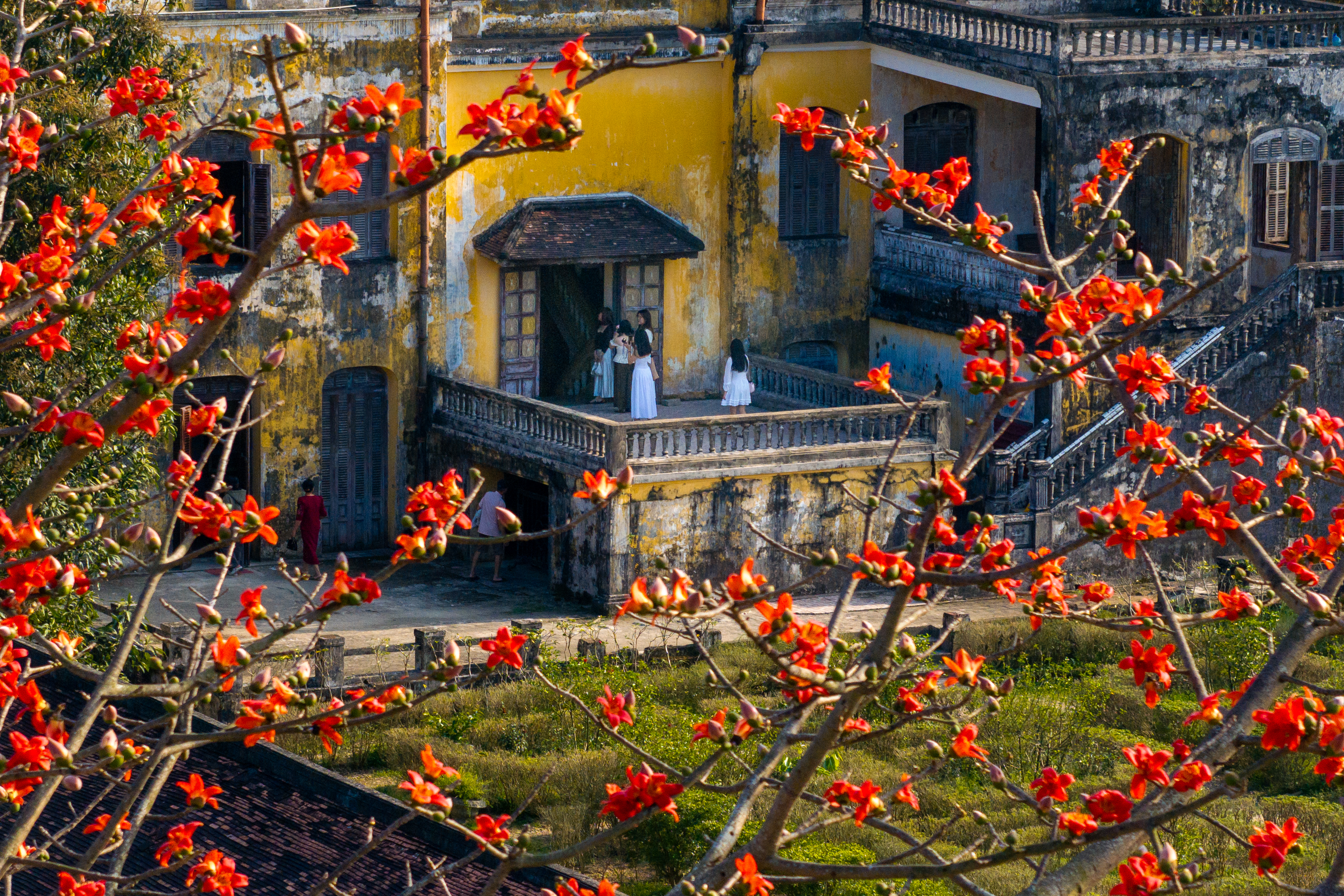 |
Dubbed the "summer palace" of the Hue imperial court, An Dinh Palace (pictured) resembles a European castle, yet incorporates traditional Hue imperial patterns and motifs.
UNESCO recognizes An Dinh Palace as a World Cultural Heritage site, an exceptional architectural and artistic work representing the neoclassical architectural style in Vietnam in the early 20th century.
 |
Anh Le, a resident of Hue City, shared that during the silk cotton tree blooming season, she and her daughter visit old silk cotton trees on the city's outskirts to take pictures next to rice fields.
"The rural landscape, with the red of the silk cotton tree flowers and the green of the rice fields, creates a peaceful feeling," Anh Le said.
Hue's late spring weather is pleasant and not too hot, making it ideal for visitors to wear ao dai or white dresses and pose against the red backdrop of the flowers.
Phong suggests the best time for checking in and photographing the silk cotton tree flowers is in the morning, from 8 AM to 10 AM. Visitors arriving too early will miss the bright sun, while late afternoons see the sun fade quickly, making it difficult to capture beautiful moments.
Tuan Anh
Photos: Nguyen Phong