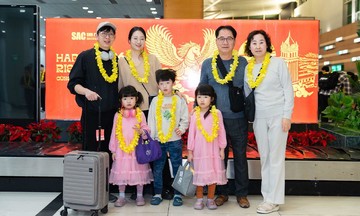
South Korean Finance Minister Koo Yun-cheol announced on 31/12/2025 that the country is extending its visa fee exemption policy for group tourist visas (C-3-2) by six months, until 30/6/2026. This policy applies to six countries: China, India, Vietnam, the Philippines, Indonesia, and Cambodia, for which the exemption was set to expire on 31/12/2025.
"This plan will help maintain international tourism growth to South Korea," Koo stated. The processing fee for a C-3-2 visa currently stands at 18,000 won (approximately 330,000 dong).
According to Nguyen Canh Linh, Head of the Visa Department at Top Ten Travel, Vietnamese tourists have two primary methods for submitting visa applications to South Korea. The first involves applying at KVAC, where applicants pay an agency service fee of 390,000 dong, in addition to a consular review fee. This consular fee varies by visa type: 20-30 USD for a single-entry visa and 80 USD for a multiple-entry visa.
The second method for visa application is through the Immigration Bureau. This option is exclusively available to group tours organized by licensed travel agencies. Since 2024, group tourists have been exempt from this fee, with the travel agency assuming full responsibility for the application review process.
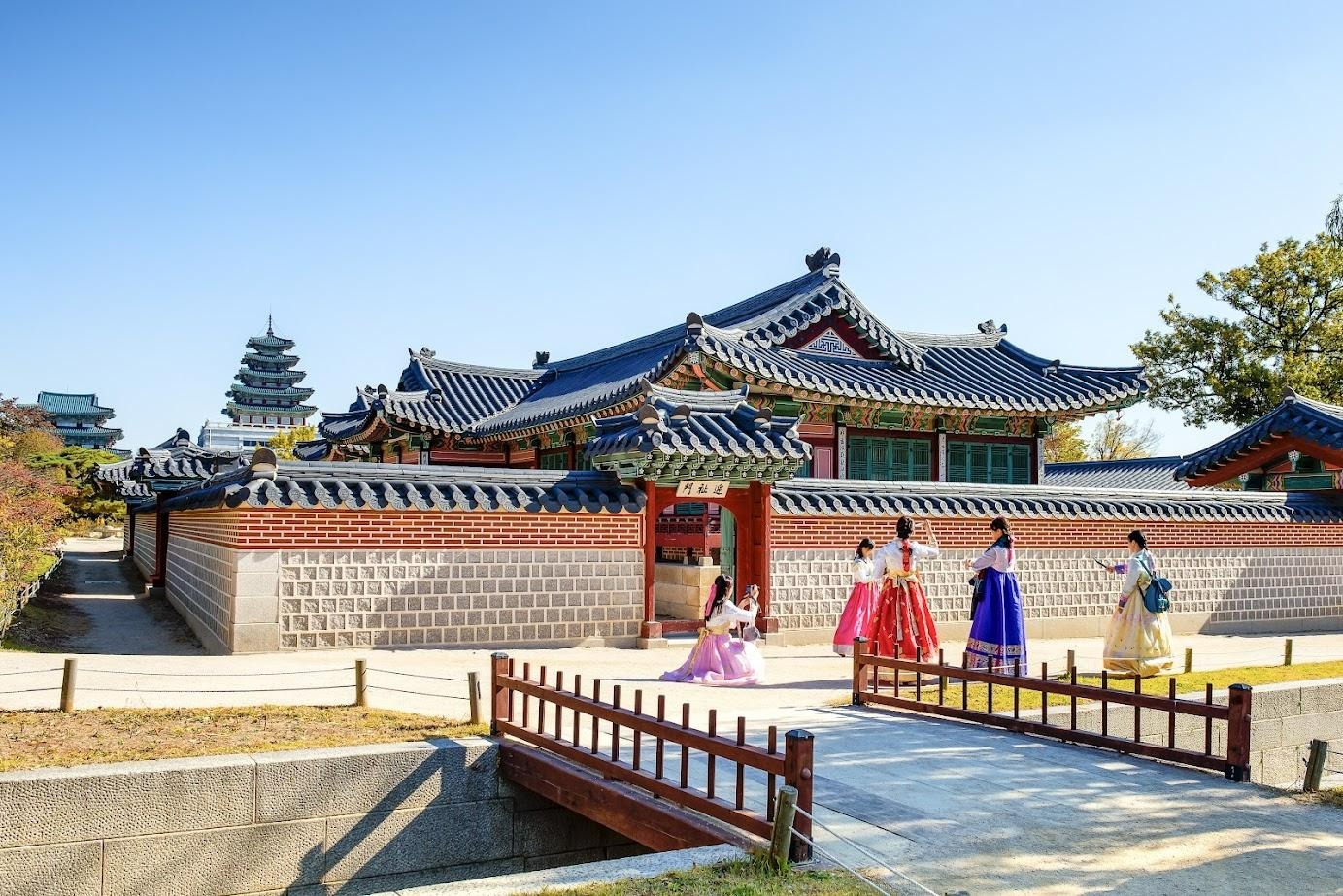 |
Tourists taking photos at Gyeongbok Palace. Photo: VJ |
Tran Thi Bao Thu, Director of Marketing and Communications at Vietluxtour, noted that while this fee exemption does not represent a large proportion of a comprehensive South Korea tour package, it significantly impacts "psychological barriers" and "convenience." Group tours and corporate clients often require quick decisions to align with holiday schedules.
Thu explained, "Eliminating a procedural step and a financial cost makes it easier for larger groups to finalize their travel plans."
A Vietluxtour representative highlighted that the group visa processing fee exemption reflects a deliberate inbound tourism stimulus strategy. This strategy targets group tours facilitated by travel businesses, fostering rapid market growth and better control over tourism quality and behavior. Group itineraries and destinations are clear, making them easier to manage than independent travelers.
Regarding market trends, in 2025, Vietluxtour observed that Vietnamese tourists traveling to South Korea favored "short trips with deep experiences," prioritizing flower and foliage seasons and selective shopping. This trend was particularly evident among corporate groups and multi-generational families. During peak cherry blossom and autumn seasons, the number of visitors increased by 25% compared to the same period in 2024.
Thu observed that many countries are reducing procedural barriers to attract international visitors, utilizing e-visas, digital declarations, and simplified paperwork. She likened visa policy to a crucial key for the market; when it targets the right audience, its effectiveness is amplified.
"However, for a destination to achieve sustainable growth, ease of entry is only one factor; being worth returning to is paramount," she concluded.
As of 11/2025, South Korea welcomed approximately 508,000 Vietnamese visitors, a nearly 7% increase compared to the same period in 2024. In a 2025 report on the top 10 favorite tourist destinations for Vietnamese travelers, seoul ranked 5th, following Bangkok, Singapore, Kuala Lumpur, and Tokyo.
Hoai Anh