As the Lunar New Year holiday concluded, Thai tourism businesses began compiling revenue figures from international visitors during this period, particularly from the Chinese market.
From the beginning of January until now, Thailand has welcomed over 30,000 Chinese visitors daily. The Tourism Authority of Thailand (TAT) projected approximately 241,000 Chinese tourists during the holiday period from 13/2 to 22/2, bringing the total number of arrivals from the start of 2026 to over 1 million.
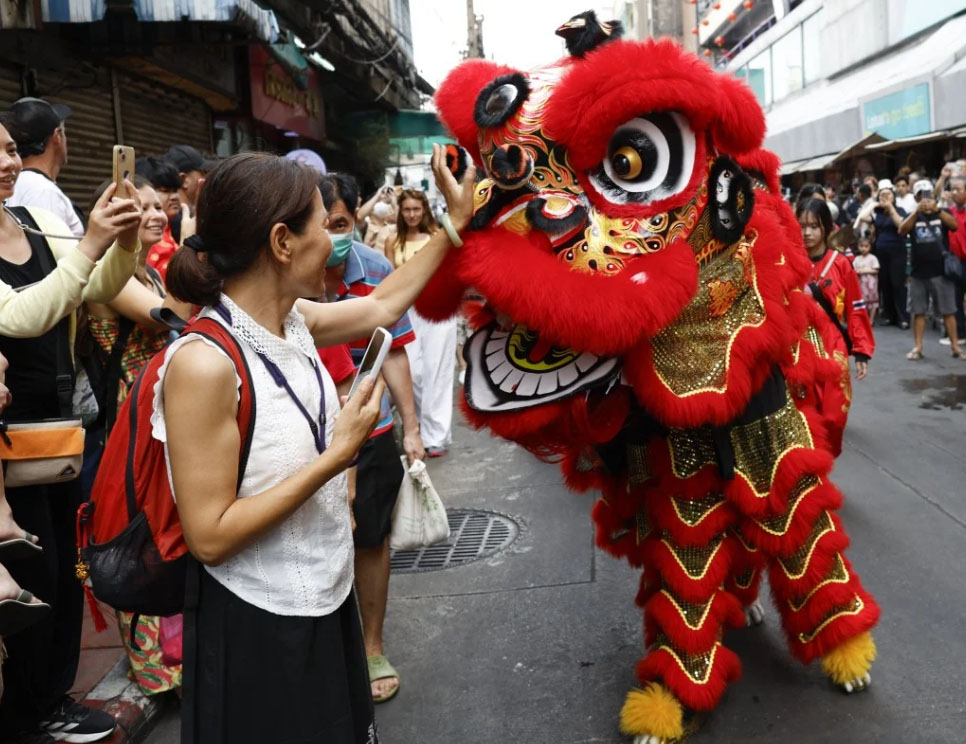 |
A lion dance performance for tourists in Bangkok's Chinatown, Thailand, during the Lunar New Year. *Photo: EPA* |
This year, TAT invested heavily to regain the crucial Chinese tourist segment, which had declined due to concerns about scams, economic difficulties in China, and a strong baht making alternative destinations like Vietnam more appealing.
A large team of Chinese key opinion leaders (KOLs) was hired to target multi-generational families and Gen Z travelers, who are less interested in crowded group tours. This campaign is part of Thailand's largest tourism promotion program to date, launched in January with the participation of Lalisa "Lisa" Manobal, the Thai member of K-pop group Blackpink.
Although official figures for Lunar New Year visitor numbers are not yet released, initial indications suggest the investment has yielded positive results.
"Pattaya is vibrant, with a significant increase in visitors compared to last year", said Boonanant Pattanasin, advisor to the Chairman of the Pattaya Business and Tourism Association.
He added, "In areas popular with Chinese tourists, booking rates have reached 75-80% capacity, primarily for independent travelers and families", emphasizing that the Chinese market remains important for this eastern resort city.
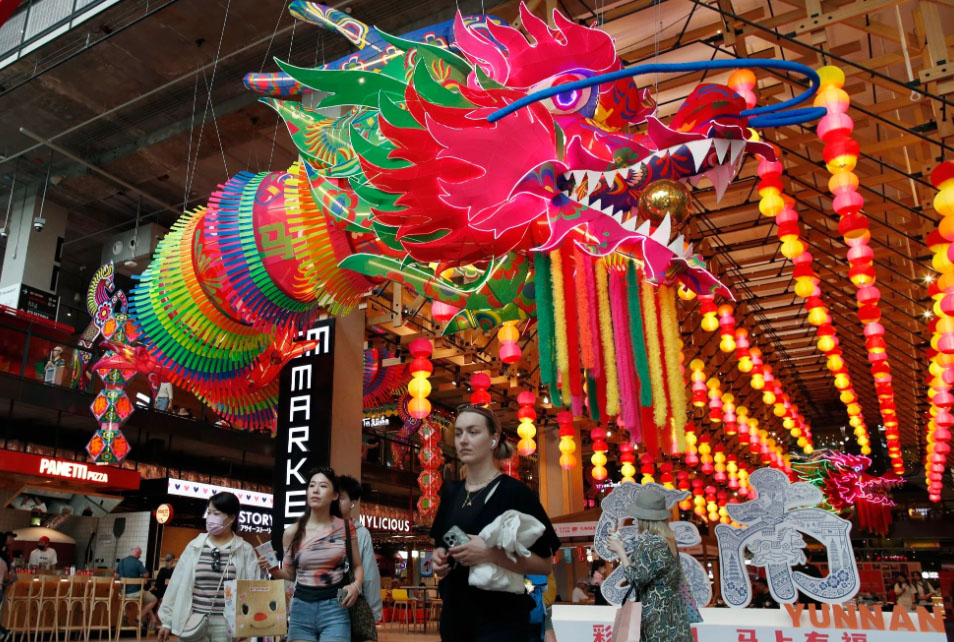 |
People walk past Lunar New Year decorations at a shopping mall in Bangkok on 14/2. *Photo: EPA* |
On the social media platform RedNote (Xiaohongshu), posts quickly went viral from Iconsiam shopping center in Bangkok, showcasing fireworks celebrating the Year of the Fire Horse, along with images of Louis Vuitton's pop-up "hotel" in the capital's Chinatown. This was actually a store requiring appointments for visits, but it attracted many Chinese tourists.
"The festive atmosphere was so lively, I was moved to tears", one user shared, along with images of a lion dance at Iconsiam.
However, many opinions complained about the baht remaining strong, which diminishes Thailand's image as one of Southeast Asia's most affordable destinations.
"Prices in Thailand are now almost catching up with Singapore", another user commented.
According to the Thai tourism agency, Chinese tourist numbers last year dropped by almost 30%, to about 4.5 million arrivals. This year, the country expects the figure to recover to over 6 million.
However, the strong baht remains a factor beyond the tourism industry's control, forcing businesses to adapt to new trends: focusing on high-quality, high-spending tourists rather than the "more is better" model seen before the pandemic.
"Ultimately, it comes back to choice – do you want to try a new market like Vietnam or return to a familiar one", said Thienprasit Chaiyapatranun, President of the Thai Hotels Association, on 21/2. To attract tourists year-round, Thailand needs a long-term competitive strategy that surpasses other destinations in service and shifts its focus to managing specific segments, prioritizing value over quantity.
He noted that which country will be more successful in this transition "still needs time to answer".
Anh Minh (According to SCMP)