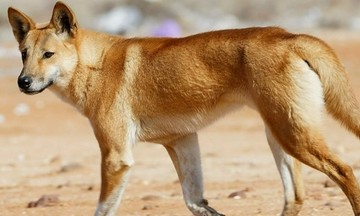
On 23/1, Quynh Ngo from Can Tho, along with three friends, visited the Mui Dien historical site in Dong Hoa commune. As the group looked for the path down to Bai Mon, they were surprised to see a golden dog run out to lead the way.
The group walked and took photos, but the dog patiently waited for them. Quynh noted that sometimes, it would stop and stare intently at the roadside grass, as if searching for something.
"Later, upon closer observation, we realized it was warning us of snakes," Quynh recounted. She added that when they wondered where the parking lot was, the dog looked into the distance. Following its gaze, they indeed found the parking area, intending to go back for the dog, but it had already disappeared.
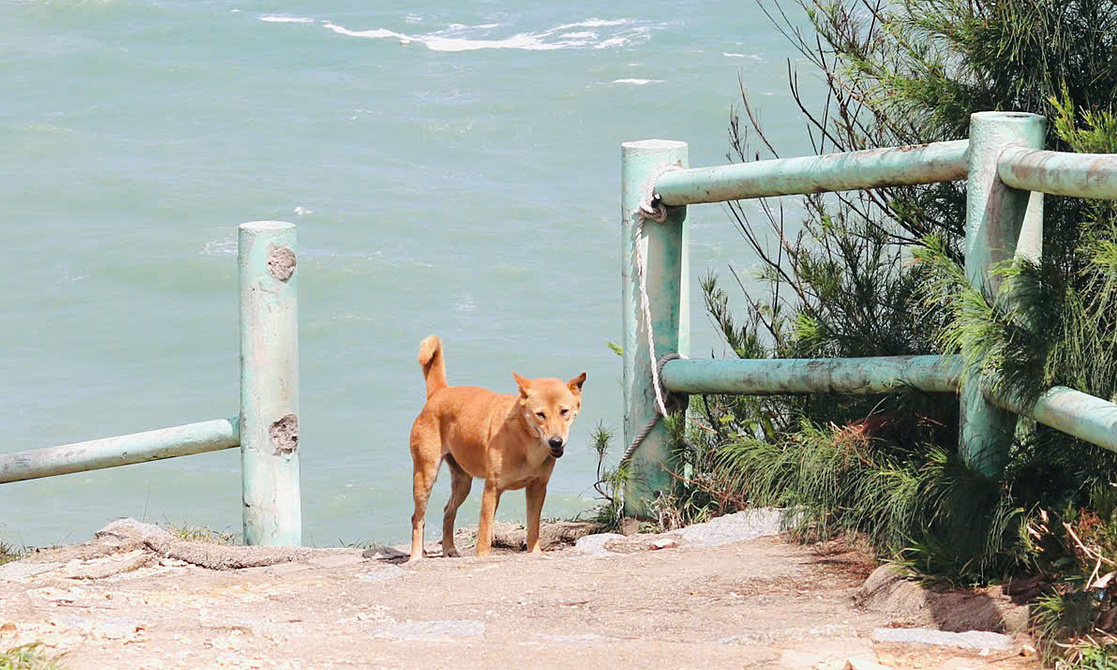 |
The golden dog guiding Quynh's group down to Bai Mon. Photo: Quynh Ngo
Quynh shared her story in a Phu Yen travel group, receiving thousands of likes and shares. Many other travelers recounted similar experiences of being guided by the same dog when visiting Mui Dien.
Nhi Duong shared that when she arrived at Mui Dien at dawn, it was still dark, but the dog ran out to greet her group. "It guided us very attentively, constantly stopping to wait for us," Nhi Duong said.
On Google Maps, a user created a location named "Ban cho vang" (Golden Dog Friend) situated between the path to the lighthouse and the road to Mui Dien. By 27/1, this location had received dozens of 5-star reviews, with most tourists sharing interesting stories about their encounters with the dog.
Tran Quoc Su, a resident of Dong Hoa commune and the dog's owner, stated that Vang is about seven years old and was previously raised at Quan chu Muoi restaurant, located near Mui Dien, dispelling the common misconception that it is a stray. Su's family has raised many dogs, and nearly all of them enjoyed guiding tourists. Unfortunately, many of these dogs were stolen.
Some of the newer, larger dogs in the household would often bite and compete for food with Vang. Consequently, Vang moved to the lighthouse area, regularly guiding visitors up and down. However, other dogs at the lighthouse also frequently bit it, leading Vang to relocate to the Mui Rang Dong area.
Vang maintains a clear daily routine: it stays at Mui Rang Dong at night, then around 4 AM, it runs to the crossroads leading to Mui Rang Dong and the lighthouse to greet visitors. After guiding a group down, it returns to the crossroads, patiently waiting for the next group of tourists.
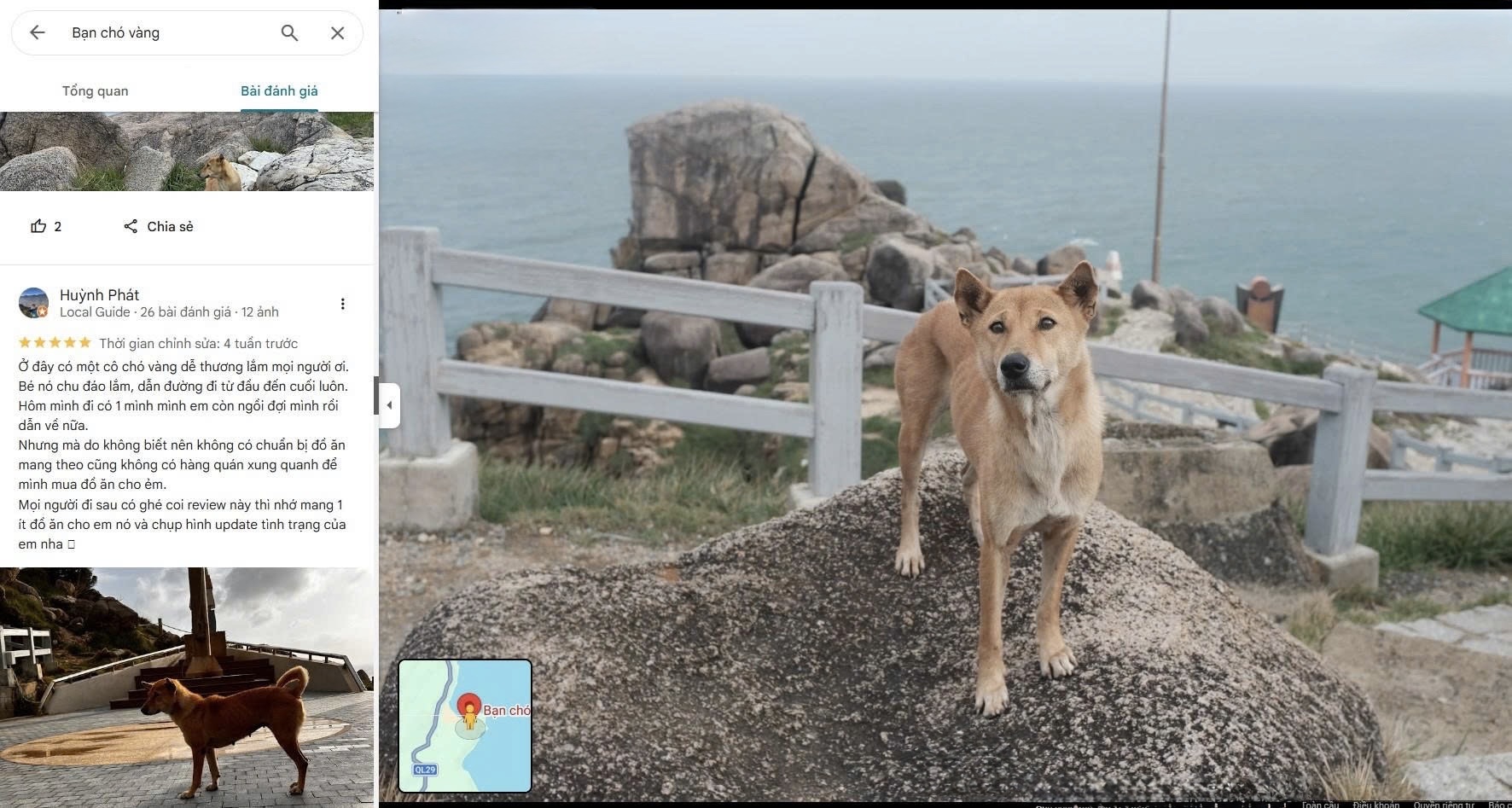 |
The "Ban cho vang" location marked by tourists on the map (where the dog often waits for visitors). Photo: Google Map
According to Su, while some other dogs in his family also know how to guide visitors, none are as "passionate about their work" as Vang. Su mentioned that Vang is the most recognized by tourists and often receives food from them. Su works at the No-Number Ship Relic in Vung Ro and visits Vang daily to feed it.
"It's very clever; it only allows family members to pet it a little because it fears being taken home. But it attaches itself to tourists, which is why many people like it," he said. In the past, some individuals asked to adopt Vang, but Su refused.
Mui Dien, also known as Dai Lanh Cape, is located in Phuoc Tan village, Phu Yen province. It is one of two points on mainland Vietnam that welcomes the first rays of dawn, alongside Mui Doi in Khanh Hoa province. The area remains underdeveloped for tourism, preserving its wild and peaceful beauty. This tourist destination features three main attractions: the lighthouse, Mui Rang Dong, and Bai Mon.
From Tuy Hoa, tourists can rent a motorbike and depart early in the morning or choose to stay overnight at hotels near Mui Dien or the Dai Lanh border post for convenient sunrise viewing. After exploring the Mui Dien area, visitors can walk to Bai Mon to relax and swim.
Tu Nguyen