Former pilot Daniel Bubb and Mark Woods, co-founder and vice president of flight operations at Cirrus Aviation Services, shared insights into using soda for aircraft windshield cleaning. This follows a viral Instagram video showing a pilot leaning out of the cockpit window, pouring a can of soda onto the windshield, and then cleaning it.
"Similar to car windshields, aircraft windshields are exposed to environmental factors, dirt, insect remains, and other contaminants. Keeping the aircraft windshield clean is crucial for ensuring visibility," Daniel Bubb explained.
For pilots, even a small insect mark on the windshield can pose a risk. Bubb noted that in the sky, another aircraft, even a large commercial jet, can appear as small as a pen tip when far away. For aircraft not equipped with a traffic collision avoidance system (tcas), clear visibility of everything ahead is vital. Tcas is primarily installed in commercial and corporate aircraft, so not all planes have it.
A clean windshield is also important when the aircraft is on the ground. Mark Woods pointed out that limited visibility from the cockpit can affect a pilot's ability to see runway markings, terrain, and weather conditions. "Even small smudges or insect residue on the glass can cause glare when encountering sunlight, which is especially dangerous during takeoff and landing," he said.
Pilots cleaning aircraft windshields with soda. Video: Tiktok/Instagram
So, why soda?
The carbon dioxide in soda and sparkling mineral water helps soften, loosen, and wash away insect remains, dirt, and residue on the glass surface. The minerals in the water also enhance its cleaning ability without the need for harsh chemicals.
Another benefit of soda water is that it does not leave sticky streaks or residue like sugary soft drinks, making it effective for quick, temporary cleaning without extensive rinsing. However, soda water cannot tackle all types of stains.
"Carbonated beverages are primarily useful for removing dried insect remains and light organic matter, but they are not effective against grease, oil, soot from exhaust, or stubborn deposits," Woods explained.
Pilots avoid using sugary, colored soft drinks like Coca-Cola because they leave residue and attract more dirt. Soda water and sparkling mineral water are less likely to damage aircraft windshields, which are durable but also sensitive to abrasive substances or strong chemical solutions.
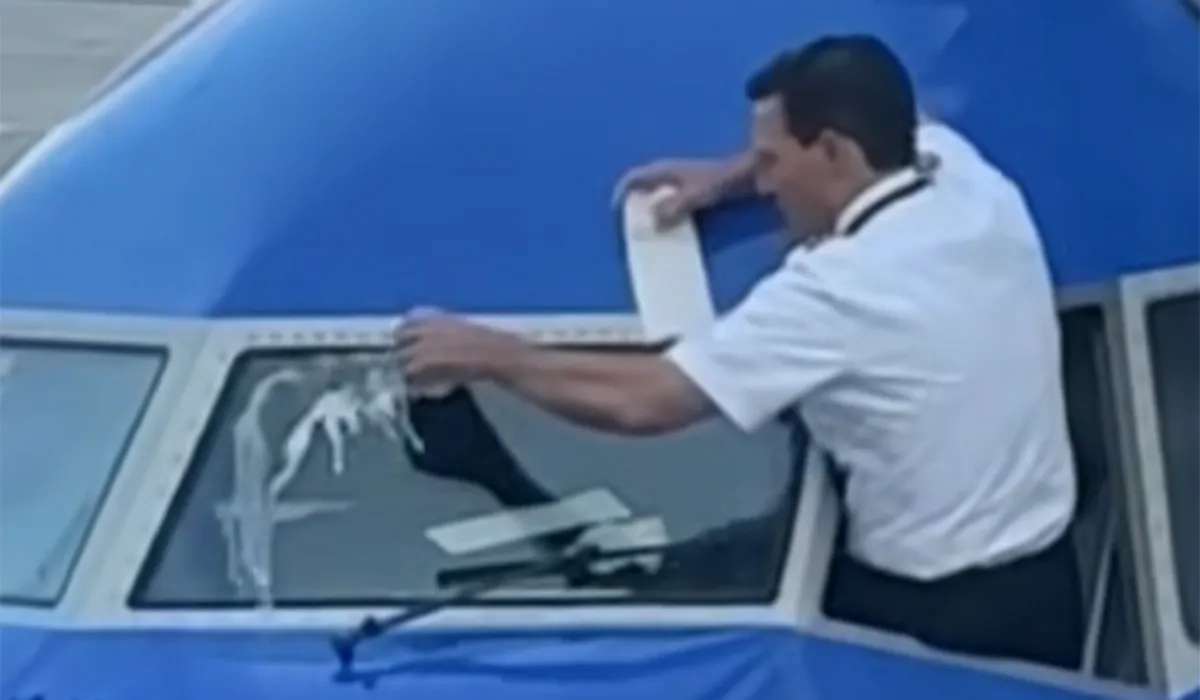 |
A pilot cleaning an aircraft windshield with soda. Photo: Extra.ie
Most aircraft windshields are constructed from laminated glass or acrylic/polycarbonate materials. They are designed to withstand extreme conditions, including sudden temperature changes and pressures up to 5 tons during flight.
Aircraft glass often features specialized coatings to enhance durability, anti-fog properties, and heat resistance, requiring much more careful maintenance than ordinary glass. "A bit of soda water can help for a quick fix, but if used, it should be rinsed off immediately with clean water," Woods said.
Why do pilots not use specialized cleaning solutions? The simple answer is convenience. It is similar to car drivers in cold regions sometimes using snow to wipe windshields when they run out of washer fluid. While not an ideal solution, it works as a temporary fix or for convenience, rather than a standard procedure.
However, Woods also noted that pilots at Cirrus Aviation Services do not widely adopt this method, as some windshields on smaller, non-commercial aircraft (like those in his company's fleet) should only be cleaned with approved products.
Soda water and sparkling mineral water are generally safe for aircraft windshields, provided they are used carefully and with moderate frequency. Pilots are trained to avoid anything that could pose a risk, such as corrosive cleaners that might affect safety or visibility.
Bubb stated: "Pilots have many small tips for various purposes as long as they are safe, but it is always best to be cautious and ensure they use materials approved by the Federal Aviation Administration (FAA) and the aircraft manufacturer. When in doubt, pilots can call the ground crew to bring FAA-approved windshield cleaning solutions."
The FAA does not have a specific regulation regarding the use of soda water or sparkling mineral water to clean aircraft windshields. Bubb also mentioned that the FAA likely recommends aircraft operators use cleaning agents approved by the aircraft manufacturer and supplied by reputable providers.
By Tam Anh (Source: Reader's Digest)