


New Zealand and Slovakia announced on 16/1 their temporary closure of embassies in Tehran and the evacuation of diplomats. This decision stems from a deteriorating security situation and the risk of military conflict in the region. According to New Zealand's Ministry of Foreign Affairs, its diplomatic staff safely departed Iran on commercial flights, with embassy operations relocating to Ankara, Turkey. The United Kingdom was the first country to announce its temporary embassy closure on 14/1, followed by similar announcements from Ukraine and Portugal.
New Zealand advised its citizens against traveling to Iran at this time and urged those currently in the country to leave immediately. The ministry highlighted that consular assistance capabilities are "extremely limited." Slovak Foreign Minister Juraj Blanar confirmed that all diplomats and embassy staff in Tehran are safe.
The UK Foreign Office spokesperson stated on 14/1 that the British embassy would operate remotely and that travel advice had been updated to reflect the change in consular services. A UK official added that the British ambassador and all consular staff were evacuated following a security assessment that prioritized staff safety. Ukraine's Embassy in Iran also issued a similar announcement on 16/1, promising further updates on the resumption of operations and any additional measures.
Portugal's Ministry of Foreign Affairs also temporarily closed its embassy in Iran. The ministry reported contacting all Portuguese citizens in the country, noting that 8 had already left. Several more citizens are processing their departure, while 10 individuals, including 7 dual Portuguese-Iranian nationals, wish to remain in Iran.
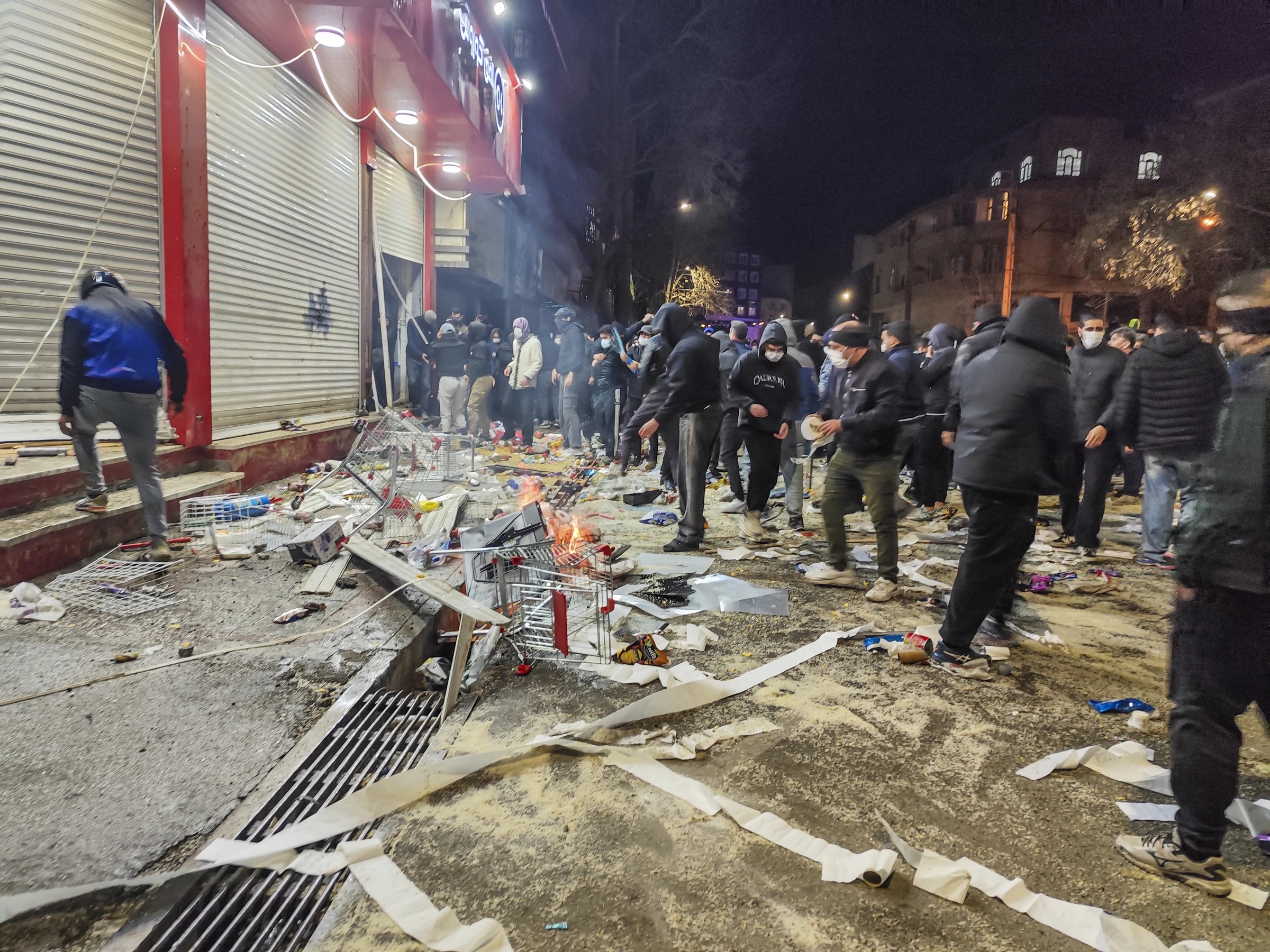 |
Protests in Kermanshah city, Iran on 8/1. _Photo: AFP_
The protests in Iran began on 28/12/2025. These demonstrations were initially sparked by merchants dissatisfied with the economic situation and the depreciating rial. They subsequently spread to many localities across Iran, escalating into violent clashes with security forces. However, the protests appear to have subsided in recent days.
Iranian officials accused "terrorist agents" from Israel and the US of inciting the riots. Washington denied these claims, stating that Tehran is "distracting public opinion from internal issues."
US President Donald Trump had repeatedly threatened military intervention in Iran regarding the protests. However, Middle Eastern media reported on 15/1, citing informed sources, that Gulf allies and Turkey had convinced the US leader to postpone this plan. This decision was made due to concerns about prolonged instability in the region.
By Huyen Le (According to AFP, Reuters, Kyiv Independent, Portugal News)


