Liu, a Beijing resident, last year ordered a birthday cake through an online food delivery platform. Dissatisfied with its inedible flower decoration, Liu complained to authorities, triggering a nationwide inspection.
Authorities discovered a chain of "ghost" cake shops operating with fake licenses. This chain claimed to have nearly 400 branches but had no physical stores. They received customer orders and payments, then outsourced these orders to an intermediary platform for other producers to bid on. Whoever accepted the lowest bid was chosen to fulfill the order, which compromised both product quality and food safety.
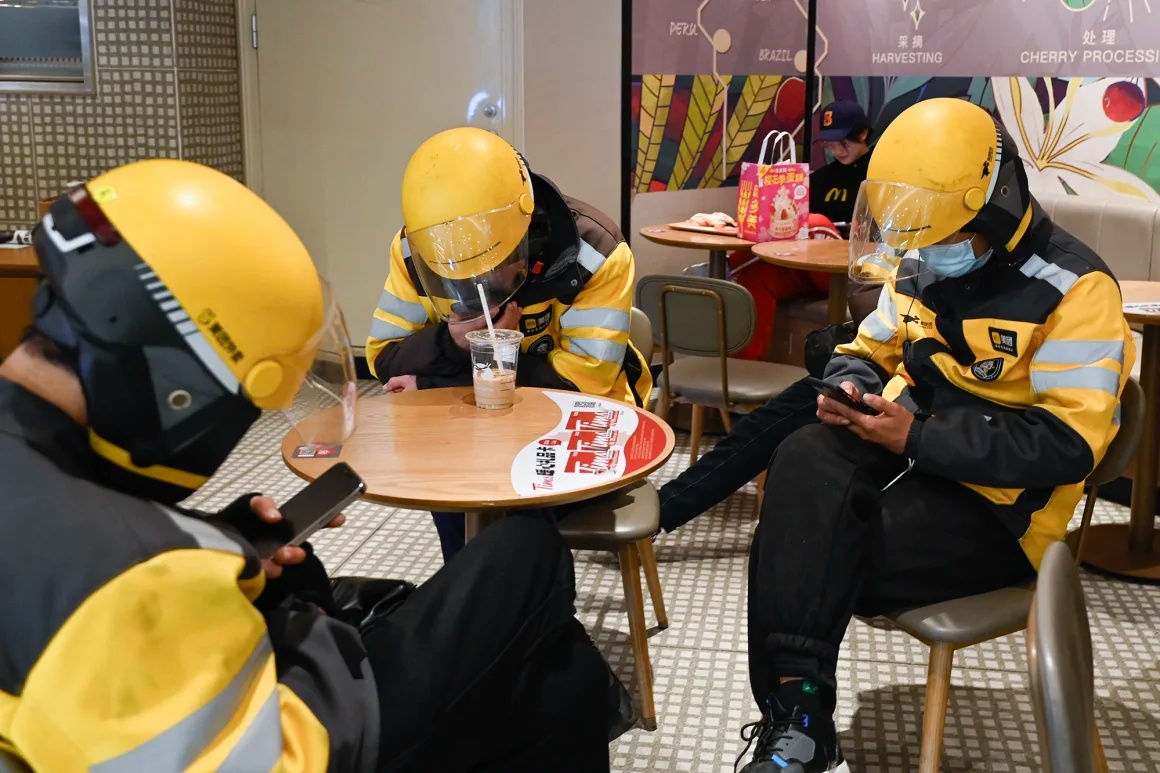 |
Delivery driver waiting for an order at a shopping mall in Beijing, March 2024. *Photo: AFP* |
According to Xinhua, a customer paid 252 Chinese yuan (USD 35) for a cake 15 cm in diameter. This order was then resold through the intermediary platform, where bakeries bid down from 100, 90, to 80 Chinese yuan. Consequently, the "ghost" shop pocketed nearly half of the customer's payment, the delivery platform collected a 20% service fee, and the actual bakery received only 30%.
Over 67,000 "ghost" shops were discovered nationwide, having sold more than 3,6 million cakes. China's State Administration for Market Regulation (SAMR) concluded that seven major delivery platforms, including: PDD, Alibaba, Douyin, Meituan, and JD, failed to adequately protect customers and thoroughly verify seller licenses.
The SAMR fined these platforms 3,6 billion Chinese yuan (USD 528 million), the largest fine since the revised Food Safety Law in 2015. Among the penalized companies, Pinduoduo received the heaviest fine of 1,5 billion Chinese yuan, attributed to its continuous refusal to provide information, submission of false documents, and violent resistance. Pinduoduo, along with other giants like Alibaba and Meituan, later pledged to comply with the penalties and tighten management to eliminate malpractices.
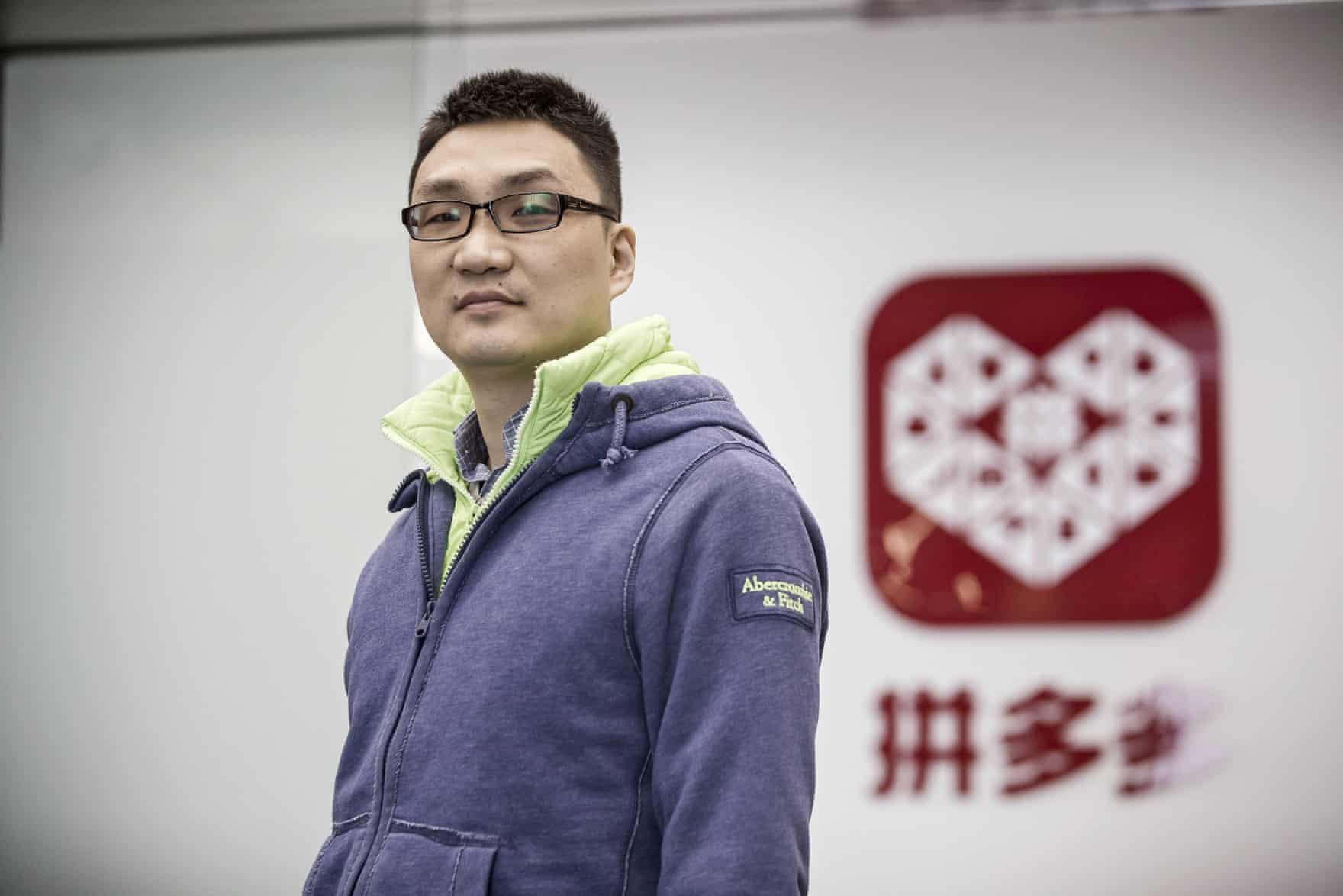 |
Huang Zheng, founder of e-commerce platform Pinduoduo. *Photo: Caixin* |
The 10-month investigation highlighted Beijing's efforts to crack down on fierce price competition, which has driven companies into a self-destructive spiral of lowering prices to attract customers at the expense of food safety.
Professor Xue Jun, a lecturer at Peking University Law School, commented on 17/4, "The platforms' thorough vetting of shops is the first line of defense for food safety. If this line of defense collapses, the entire regulatory system will fail."
He suggested that these heavy penalties compel platforms to transition from formal to substantive shop verification and to fully shoulder their responsibilities.
Shi Jianzhong, a professor at China University of Political Science and Law, believes the "ghost" shop case is a landmark. It compels regulators to strengthen food safety oversight on online shops and regulate platform development, while also serving as a reference for adjudicating similar cases in the future.
By Hong Hanh (According to CNN, Xinhua)