Relations between the United States and Poland, a key NATO ally of Washington, became strained last week following comments by Speaker of the Polish Sejm Wlodzimierz Czarzasty regarding former President Donald Trump's ambition to win the Nobel Peace Prize.
Early last week, Czarzasty stated that Trump "does not deserve" the Nobel Peace Prize he publicly pursued. He added that the former White House occupant disrespected Poland as an ally when he declared in 12/2025 that NATO countries were not contributing enough to the US-led war in Afghanistan.
According to Czarzasty, Trump also "destabilized" international organizations such as the United Nations and the World Health Organization (WHO).
US ambassador to Poland Thomas Rose immediately responded on social media platform X, stating the embassy would cut ties with Czarzasty and accusing the Polish official of making "blatant and unprovoked insults" against Trump.
Rose also asserted that these comments made the Speaker of the Polish Sejm a "serious impediment" to the "excellent" relationship between the United States and Prime Minister Donald Tusk's government.
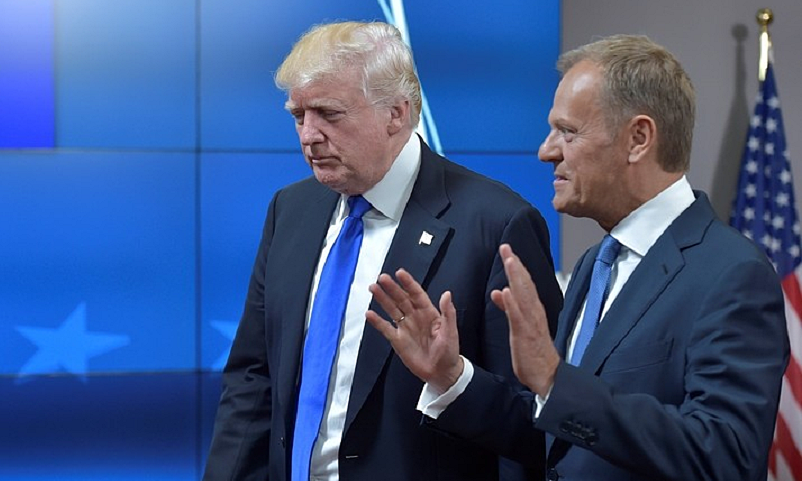 |
Former US President Donald Trump (left) and Donald Tusk, then President of the European Council, in Brussels, Belgium in 5/2017. Photo: Reuters |
Former US President Donald Trump (left) and Donald Tusk, then President of the European Council, in Brussels, Belgium in 5/2017. Photo: Reuters
"We will not allow anyone to undermine US-Poland relations, nor will we tolerate insults to President Trump, who has done so much for the country and people of Poland," Rose wrote.
That statement sparked a wave of strong reactions in Poland. Prime Minister Tusk, who leads the center-left coalition government, replied on X: "Ambassador Rose, allies should respect each other, not lecture each other. At least, in Poland, that is how we understand the spirit of partnership."
The US ambassador also responded to Tusk's criticism, suggesting the Polish Prime Minister should have directed his message to Czarzasty, a member of the New Left party within the ruling coalition.
Poland has long considered itself one of the United States' most steadfast allies. In recent years, Warsaw increased military spending at Trump's request for NATO and became one of the world's largest purchasers of US weaponry. Poland also maintains one of the largest armies within the alliance.
However, the disputes that arose last week added Poland to a growing list of countries that have displeased the US administration. Trump repeatedly expressed his desire to receive the Nobel Peace Prize. Earlier this year, the former US President criticized Norway after the Nobel Committee, based in that country, awarded the prize to Venezuela's opposition leader.
Analysts suggest the war of words is unlikely to lead to a complete breakdown in relations between the United States and Poland. However, it highlights how Trump's personal issues and his increasingly abrasive attitude toward NATO partners have impacted ties between the US and its closest European allies.
Opinion polls indicate that just over 30% of Poles support Trump's tenure, expressing concerns about Washington's long-term security commitments. Many in Warsaw view these commitments as a cornerstone of their relationship with the US, according to WSJ. Polish public favorability toward the US has also dropped from 70-80% to about 49%.
A recent survey showed that 72% of Poles view the Trump administration's policies negatively, with only 28% holding a positive assessment, according to Politico.
After a Polish law student criticized Ambassador Rose, asserting Poland's sovereignty and asking him to "go home," the US diplomat posted on his X account: "So should we take all our soldiers and equipment with us?" However, Rose's post was later deleted.
Republican Congressman Don Bacon later wrote on X: "It's time for a new ambassador." Rose has not commented on this statement.
 |
Location of Poland. Graphics: CBC |
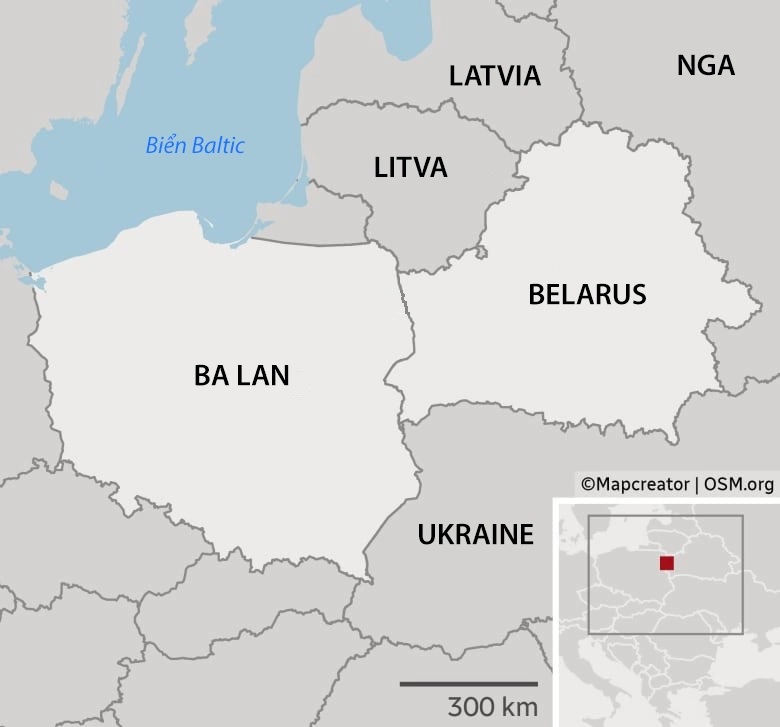
Location of Poland. Graphics: CBC
Right-wing Polish MP Roman Giertych stated he does not share Czarzasty's political views but expressed support for the Speaker of the Sejm.
"The time when ambassadors could dictate to Poles who should hold what office is over and will never return," he wrote on X. "We want good relations with the US, but your representatives cannot choose the leaders of the Republic of Poland for us."
Marcin Duma, founder of the IBRiS polling firm in Warsaw, suggested the current risk is that more Poles will question the US's "superior partner" role in bilateral relations.
"If you question Denmark's sovereignty over Greenland, place photos of Russian President Vladimir Putin in the White House, that does not send a signal that US security guarantees are solid," Duma said.
Thanh Tam (According to WSJ, Politico)