The Russian Investigative Committee announced on February 8 that it had found the weapon at the scene of the attempted assassination of Lieutenant General Vladimir Alekseyev, Deputy Chief of the Main Intelligence Directorate (GRU). "It was a Makarov pistol fitted with a suppressor and still contained three rounds," the agency stated.
Military correspondent Alexander Kots reported that General Alekseyev sustained three gunshot wounds: two to the abdomen and one to the leg. He is now out of critical danger, conscious, and able to communicate, though his condition remains serious.
The suspect discarded the weapon, and the Makarov was found by investigators in a video released on 8/2. Video: RIA Novosti
The Makarov pistol (PM) was developed to replace the Tokarev TT-33 series in the Soviet military and many other nations. The TT-33 was considered too heavy and bulky for a personal self-defense weapon after World War II, lacking a safety catch and prone to magazine loss.
When launching the competition for a new pistol, Soviet officials demanded a product that surpassed the TT-33 in reliability, safety, and user-friendliness, while also being more compact and lighter. The pistol needed to use 9 mm or 7.62 mm ammunition.
The new generation 9x18 mm cartridge, developed by Boris Semin in 1946, was deemed the most suitable for this project. Its low gas pressure allowed for a blowback mechanism, reducing the cost and complexity of the firearm while ensuring low recoil and powerful impact.
The design team led by Nikolay Makarov won the competition. This pistol design was reportedly inspired by Germany's Walther PP series, outperforming rivals with its simple design, high reliability, durability, and quick disassembly capability.
During testing in April 1948, the Makarov pistol had a malfunction rate 20 times lower than those of Baryshev and Sevryugin's models, and it also featured fewer components.
After its victory, Makarov's design continued to be developed and optimized for mass production. Following significant design changes and adjustments, it was adopted by the Soviet army in 1951 under the name Pistolet Makarova (Makarov's Pistol).
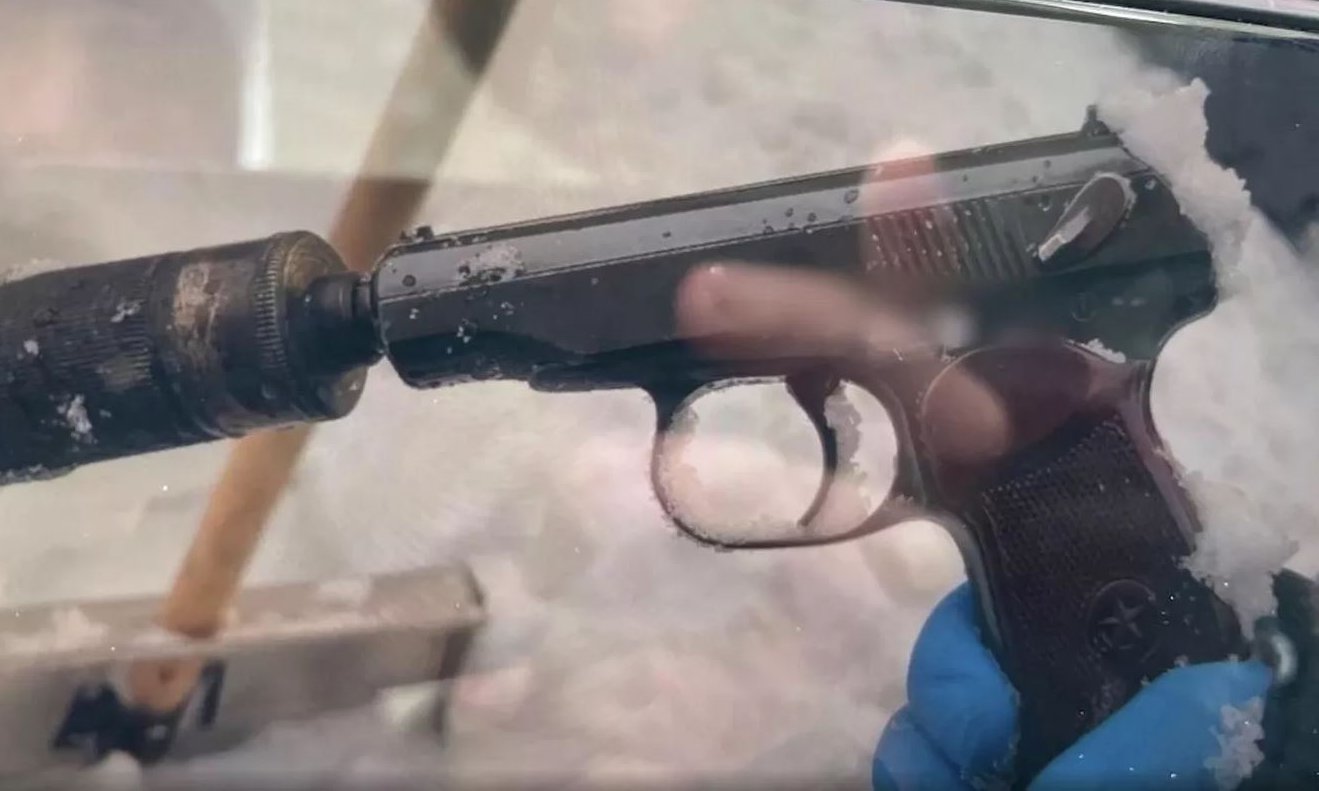 |
The PM pistol found at the scene of the attempted assassination of General Alekseyev. Photo: RIA Novosti
The PM became the standard pistol for the Soviet military and police, as well as numerous allied nations. It is one of the most widely produced pistols globally, with over 5 million units manufactured.
Even after the dissolution of the Soviet Union in 1991, the Makarov pistol remained in use, undergoing modifications and modernization. It is currently still in service with some Russian forces, former Soviet republics, and several African and Asian countries.
The Makarov pistol has an empty weight of 0.73 kg and weighs 0.81 kg when fully loaded. It has an overall length of 161 mm, a barrel length of 93 mm, uses an eight-round magazine with a muzzle velocity of 315 m/s, an effective range of 50 m, and a maximum firing rate of 30 rounds per minute.
Russian military publication Top War called the Makarov pistol "a symbol of an era," having served for decades with the military, police, and special forces of many countries.
"The Makarov was designed to be as simple and durable as possible. It has only 32 parts and almost no superfluous components. This pistol can operate in mud, dust, and freezing conditions, firing hundreds of rounds without maintenance," the publication noted.
One advantage of the PM is its compactness, allowing it to be easily concealed on one's person without snagging on clothing or requiring a bulky holster, making it simple to draw when needed. "This factor is crucial for patrol officers or undercover agents, as they require a lightweight and easily deployable weapon in emergency situations," Top War explained.
The Russian military publication suggests that the Makarov's 9x18 mm round is often underestimated, primarily because its stopping power is inferior to modern 9 mm ammunition and it is less suitable for today's military combat environments where body armor and ballistic helmets are common. However, it remains powerful enough for police use and self-defense purposes against soft, unarmored targets.
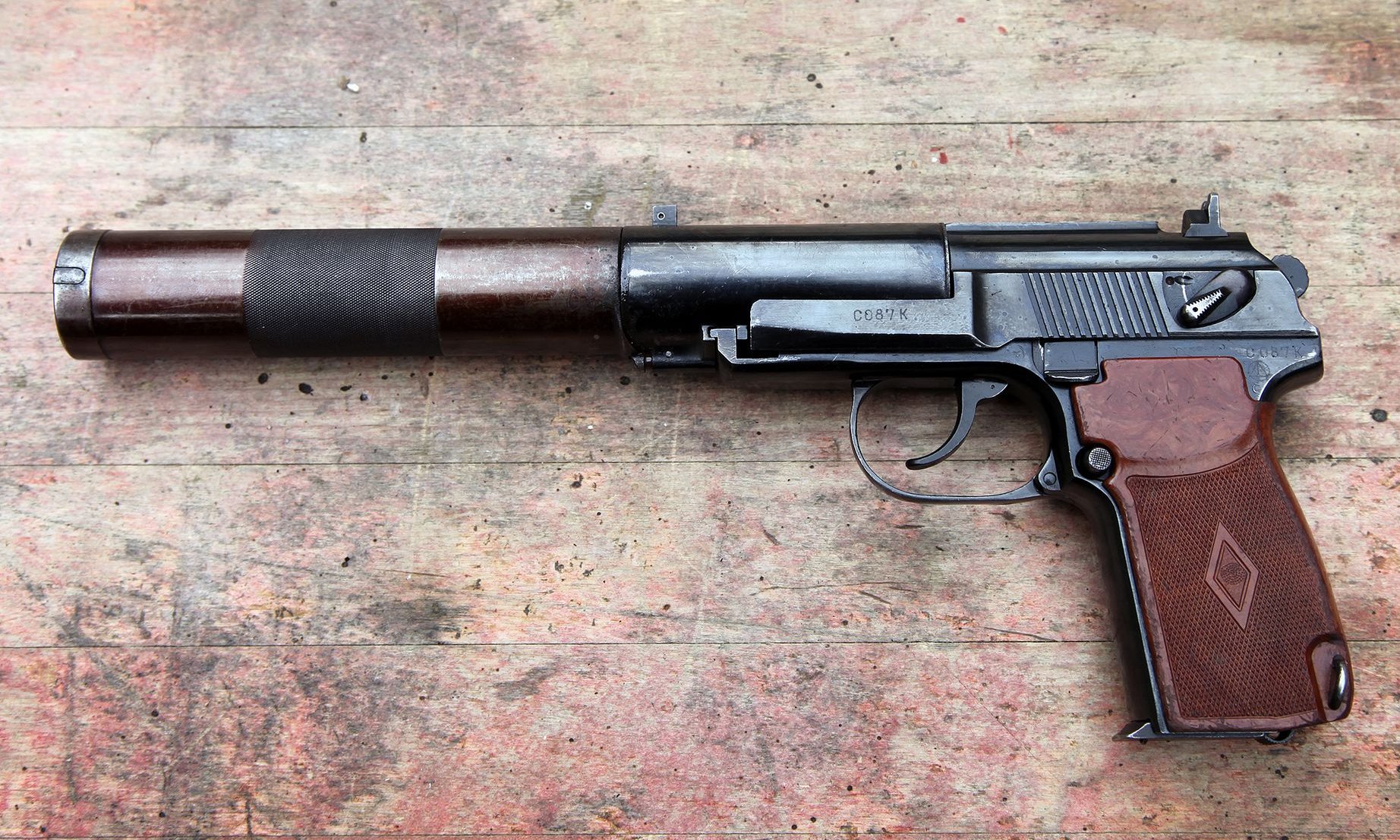 |
A Soviet-era PB suppressed pistol. Photo: Vitaly Kuzmin
A standard Makarov pistol cannot be fitted with a suppressor because its muzzle is unthreaded and covered by the slide.
The suppressed version, known as the PB, was issued to Soviet reconnaissance and intelligence forces starting in 1967. Its external appearance is quite different from the pistol allegedly used by suspect Korba. This leads experts to believe that the suspect may have used a modified PM pistol to attach a suppressor for the attempted assassination.
Pham Giang (According to Izvestia, Top War, RBTH)