The Canadian government is facing a wave of domestic opposition after Prime Minister Mark Carney signed a trade agreement with China. This deal allows electric vehicles (EVs) manufactured in China to enter the Canadian market with preferential tariffs.
Under the agreement, Canada permits the import of 49,000 Chinese electric vehicles annually at a 6,1% tariff. This rate is significantly lower than the 100% duty that Canada and the United States imposed from 2024 to counter what they consider Beijing's subsidies and dumping policies.
Canada's import ceiling for Chinese electric vehicles is expected to increase to 70,000 units within five years. In exchange, China has committed to reducing tariffs on various Canadian agricultural and seafood products.
A portion of the import quota is allocated for electric vehicle models priced at 35,000 CAD (approximately 25,500 USD) or less. By 2030, this category of vehicles will account for 50% of the import quota designated for China, according to the Canadian Ministry of Foreign Affairs.
Ottawa views this as a strategic move to reduce electric vehicle prices, enhance competition, and attract investment. Prime Minister Carney emphasized that Canada must compete in the future market rather than clinging to the automotive industry of the 2000s, thus requiring increased cooperation with Chinese businesses.
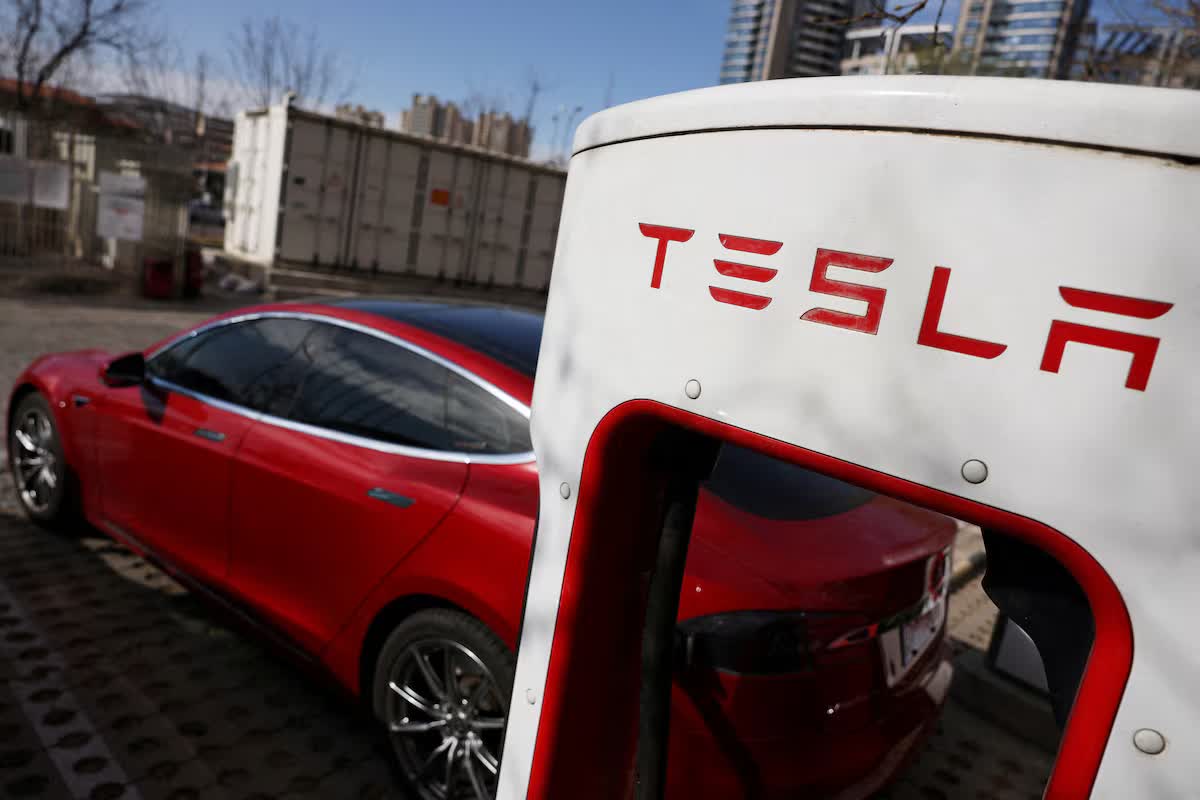 |
A Tesla charging in Beijing, China on 24/3/2025. Photo: Reuters |
A Tesla charging in Beijing, China on 24/3/2025. Photo: Reuters
Meanwhile, the Ontario provincial government and automotive unions are concerned that cheap vehicles will "flood" the market, potentially leading to job cuts following the agreement with China. Ontario Premier Doug Ford warned that this deal could immediately close off the US market, Canada's largest export destination, for the Canadian automotive industry.
Ontario is the world's second-largest automotive manufacturing hub after Michigan, United States, producing approximately 1,3 million vehicles for the market in 2024. The Windsor-Essex region, located in southern Ontario, is home to plants for Ford, one of the major American car manufacturers. Ford established a plant in Windsor in 1896, and Stellantis followed in 1928. Subsequently, dozens of other factories and suppliers like Toyota, Honda, and GM also established a presence in the area. According to BBC estimates, approximately 24,000 people are employed in the automotive industry in Windsor-Essex.
The Ontario Premier called on residents to boycott Chinese electric vehicles, emphasizing: "Canadian workers cannot feed their families with investment commitments on paper".
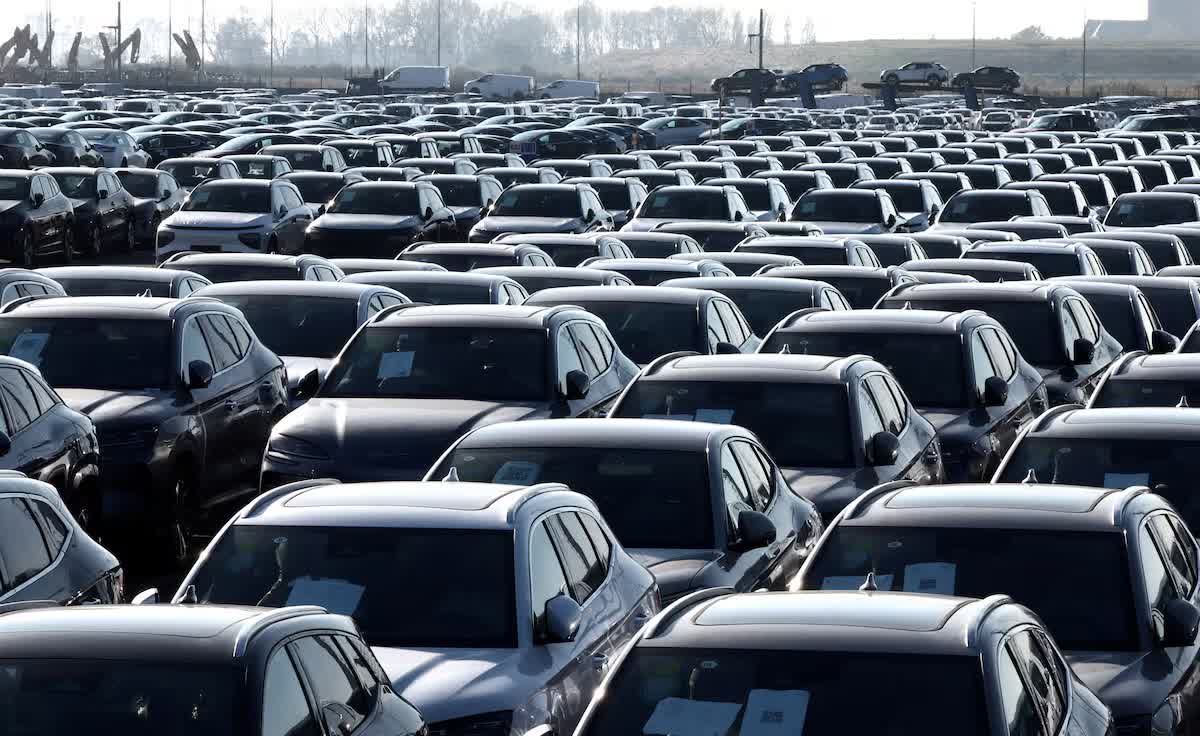 |
New cars at the port of Zeebrugge, Belgium in 2024, including electric vehicle models manufactured by BYD in China. Photo: Reuters |
New cars at the port of Zeebrugge, Belgium in 2024, including electric vehicle models manufactured by BYD in China. Photo: Reuters
Unifor, a major union in Canada's automotive sector, called the Chinese electric vehicle import agreement an act of "shooting itself in the foot". The union pointed to examples in the United Kingdom and Brazil, showing that when China enters a country's automotive market, it often quickly captures market share.
According to analysts, the first vehicle models imported under the Canada-China agreement are likely to be from Tesla, Volvo, or Buick, which already meet North American standards. Chinese brands such as BYD, Nio, or Chery may require additional time to adapt to Canadian regulations.
However, Daniel Ross, a senior manager at automotive market analysis firm Canadian Black Book, warned that Chinese brands would not take long to enter the Canadian market given their inherent adaptability.
The anticipated selling price of vehicles imported from China is approximately 10-15% lower than electric vehicles currently available in the Canadian market. While this price point may struggle to compete with inexpensive gasoline cars, it is sufficient to exert pressure on North American manufacturers.
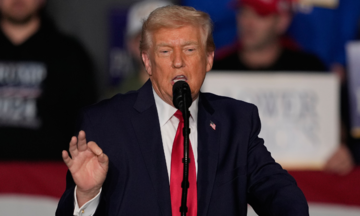
Canada's automotive industry is also facing impacts from US tariffs, amidst past statements from President Donald Trump that Washington does not need cars manufactured in Canada.
The Canadian government stated it had informed US Trade Representative Jamieson Greer about the agreement beforehand. Although President Trump publicly welcomed Canada's deal with China, Greer cautioned that Ottawa "may regret it in the long term".
By Ha Linh (According to Canadian Press, The Globe and Mail, CBC)