Partygoers sway to the music, one hand holding a cup, the other waving enthusiastically. The atmosphere mirrored that of a typical club night or bar. However, the difference was that this party took place at 9:00 a.m., and the drinks were cold Americano coffees.
These "early morning dance parties" have become the latest craze for Koreans in their 20s and 30s. They are seeking healthy entertainment options instead of nights spent under alcohol's influence.
Young Koreans are gradually moving away from the culture of after-work drinking and all-night partying. They are shifting towards habits like morning runs or dancing while sipping coffee.
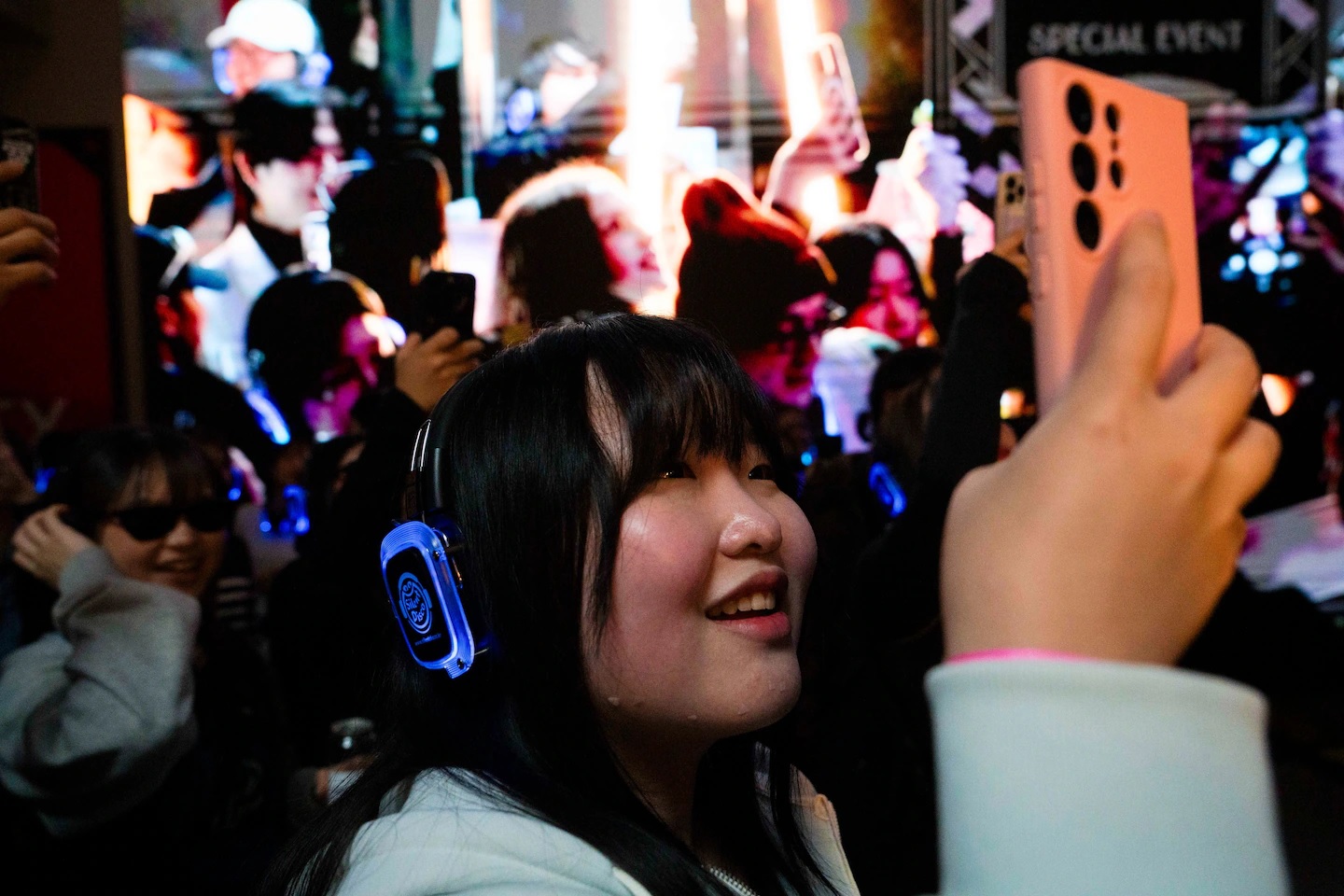 |
Young Koreans at a morning party in Seoul. Photo: WP |
"I came here today with a plan to make this my own stage. When I was younger, I used to go to bars, but it made me very tired because I always had to drink," said Kim Hyo-hee, 32 years old, participating in a morning party after a 5 km run with her friends.
"This is my joy now; it's healthy and like cardio. I start my day feeling great," Kim said about the party.
These types of parties are gaining popularity worldwide, including in Europe, the United States, Australia, and Singapore, as the "sober curious" movement spreads among young people. Initially, few believed South Korea would join the new trend.
South Korea ranks among the top 5 advanced economies with a high rate of alcohol consumption, according to the 2025 report by the Organization for Economic Co-operation and Development (OECD). After-work drinking parties have long been a part of corporate culture in South Korea, viewed as a way for employees to connect and bond.
However, recent surveys indicate that those in their 20s and 30s are increasingly reluctant to attend such drinking sessions. Many young Koreans are questioning what other forms of entertainment are available besides drinking alcohol.
"What's fun about constant drinking? It only brings trouble upon oneself," said Kim Go-yang, a 36-year-old social worker, as she attended a recent morning party. "South Korea needs more spaces where people can have fun without alcohol."
At a recent morning party organized by the cosmetics brand Kahi, about 100 people gathered at a basement store from 8:00 a.m. Initially, everyone felt a bit awkward without the Dutch courage to boldly join in, but after the caffeine kicked in, the crowd erupted. They cheered, danced, and even formed a train running around the store.
Some gathered near the DJ to dance, while others moved to the back to enjoy the music. Some wore headphones to customize their sound louder.
As people finished their coffee provided by Kahi, staff entered carrying jars of caviar. The crowd became excited as the staff swayed to the music while preparing caviar rice balls and serving them to the partygoers.
A brand representative stated they aim to utilize morning parties as a marketing opportunity. "Some people view party culture negatively. There are those who love music but cannot fully enjoy it due to that prejudice. So, I think this change is really wonderful," shared Seo Minji, one of the DJs playing music that day.
The morning party at Kahi's store concluded at exactly 10:30 a.m. that day.
Event organizers, running clubs, cafes, and many brands in South Korea are embracing this trend. They are hosting pre-work parties, runs, yoga classes, and book talks.
Yoon Duk-hwan, a consumer trend researcher, noted that this trend is driven by people in their 20s who are increasingly prioritizing health post-pandemic. Young people also desire greater control over their lives.
"They value discipline. Instead of indulging in daily drinking sessions, they want to focus their time on things they truly love," Yoon commented.
 |
Kahi staff making caviar rice balls for attendees at a morning party in Seoul. Photo: WP |
The alcoholic beverage market in South Korea is also undergoing change. Alcohol consumption has gradually decreased over the past decade. According to this year's report by South Korea's Ministry of Health, adults consume an average of 8,3 liters of pure alcohol per year, a reduction from 9,8 liters in 2011.
Meanwhile, non-alcoholic beverage consumption is on the rise. South Korea's market for non-alcoholic and low-alcohol beer grew 118% from 2020 to 2024, according to data analytics company Euromonitor International.
"I like seeing people of all ages having fun together without drinking alcohol," said Kim Yoo-jin, a 27-year-old consultant, after attending a morning party.
Seoul Morning Coffee Club was among the first to join this morning party trend in South Korea. Starting in 2022, they organized pre-work coffee meetups. News of their events spread online, and their Instagram page now boasts about 53,000 followers.
Siwon Moon, the club's marketing director, stated that they currently host numerous events across South Korea, adding that some of their morning parties attract up to 600 participants.
Kofe Haus Local Club, a club in Daejeon, has hosted 10 morning parties this year. These events are becoming increasingly popular. They even organize events on mountains with activities such as yoga, running, and morning parties.
"Koreans work very hard but are not good at taking care of their own health. We hope for a South Korea with a better work-life balance, where we proactively take more care of ourselves," shared Park Seong-su, a club representative.
Thanh Tam (According to Washington Post, Korea JoongAng Daily)