Last week, as European leaders worked to unlock some 246 billion USD in frozen Russian assets to support Ukraine, this plan placed significant pressure on at least one member state within the bloc.
"Who could believe that President Vladimir Putin would calmly accept the confiscation of Russian assets? Moskva has made it clear that if this happens, Belgium and I personally will face permanent consequences. That seems like a rather long time", Belgian Prime Minister Bart De Wever recently told reporters.
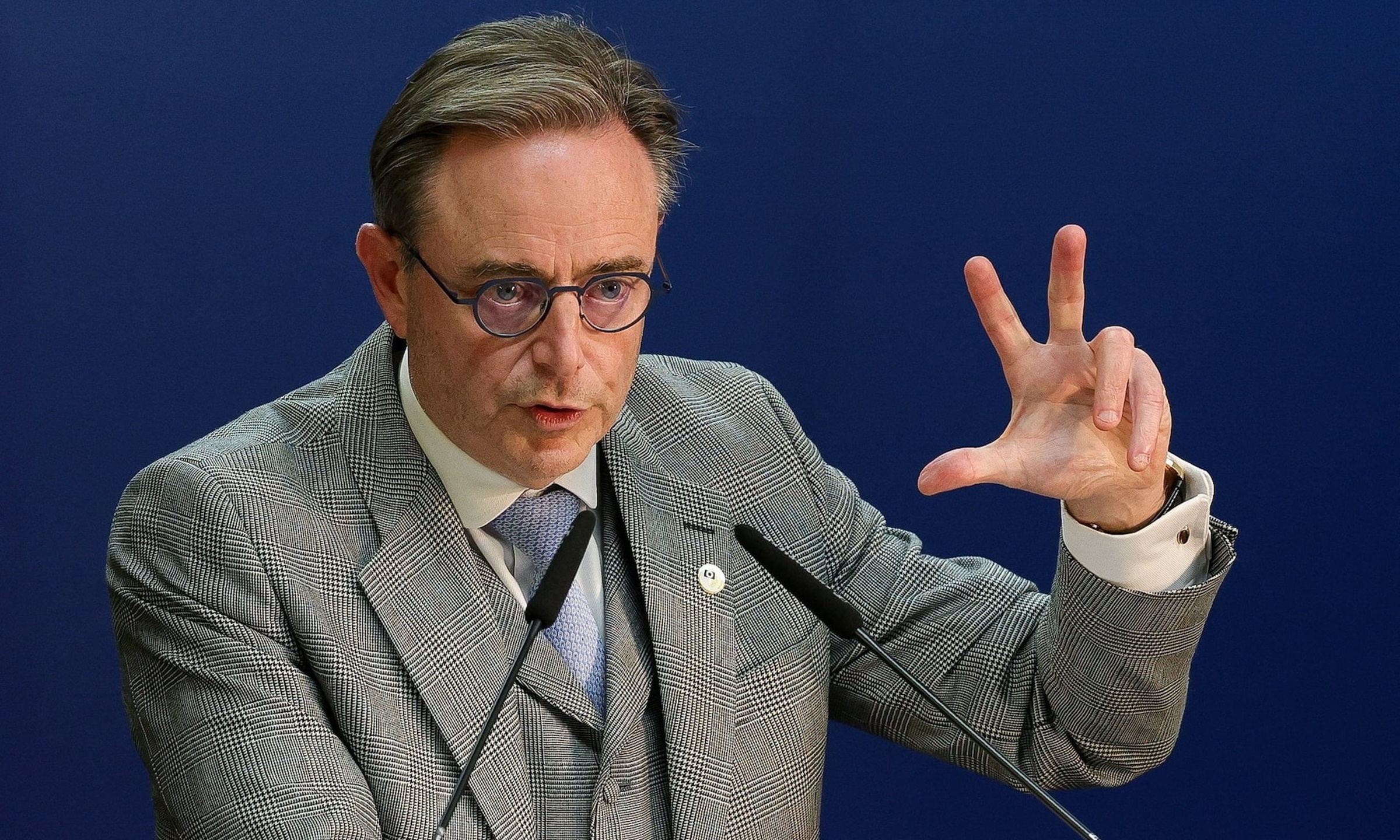 |
Belgian Prime Minister Bart De Wever at a press conference in Brussels on 23/10. Photo: Reuters |
Belgian Prime Minister Bart De Wever at a press conference in Brussels on 23/10. Photo: Reuters
Prime Minister De Wever, a nationalist politician who gained prominence before taking office in February, finds himself at the forefront of a dispute, facing pressure from Russia to compel the European Union (EU) to abandon plans to convert its frozen assets into loans for Ukraine.
Regional officials view the adoption of this plan as a crucial step, not only for sustaining Ukraine's resistance in the conflict but also for ensuring Europe's voice in global decision-making.
"Let's not deceive ourselves. If we do not succeed, the EU's capacity to act will be severely damaged for years, perhaps even longer", German Chancellor Friedrich Merz said. "And we will show the world that at this historic moment, we are incapable of unity and action to protect our own political order on the European continent".
Others have offered even sharper assessments. Nathalie Tocci, head of the Italy Institute of International Affairs, stated that if this effort fails, "it means we will not have enough money to maintain economic and military support for Ukraine in 2026 and beyond".
"It essentially means Ukraine will have to surrender, and we are opening the door for the conflict to spread to other European countries", she warned.
The EU has been hesitant to use the frozen foreign exchange reserves of the Russian Central Bank, held in Belgium under Western sanctions, due to concerns about legal and financial risks associated with setting a precedent for seizing national assets.
However, with the administration of President Donald Trump having halted financial aid to Ukraine and growing economic difficulties weighing on Europe, the plan to use these funds as collateral for loans to Ukraine has become increasingly urgent.
Believing that European support for Ukraine would wane, Russia appears to have launched a multifaceted campaign, warning of "decades" of litigation if its assets are seized and vowing a strong response if Brussels proceeds with such "hostile actions".
Dmitry Medvedev, deputy chairman of Russia's Security Council, even threatened that Belgium could "disappear" if Russia tested its nuclear-capable Poseidon unmanned underwater vehicle.
Additionally, in recent weeks, mysterious drone incursions into airspace have disrupted operations at several airports across Europe. Regional officials suggest this is part of a Russian destabilization campaign, though Moskva denies involvement.
"Russia is testing us in the gray zone with tactics just below the threshold of conflict", Blaise Metreweli, head of the UK's MI6 intelligence agency, stated, adding that it is important for Europe to understand Moskva's efforts.
The fate of the frozen Russian assets is also part of a 28-point peace plan proposed by Washington after discussions with Moskva. This proposal calls for using 100 billion USD of Russian assets for US-led reconstruction and investment efforts in Ukraine, with the remainder placed into a joint US-Russia investment fund.
European officials say that since then, Prime Minister De Wever and other regional leaders have faced continuous pressure from US officials.
"Russia is not only trying to exert pressure but also to make the White House believe they can get their hands on that money", a former Western bank executive who worked in Moskva said. "They think they can get the White House to help them retrieve assets from Europeans by sharing a portion with the US side".
According to two informed sources, the European side has received clear signals that the US administration wants to use these assets for a settlement deal, raising the risk of a dispute between Washington and the EU.
"There have been many debates about whether seizing assets is a good idea, but the question now is, if the EU doesn't do it, the US will", Agathe Demarais, an expert at the European Council on Foreign Relations, said. "So, it's no longer a matter of whether to seize assets, but who will do it, which I think is completely changing the dynamics of the debate".
Russia's current strategy is to exploit existing rifts within the EU, focusing on leaders like Prime Minister De Wever, who remain hesitant about asset seizure or lean towards populism. In recent days, Italy Prime Minister Giorgia Meloni, an ally of President Trump, along with Bulgaria, Czech Republic, and Malta, have expressed reservations about the plan. Meanwhile, Russia's allies Hungary and Slovakia have outright rejected it.
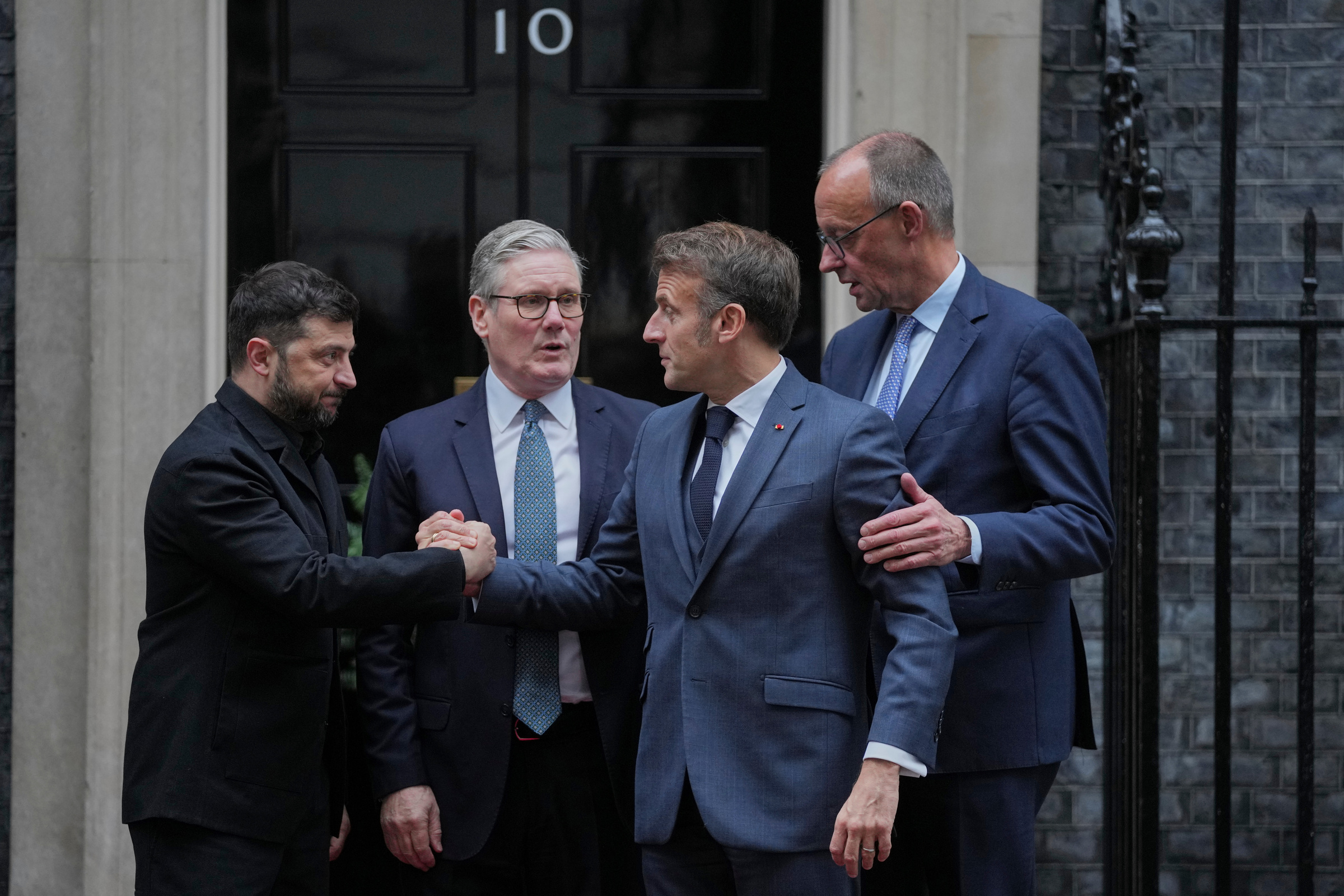 |
From left to right: Ukraine President Volodymyr Zelensky, UK Prime Minister Keir Starmer, France President Emmanuel Macron, Germany Chancellor Friedrich Merz at 10 Downing Street in London. Photo: AP |
From left to right: Ukraine President Volodymyr Zelensky, UK Prime Minister Keir Starmer, France President Emmanuel Macron, Germany Chancellor Friedrich Merz at 10 Downing Street in London. Photo: AP
To date, Prime Minister De Wever has maintained his stance and opposed the plan. In an interview with the Belgian newspaper La Libre, he stated that the idea of Russia failing in Ukraine is "complete illusion".
He also called any move to use Russian assets an act of theft, echoing the Kremlin's terminology. "The theft of another country's frozen assets, specifically their national wealth funds, is unprecedented", the Belgian Prime Minister emphasized.
Belgium has long sought specific assurances that its EU neighbors would share the risks of any potential litigation, and that other nations would also commit to using Russian assets held in their countries.
Prime Minister De Wever firmly rejected accusations that he was endorsing statements from Russia, stating that the EU is taking steps to meet Belgium's conditions, which seems to open a negotiation opportunity.
His hesitation regarding the EU's plan has garnered public support in Belgium, with polls showing that a majority of the country's citizens oppose using frozen Russian assets.
As a populist politician, Prime Minister De Wever previously supported separatist movements in Europe. The New Flanders Alliance party, which he has led since 2004, has advocated for transforming Belgium into a federal state and campaigned for the secession of the Flanders region in the north of the country.
He remains an unknown quantity in Europe. "De Wever has always been a local politician. This is the first time he faces both Russia and the US as a decision-maker", a former European official who worked in Belgium said.
The European Commission (EC) has, in recent weeks, sought to reassure Prime Minister De Wever that his country would not face any litigation or retaliatory actions from Moskva alone.
Belgian officials were reportedly displeased with the EC's initial approach, feeling that the EC assumed Belgium would accept the bloc's plan without attempting to alleviate the concerns raised by the country, according to two EU diplomats.
"We felt frustrated that we were not heard; our concerns were being trivialized", Belgian Foreign Minister Maxime Prevot told the media as tensions escalated in recent weeks. "We are simply trying to avoid potentially catastrophic consequences for a member state that is being asked to show solidarity but is not receiving the same in return".
But despite its opposing stance, Belgium was among the 25 EU member states that agreed last week on a key step in the plan: freezing Russian assets indefinitely and eliminating the need for unanimous votes every six months, a move to bypass Hungary's veto power.
At its summit on 18/12, the EU failed to reach a consensus on the plan to transfer Russian assets to Ukraine, as Belgium demanded guarantees of shared legal responsibility among members in case of lawsuits from Russia. Other countries deemed this request beyond what they could accept.
This temporarily shelved the option of using Russian assets. Instead, EU leaders agreed to lend Ukraine 90 billion euro (over 105 billion USD) over the next two years, secured by the bloc's joint budget.
EU Foreign Policy Chief Kaja Kallas noted last week that while the decision to transfer Russian assets to Ukraine could be approved by a majority vote to overcome Belgium's opposition, securing the country's support remains essential.
"Without Belgium, things will not be easy because they hold the majority of the assets, and it is important that they are involved in everything we do", Kallas said.
Vu Hoang (According to Washington Post, AFP, Reuters)