"We believe that payments in local currencies are a practical mechanism to reduce transaction costs in bilateral trade", said Sudhakar Dalela, India's Deputy Foreign Minister for Economic Relations, at a press conference in New Delhi on 12/9 regarding the outcomes of the ongoing BRICS summit in India.
Dalela stated that BRICS members have discussed trade payments in local currencies for over a decade. They view this as a supplementary mechanism to the global payment and settlement system, aiming to improve overall global trade among nations.
"However, I want to state that there is currently no proposal for a BRICS common currency", he said, responding to a reporter's question about the idea of issuing a common currency for the bloc.
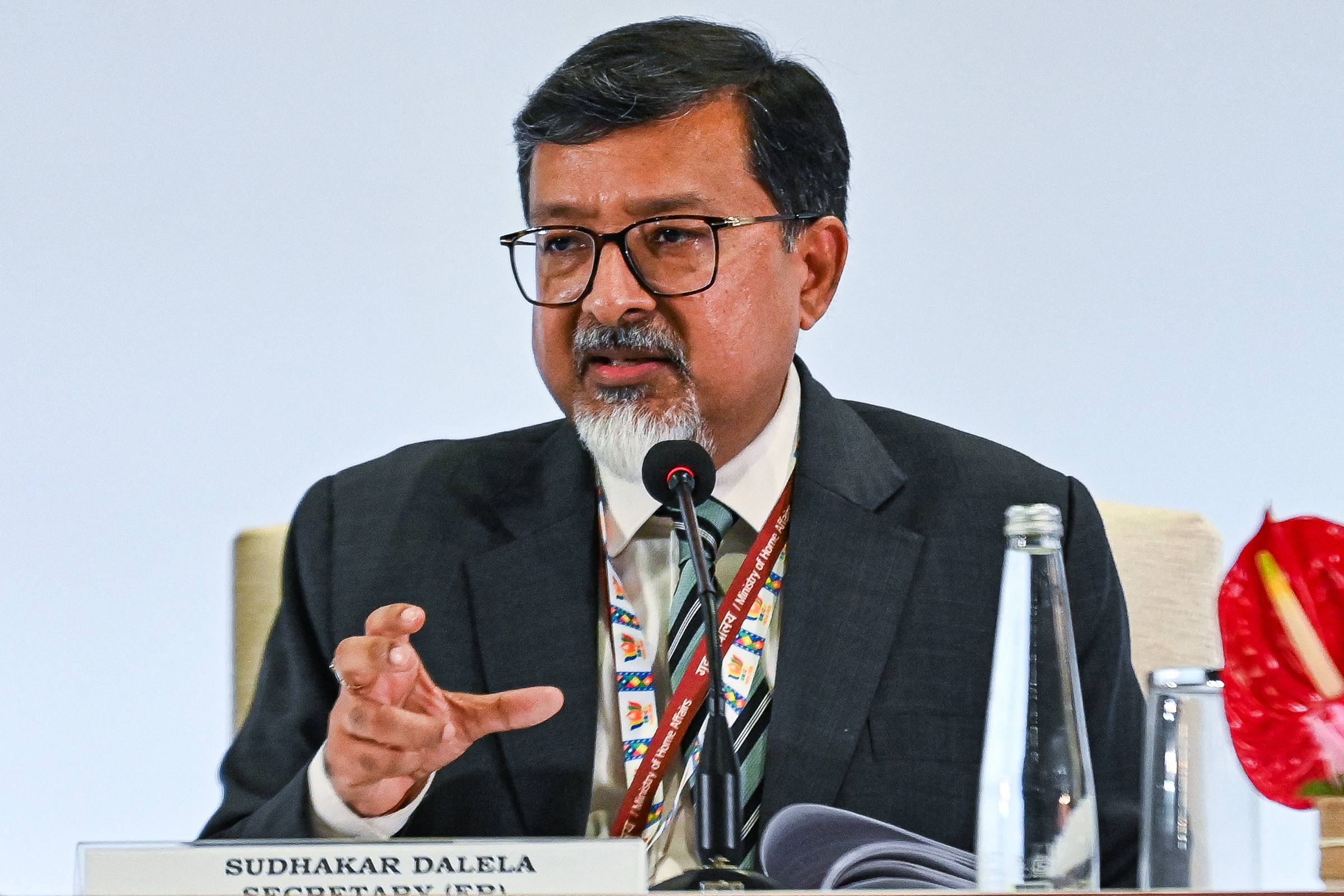 |
Sudhakar Dalela, India's Deputy Foreign Minister for Economic Relations, speaks at a press conference in New Delhi on 12/9/2026 about the BRICS summit outcomes. Photo: AFP
During a BRICS ministerial meeting in June, Indian Commerce Minister Piyush Goyal also declared that India does not support the idea of issuing a BRICS common currency and does not endorse any plans related to this initiative.
Some BRICS members have recently pushed for reducing reliance on the US dollar in international payments and proposed the possibility of developing a common currency for the bloc. In 2024, Donald Trump, then US President-elect, stated that BRICS countries should not take any steps to replace the US dollar's role in the global financial system.
According to Deputy Foreign Minister Dalela, instead of issuing a common currency, BRICS is focusing on promoting intra-bloc trade and engaging more actively with the global business community, thereby minimizing transaction costs.
"We are trying to develop bilateral or intra-bloc frameworks to address these issues", he said.
Some BRICS members, such as India, China, Russia, and Brazil, already operate domestic payment systems with the potential for interconnection. This allows businesses and banks to increase direct transactions in national currencies and through linked payment networks, reducing reliance on the US dollar.
Dalela stated that BRICS maintains a consistent stance condemning unilateral coercive measures, particularly in the form of unilateral economic sanctions and secondary sanctions.
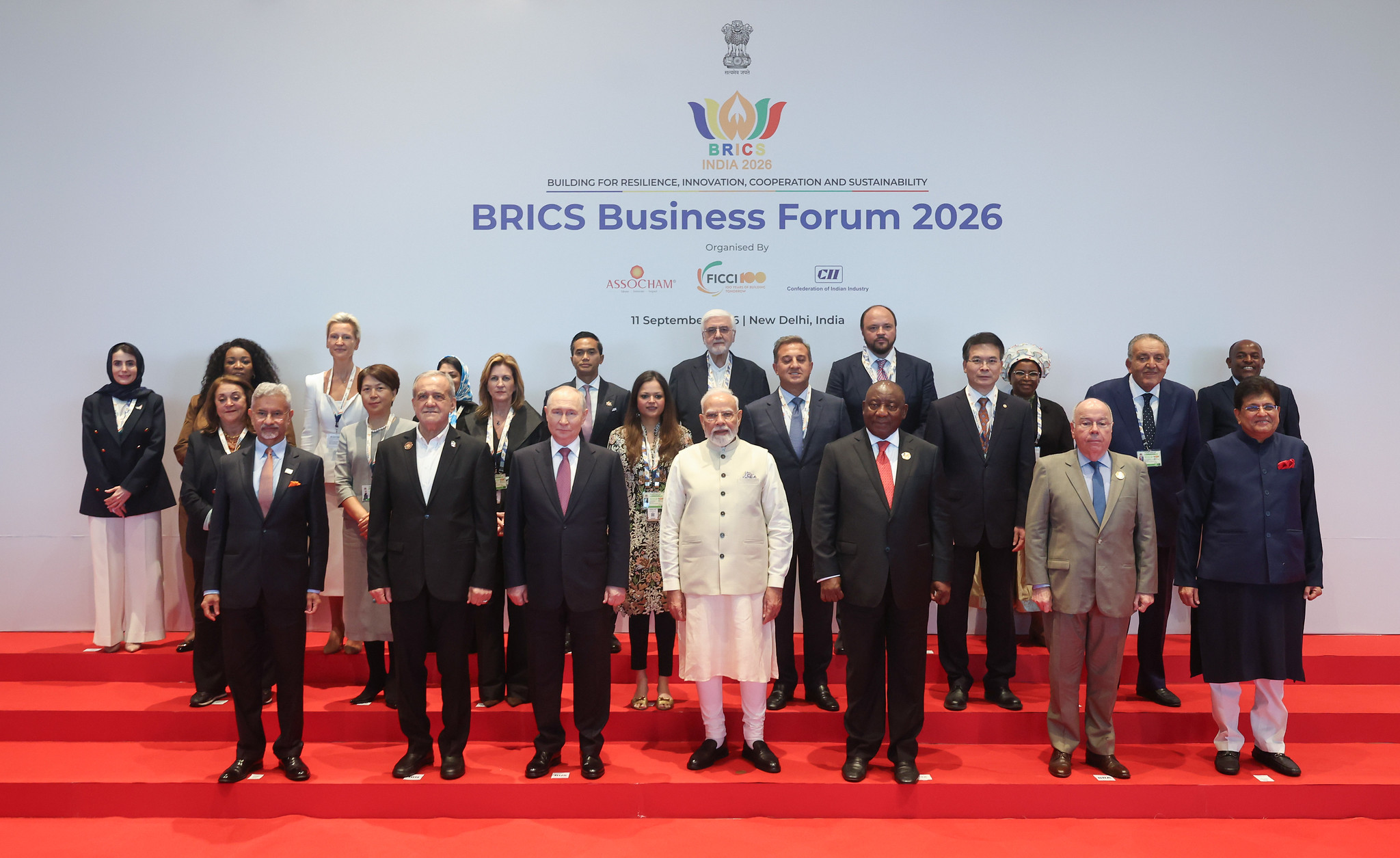 |
Leaders attend the BRICS Business Forum 2026 in New Delhi, India. Photo: Indian Ministry of External Affairs
The New Delhi Joint Statement, released after the BRICS summit, emphasized that these unilateral sanctions severely harm the development rights, health, and food security of people in targeted countries. The poor and vulnerable groups are disproportionately affected, while the digital divide widens, and environmental challenges worsen.
BRICS called on relevant parties to lift unilateral coercive measures not authorized by the United Nations Security Council. However, the document did not mention any specific country or sanction.
"BRICS members have sought to respond to the economic consequences of geopolitical challenges over the past year and agreed that parties need to coordinate to ensure the smooth flow of trade, supply chains, and global energy supply in accordance with international law", Deputy Foreign Minister Dalela stated.
BRICS was established in 9/2006 with Brazil, China, India, Russia, and South Africa. It now has 11 members, including Egypt, Ethiopia, Indonesia, Iran, Saudi Arabia, and the United Arab Emirates. BRICS has also established a partner mechanism with 10 countries: Belarus, Bolivia, Cuba, Kazakhstan, Malaysia, Nigeria, Thailand, Uganda, Uzbekistan, and Vietnam.
Since its inception, BRICS has been defined as a policy coordination forum aimed at promoting a multipolar world order, enhancing the voice of developing countries, and linking economic cooperation with sustainable development and climate change response.
Bao Thanh