Speaking at the Munich Security Conference in Germany on 14/2, Chinese Foreign Minister Wang Yi stated that the Japanese people "should not continue to allow themselves to be manipulated or deceived by far-right forces, or by those seeking to restore militarism".
"All peace-loving nations should send a clear warning to Japan that if it chooses to return to this path, it will only move closer to self-destruction," Wang said.
Japan's Foreign Ministry on 15/2 rejected the accusation, stating that the Chinese Foreign Minister's remarks were "untrue and baseless". The ministry added, "Japan's efforts to strengthen its defense capabilities are in response to an increasingly severe security environment and are not directed at any specific third country".
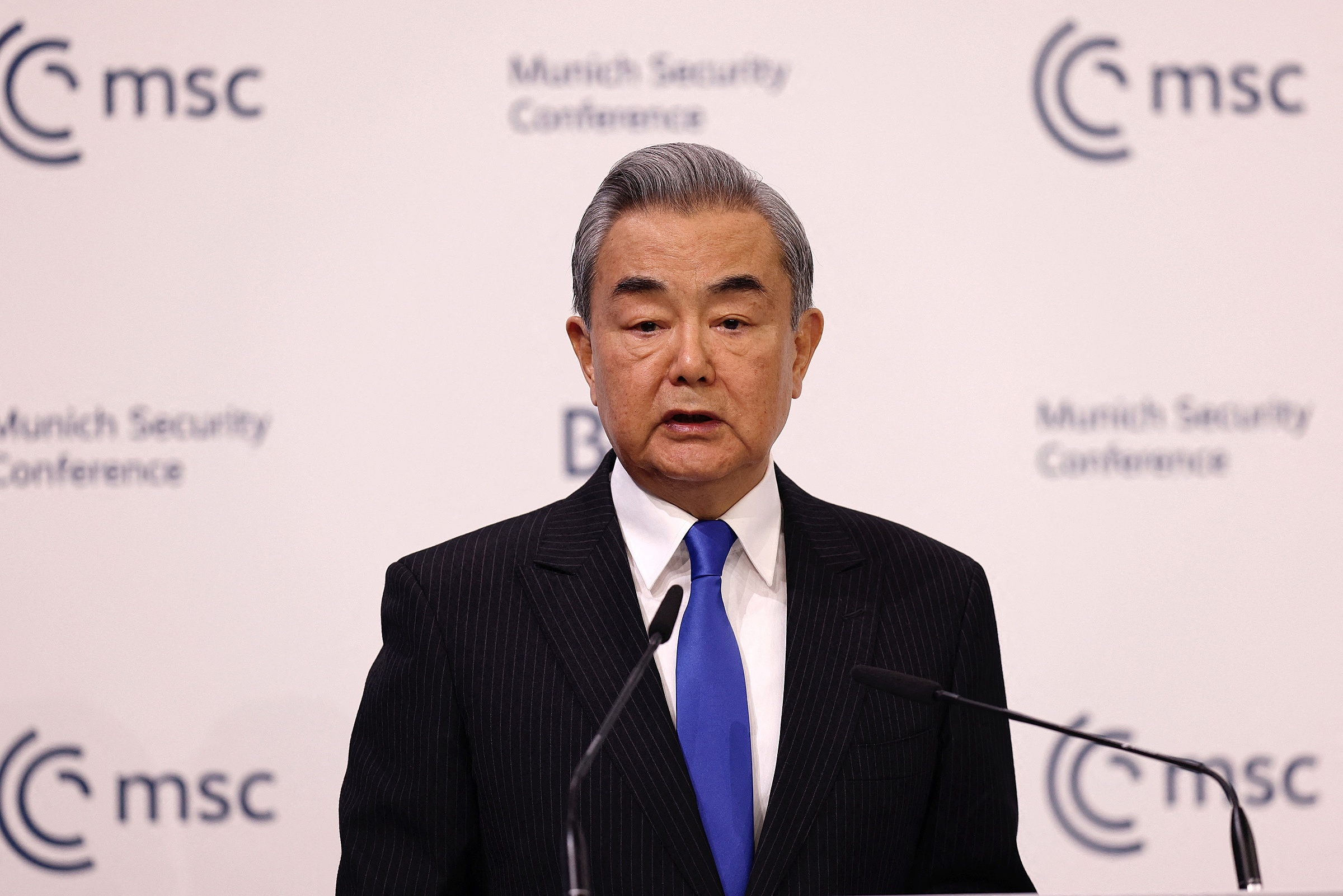 |
Foreign Minister Wang Yi speaking at the Munich Security Conference on 14/2. Photo: AFP |
Foreign Minister Wang Yi speaking at the Munich Security Conference on 14/2. Photo: AFP
Japan's Foreign Ministry also voiced opposition to "nations in the international community rapidly and opaquely increasing their military capabilities," though it did not name any specific country. Foreign Minister Toshimitsu Motegi further clarified Japan's stance at another session of the Munich Conference.
Tokyo confirmed it had sent a "strong protest" through diplomatic channels to Beijing.
Sino-Japanese relations are at their lowest point in years, following remarks made by Prime Minister Sanae Takaichi concerning the Taiwan issue in 11/2025. At that time, Takaichi warned that Japan might take military action if Taiwan island were attacked. Taiwan island is 100 km from Japan's closest island.
The Japanese Prime Minister later softened her tone to ease tensions, but China did not accept this, continuing to demand she retract her statements. Takaichi has so far refused to do so, while also declaring that Japan will bolster its defense capabilities and "resolutely protect" its territory.
By Huyen Le (According to AFP)