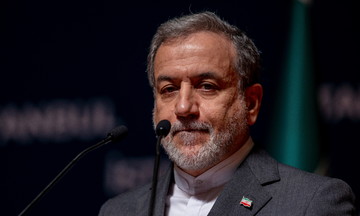
"Prime Minister Sanae Takaichi continues to equivocate by stating that Japan's position has not changed. We absolutely do not accept this," said Chinese Foreign Ministry spokesperson Lin Jian at a press conference in Beijing on 4/12.
"China's attitude is very clear. We urge the Japanese side to seriously reconsider its stance, correct its mistakes, and retract Prime Minister Takaichi's erroneous statements," Lin added.
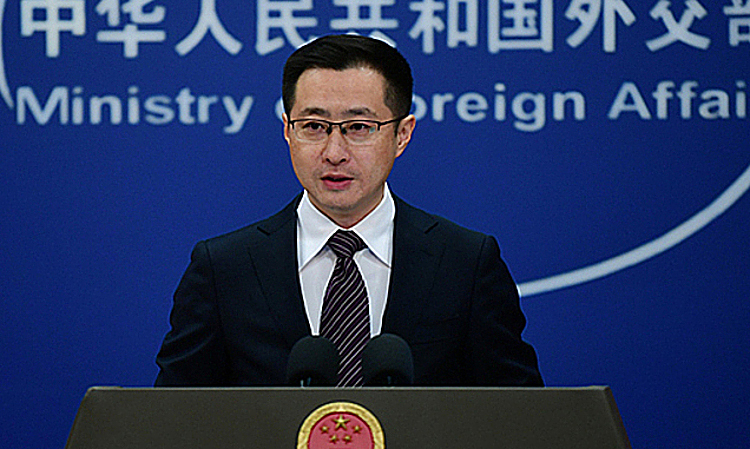 |
Spokesperson Lin Jian at a press conference in Beijing on 4/12. Photo: Chinese Foreign Ministry |
On 3/12, Takaichi appeared to attempt to de-escalate weeks-long tensions with China by stating that the Japanese government's fundamental position on Taiwan remains consistent with the 1972 Japan-China Joint Communique and has seen no changes.
In that document, Beijing "reaffirmed that Taiwan is an inalienable part of China's territory," and Tokyo "fully understood and respected this position."
However, she did not explicitly mention the contents of the joint communique, nor did she retract her 7/11 statement that an attack on Taiwan could constitute an "existential threat" to Japan, compelling the country to take military action.
Spokesperson Lin Jian also urged Prime Minister Takaichi to publicly "present accurately and fully" the contents outlined in the 1972 joint communique, the document that led to the normalization of China-Japan relations. "Why does Japan evade clarifying the commitments it made and its legal obligations? What is the logic and calculation behind this?" he questioned.
China consistently views Taiwan as an inalienable part of its territory and is prepared to use all measures to unify the island. Chinese leaders have also repeatedly affirmed that they do not rule out the use of force to reclaim the island, although the general policy remains dialogue and peaceful reunification.
Japanese leaders previously avoided publicly mentioning Taiwan when discussing military scenarios in the region. This was considered Japan's policy of "strategic ambiguity," a stance also supported by its ally, the US.
Takaichi is the first Japanese leader since World War II to openly link an emergency in Taiwan with the potential deployment of the Japan Self-Defense Forces. Her statements have plunged Japan-China relations into their most serious crisis in many years.
Observers in Beijing suggest that Prime Minister Takaichi's latest remarks will not resolve the current diplomatic dispute but indicate a softening tone and a return to the policy of strategic ambiguity.
Huyen Le (According to SCMP, AFP).