


"A few countries should not hold privileges based on self-interest, and the world cannot revert to jungle law, where the weak fall prey to the strong," stated China's Vice Premier Ha Lap Phong on January 20 at the World Economic Forum (WEF) in Davos, Switzerland. Ha stressed that every nation has the right to protect its legitimate interests. He criticized unilateral actions and trade agreements by "some countries" for violating World Trade Organization (WTO) rules, implicitly referring to recent aggressive tariff policies from Washington.
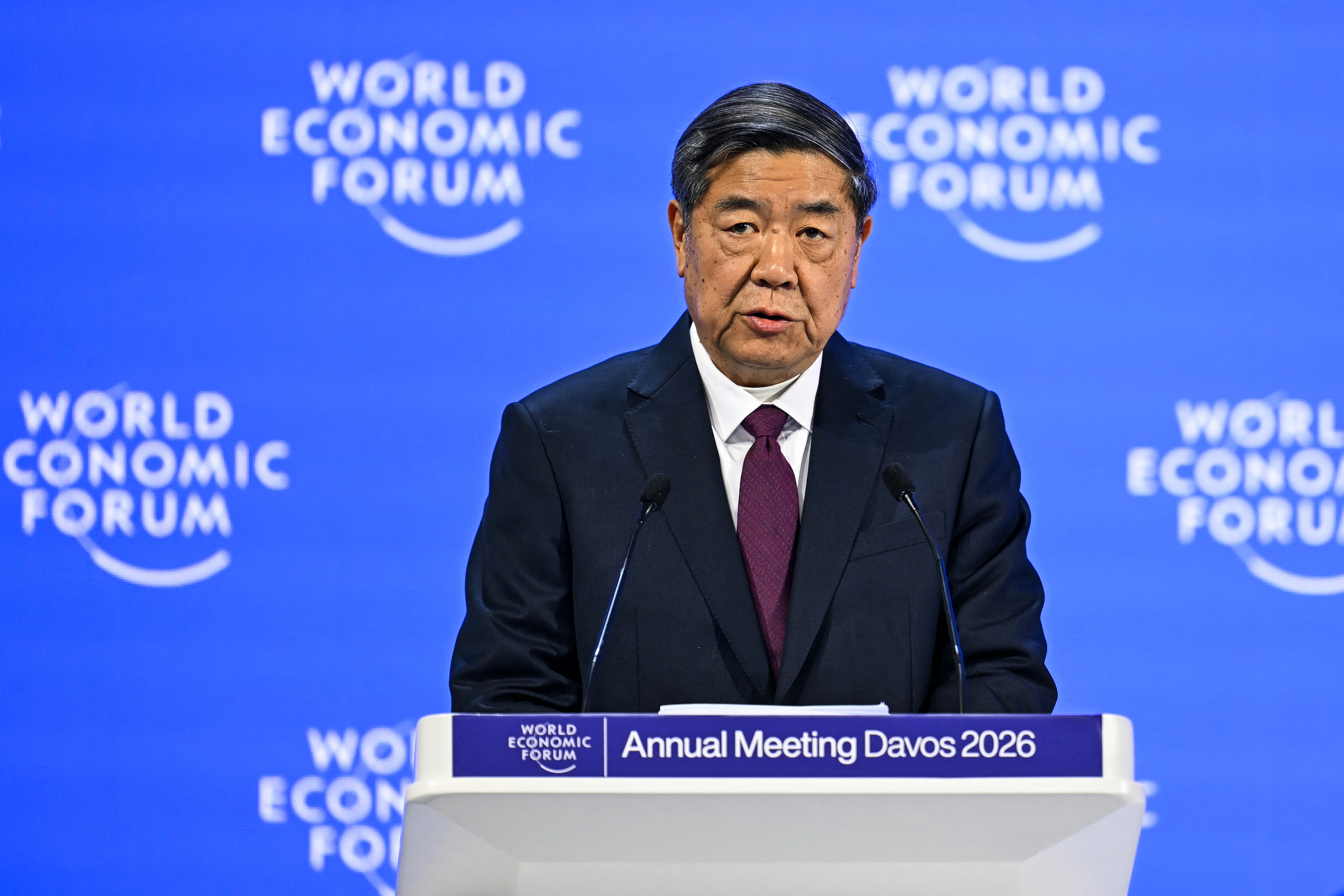 |
China's vice premier Ha Lap Phong speaks at the World Economic Forum (WEF) in Davos, Switzerland, on 20/1. *Photo: AFP*
The current multilateral trade system faces serious challenges, according to Ha. He urged countries to firmly defend multilateralism and foster a more "fair and equitable" international economic and trade order.
Addressing concerns about a surge in Chinese exports, Ha affirmed that Beijing never intentionally seeks trade surpluses and is prepared to be the "world's market". He declared China's intention to leverage its vast market and significantly expand imports. Chinese leaders aim to boost domestic consumption by increasing incomes and internal demand, thereby making consumption a crucial driver of the economy. "We are not only willing to be the 'world's factory', but also aspire to become the world's market," he said.
Regarding US-China economic relations, Ha reiterated China's position as a "trade partner, not a rival". He alluded to US restrictions on technology exports to China, noting that Beijing often wishes to purchase foreign goods "but they do not want to sell". Last year, China recorded a record USD 1.2 trillion trade surplus. While this helped the country navigate various economic challenges, it also exacerbated China's own overcapacity, prompting protectionist responses from nations seeking to enhance their production capabilities.
Ha led the Chinese delegation to the WEF this week. The forum hosted approximately 2,900 delegates, including numerous economic leaders such as US President Donald Trump.
Thanh Danh (Reuters, AFP)


