Bloomberg, citing sources familiar with the situation, reported on 24/9 that shipping carrier UPS was responsible in May for transporting a cockpit canopy and a weapon bay door of an F-35 stealth fighter from Australia to the United States for inspection, repair, or destruction. These components were coated with radar-absorbing material, which enhances the aircraft's stealth capabilities.
Two sources added that Chinese authorities acquired this shipment and have not yet returned the components. One source stated that the UPS aircraft stopped in South Korea en route to the United States, then diverted to Hong Kong. It remains unclear why the aircraft took this route, or whether the F-35 components were diverted due to error or intent.
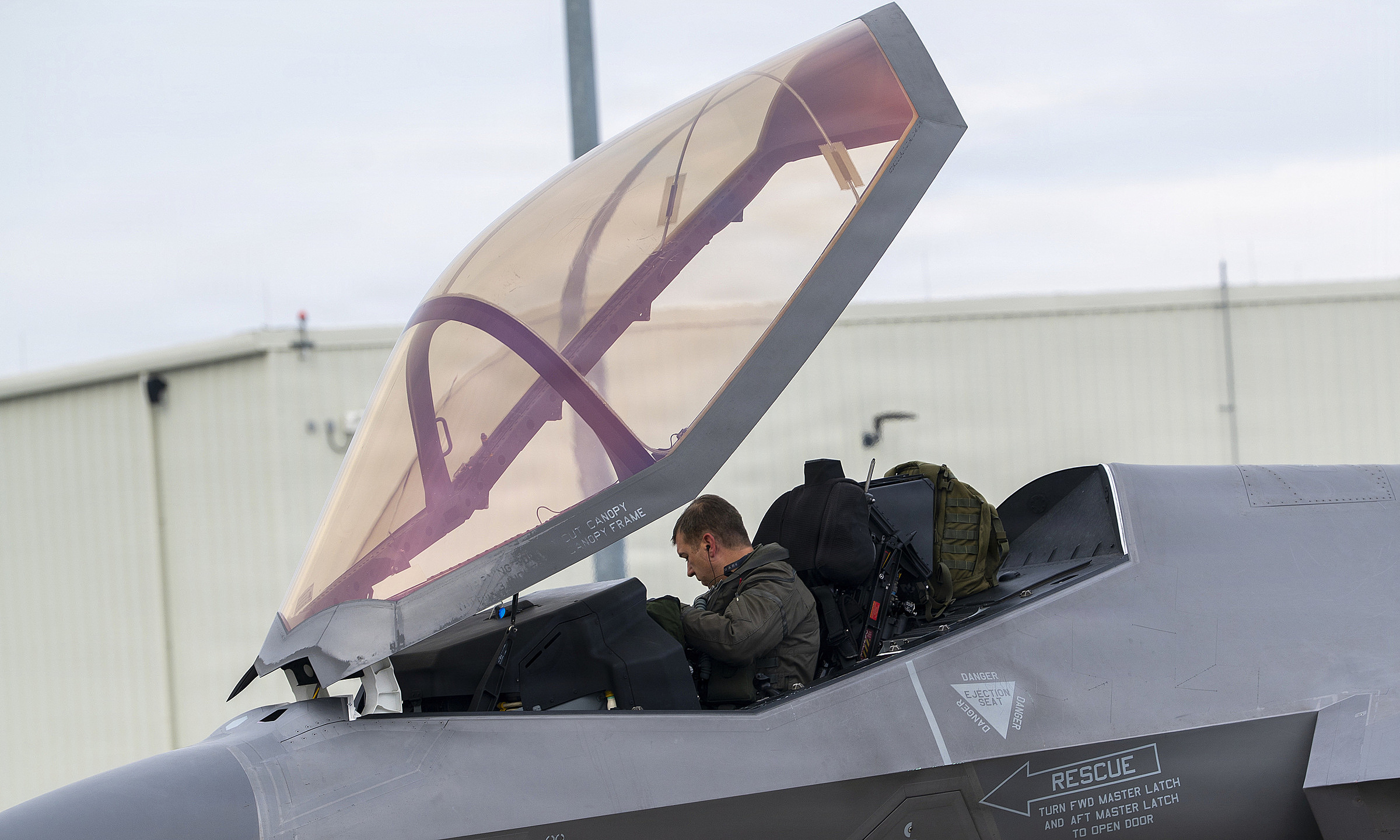 |
A US pilot in an F-35 fighter cockpit at a base in Massachusetts in 12/2025. Photo: USAF |
China's Ministry of Foreign Affairs stated on the same day that it "had no information" regarding the matter.
Information about the sensitive F-35 components being diverted to Hong Kong was reported by US media on 18/9, though at that time it was unclear who possessed these devices or which party was responsible for their transport.
The Pentagon announced it was aware of "an incident involving the transport of unusable F-35 components," affirming it is coordinating with other US agencies and partners to recover them, investigate the incident, and implement measures to prevent recurrence.
A spokesperson for Lockheed Martin's Australia branch stated that the parts "are unusable and pose little risk of information exploitation."
Australia is one of 7 nations outside the United States with a global spare parts warehouse for the F-35 program, alongside Canada, Denmark, Italy, the Netherlands, Norway, and the United Kingdom.
A warehouse in Williamtown, north of Sydney, serves as a distribution hub for F-35 components in the Asia-Pacific, supporting forces from Singapore, Japan, and South Korea, as well as US and UK aircraft deployed in the region.
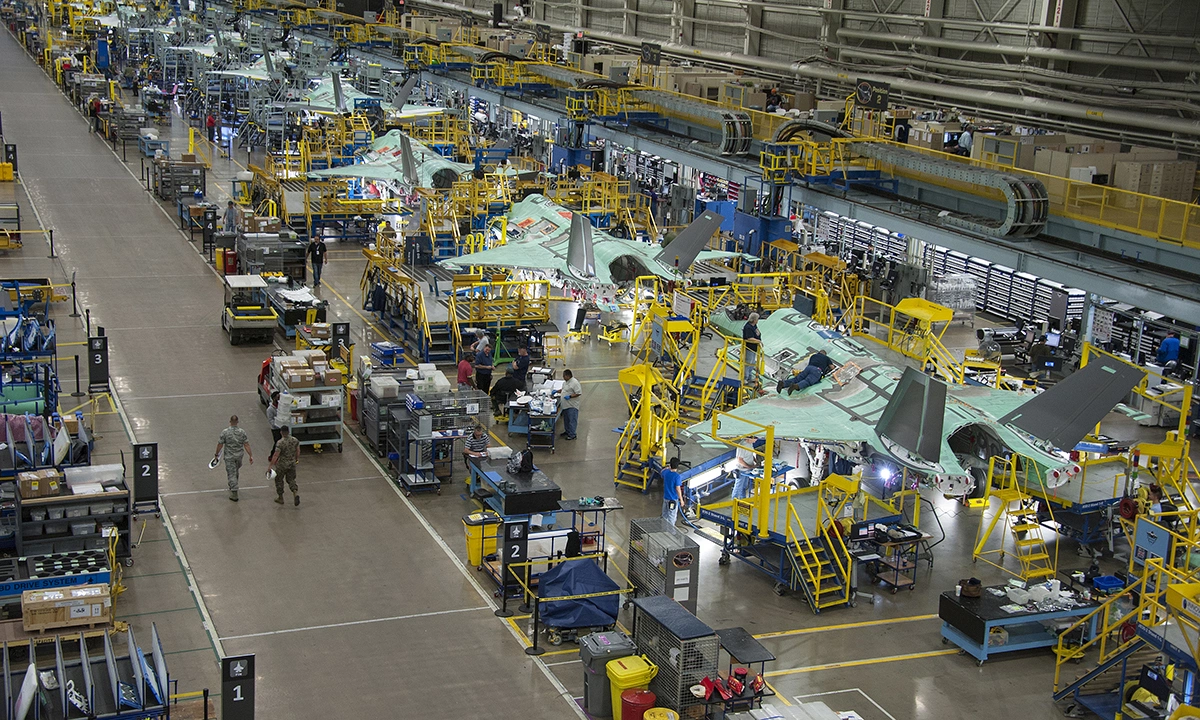 |
An F-35 fighter on an assembly line in Texas, US in 6/2017. Photo: Lockheed Martin |
Australia's Parliament was informed in 2025 that Lockheed Martin transports F-35 components from this warehouse to other global locations via commercial aircraft, with some flights stopping in Asia. Australian defense officials emphasized at the time that Canberra does not control or direct the export process of components from the warehouse.
Michael Shoebridge, an expert who previously worked in Australian intelligence agencies, suggested that if adversaries acquire parts like the cockpit canopy, they could study them to identify stealth characteristics and exploit F-35 weaknesses. They might even apply reverse engineering to integrate the technology into domestic products.
Nguyen Tien (According to CNBC, AP, Reuters)