When Gao Wenjia saw Nanjing's "Romantic Center" on social media, he knew immediately where he would exchange vows, even if it meant traveling over 3,200 km from his hometown.
Nanjing city's marriage registration office defies the typical image of a dismal government building. Located in a lakeside park, the office is adorned with pink heart-shaped balloons and red flowers, featuring a poem symbolizing love as perfectly matched jade pieces. Floral arches, Roman-style stone columns, and chandeliers embellish an underground photo studio.
 |
Couples taking photos at Nanjing city's marriage registration office. Photo: WSJ
The number of couples registering marriages in China has dropped by about one-half compared to ten years ago, falling to over 6 million by 2025. With a shrinking population, the Chinese government is striving to boost marriage and increase birth rates. To achieve this, they are transforming government agencies that handle marriage paperwork into captivating destinations. Combined with honeymoon vouchers and cash subsidies for newborns, authorities aim to create a "birth-friendly society."
Gao and his girlfriend, Dong Peipei, queued in Nanjing to register their marriage. Like many other couples, they brought selfie sticks, flowers, and even pets. In just a few minutes, the couple from the remote western region of Xinjiang officially became husband and wife.
"There are many fantastic spots here for 'virtual living' (social media photos)," Dong said.
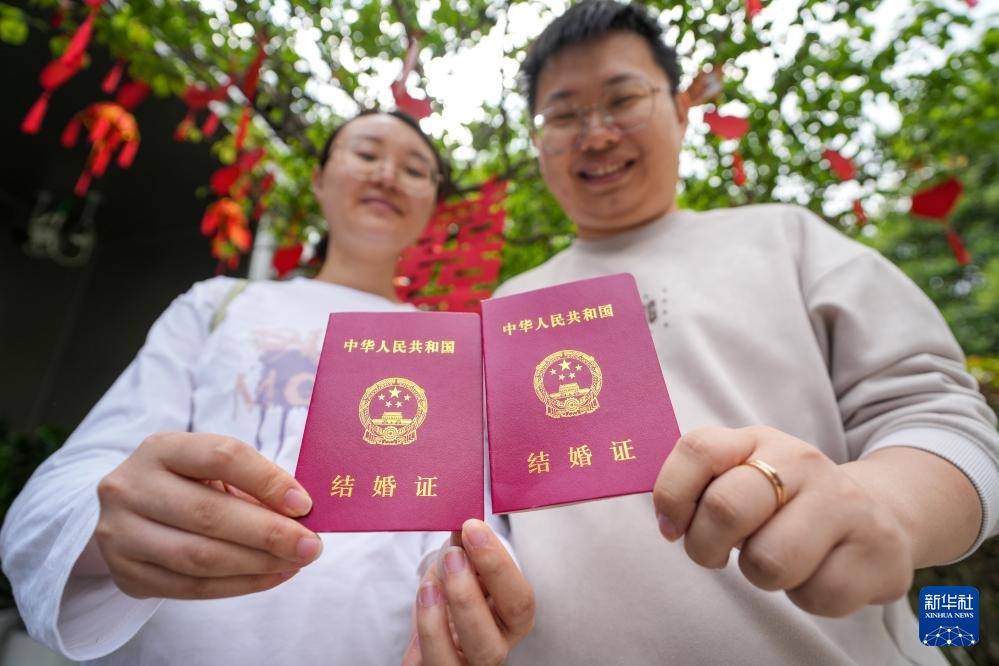 |
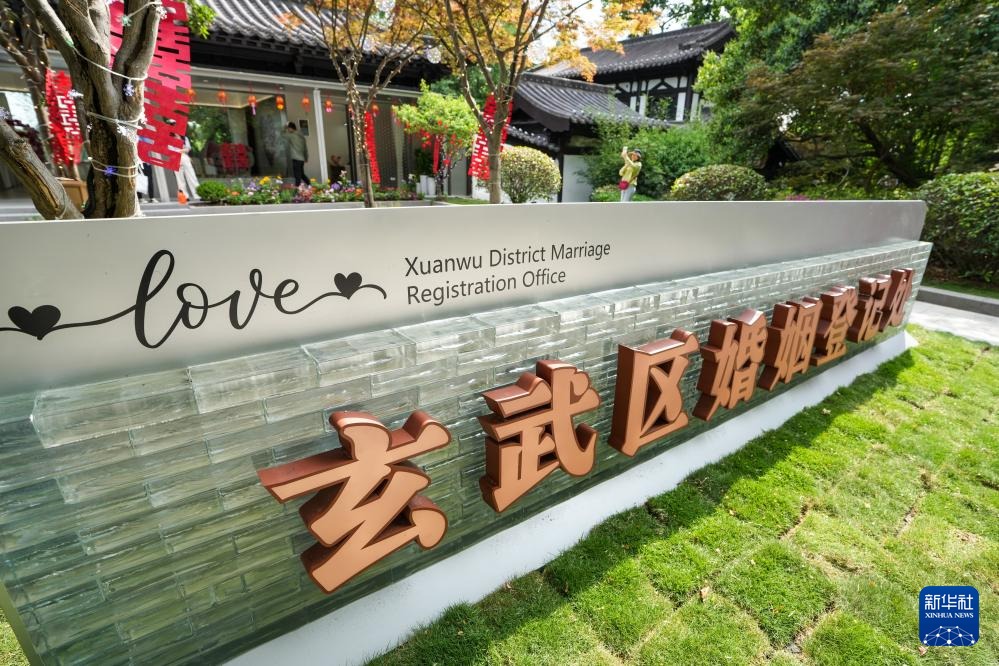
Huanwu district marriage registration office, Nanjing city, which combines administrative procedures with tourism and photography, in October 2025. Photo: Xinhua
In China, marriage registration offices traditionally serve as administrative hubs, with the actual ceremony taking place at a wedding venue. However, the government saw an opportunity to make this procedure more appealing. Last year, Beijing relaxed regulations, allowing couples to register anywhere, rather than being restricted to their household registration location. This move sparked a competition among local governments to capture a share of the "wedding tourism" market.
In Nanjing, a new marriage registration office is situated on a heart-shaped island in the renowned Huanwu Lake, where orange signs encourage couples not to "rush too quickly" because "happiness should be savored." Another office, located in the city's historic Confucius Temple complex, provides traditional attire for photo opportunities. Nearby, a cafe serves lattes adorned with the Double Happiness character.
The mountainous Yunnan province offers a backdrop of rolling rocky landscapes for wedding photos, while Hainan island boasts white sandy beaches. Other cities prioritize convenience over romance, placing registration offices in central locations such as banks and subway stations.
 |
A corner of the Huanwu district marriage registration office, Nanjing city, in October 2025. Photo: Xinhua
 |
A couple proudly displays their newly received marriage certificate at the Huanwu district registration office in October 2025. Photo: Xinhua
 |
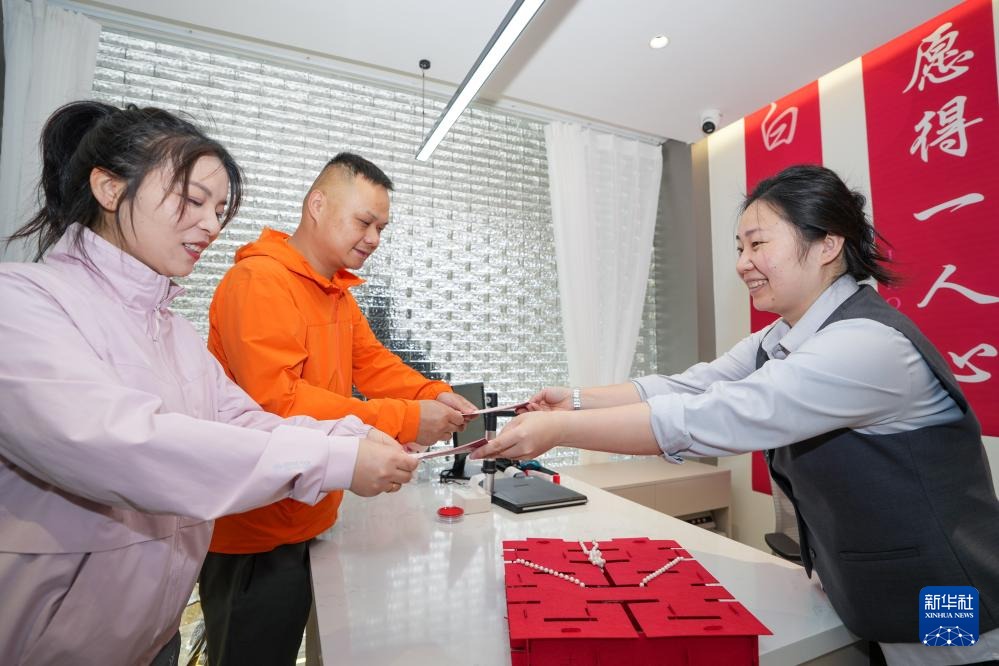
A staff member at the Huanwu marriage registration office hands a certificate to a visitor in October 2025. Photo: Xinhua
 |
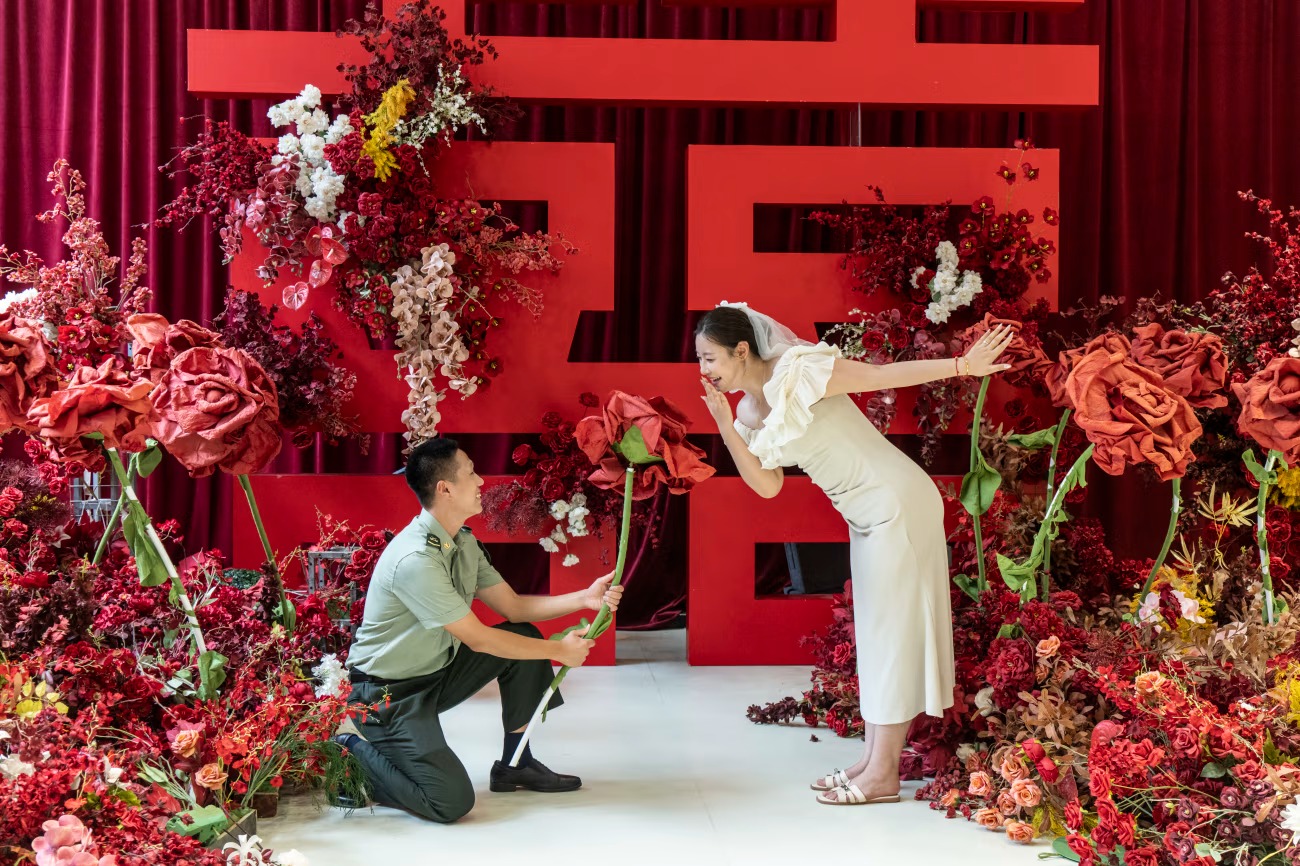
A newly registered couple takes a commemorative photo at the Huanwu district marriage registration office in October 2025. Photo: Xinhua
These efforts are yielding results, at least for now. In the first year of the policy's implementation, the number of marriage registrations in Nanjing increased by over 15% compared to the same period last year. Over 22,000 couples from other areas traveled to Nanjing to register.
However, experts remain skeptical about the true effectiveness of these initiatives. Young people worry about the high costs of starting a family and raising children, and many women, now financially independent, feel less compelled to marry.
Yu Wenlei, a 21-year-old university student in Nanjing who volunteers at the Romantic Center on weekends, noted that her Generation Z friends still harbor significant concerns about parenthood.
"Most of my friends are ready to marry but do not want children," she said, citing the intense competition in China for admission to the best schools. "We fear we cannot guarantee a happy, carefree childhood for our children."
Hong Hanh (According to Wall Street Journal, Xinhua)