The Pinglu Canal, a mega-project in Guangxi Zhuang Autonomous Region, southern China, completed filling two of its three main ship locks, Madao and Xishi, with water on 3/6. This achievement enables navigation throughout the canal and marks the beginning of its trial operation.
According to the Pinglu Canal Group, with over 96% of the project completed, this waterway is scheduled to open next September during the China-ASEAN Expo in Nanning, the capital of Guangxi province.
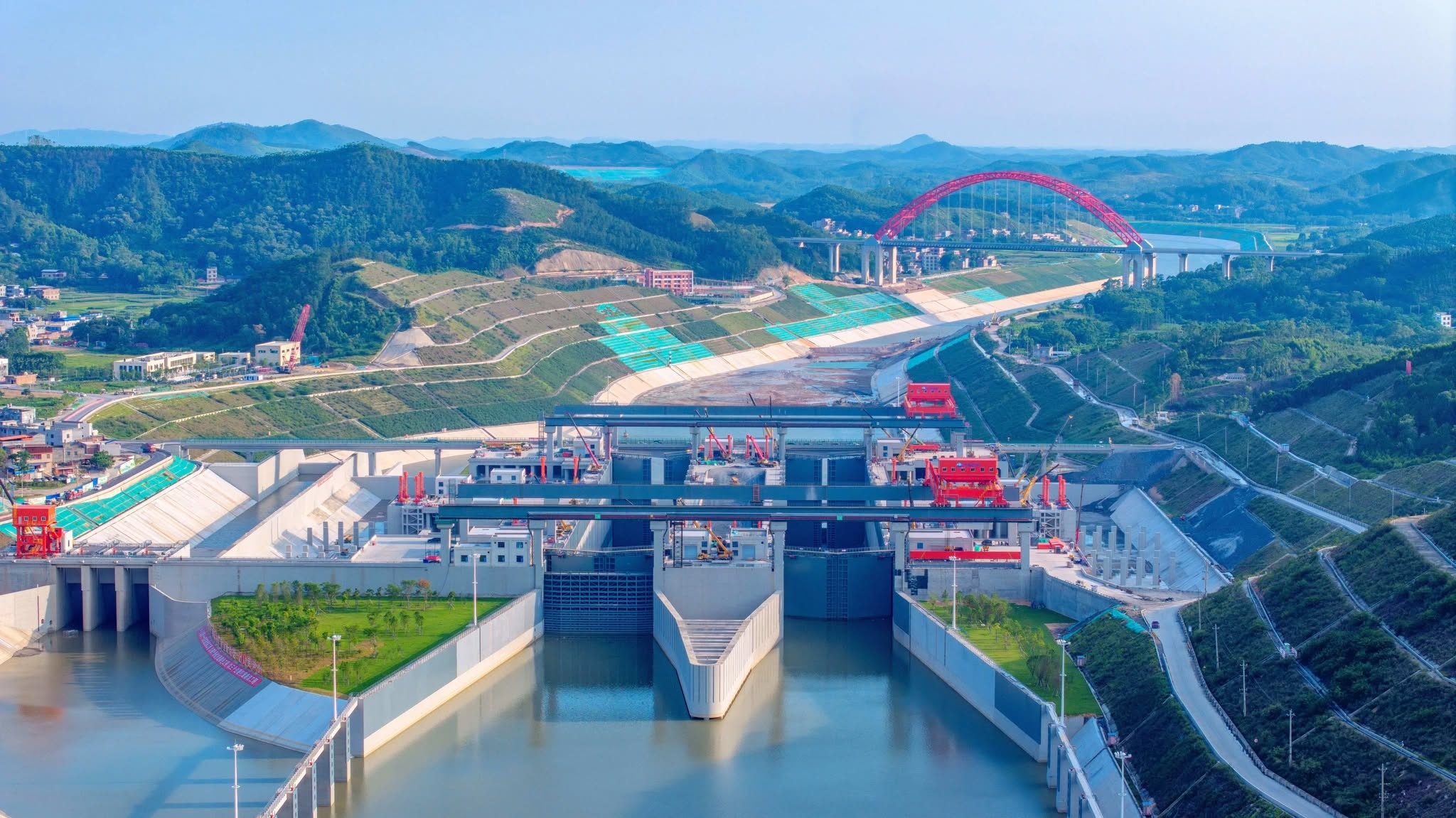 |
The Madao ship lock of the Pinglu Canal in Guangxi province on 3/6. *Xinhua* |
The Pinglu Canal is China's largest artificial canal project since the Grand Canal, constructed over 2,500 years ago. Its development aims to enhance waterway transport, provide water supply and irrigation, ensure flood control, and improve river ecological environments. The Pinglu Canal has a total investment of approximately 72,7 billion yuan (over 10 billion USD).
This 134,2 km waterway stretches from Xijin Reservoir in Hengzhou city, Guangxi province, to Qinzhou Port on the Beibu Gulf coast. It is a key project within the New International Land-Sea Trade Corridor, designed to connect China's western regions with global markets.
Local authorities project significant economic benefits upon completion. The canal is expected to shorten inland waterway shipping for goods exported from southwestern China by over 560 km, compared to the previous route via Guangzhou Port. This reduction in distance is estimated to save approximately 5,2 billion yuan (768 million USD) in transport costs annually.
Guangxi holds a unique position as the only region connecting China with the Association of Southeast Asian Nations (ASEAN) market via both land and sea routes.
Vi Thao, Chairman of the Guangxi Zhuang Autonomous Region, stated that "this canal will help ASEAN member countries connect more efficiently and conveniently with China's domestic market".
According to Ngo Thao, a history professor at Sun Yat-sen University Guangzhou, exporting goods from western China to global markets via maritime transport is challenging without convenient access to sea routes.
By opening a direct river-to-sea link, the Pinglu Canal will remove development bottlenecks. The project will simultaneously promote the gradual shift of western China's economy from an inward-looking domestic model to an export-oriented maritime economy.
Ngo further noted that "despite the continuous development of road, air, and rail transport systems, inland waterways still play an irreplaceable role. Their large cargo capacity and low transport costs make these routes ideal for exporting large quantities of agricultural products and mineral resources".
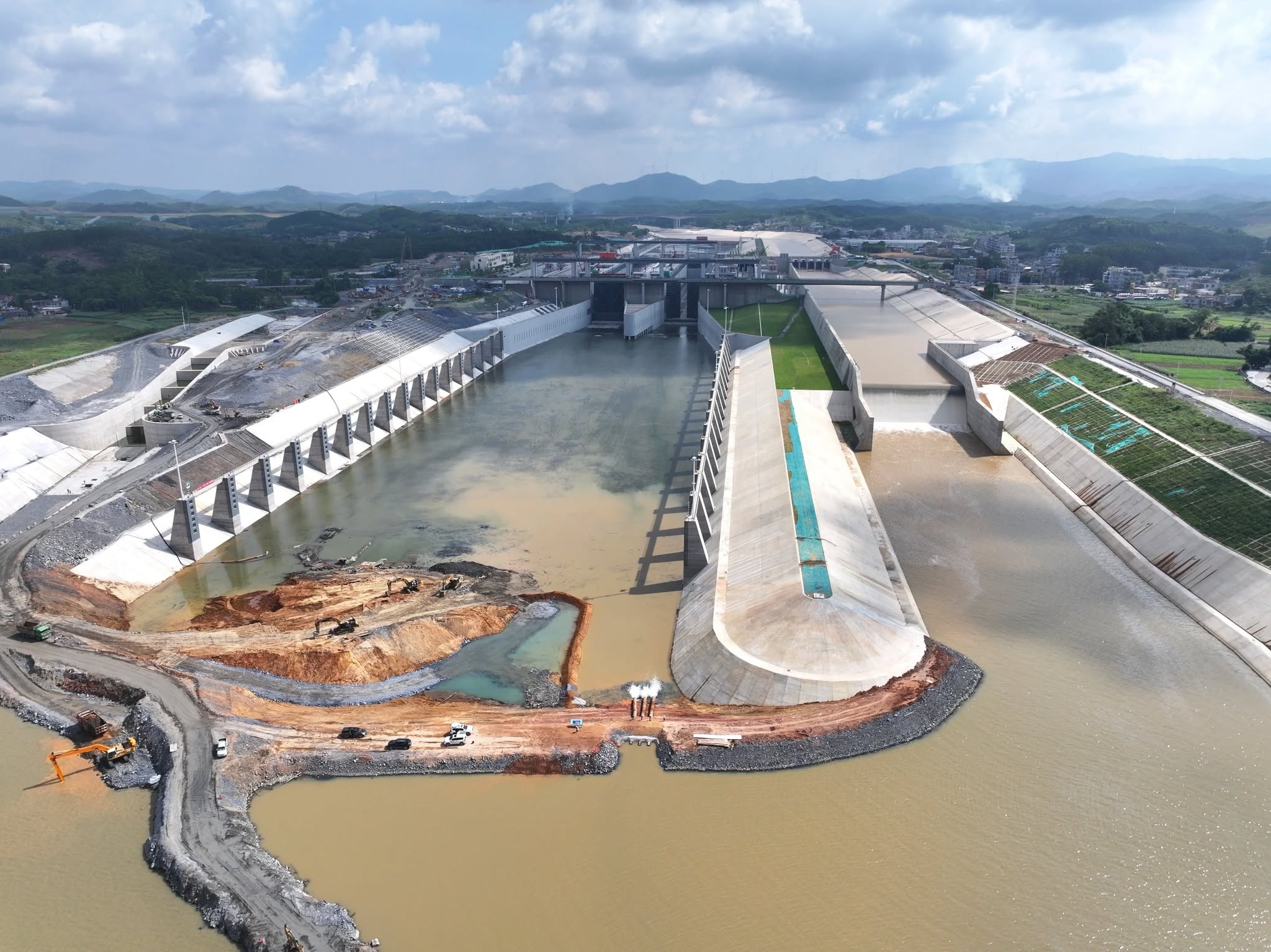 |
Water being pumped into the Xishi ship lock section of the Pinglu Canal on 3/6. *Xinhua* |
Ngie Ngoc Binh, Deputy Dean of the Institute for Human Sciences at Tsinghua University China, believes the canal will improve China's cross-border logistics system. He anticipates it will accelerate economic and trade growth in the remote southwestern region, stating, "ASEAN member countries with economic ties to China can further strengthen trade with China, leading to mutually beneficial outcomes".
Hong Hanh (According to China Daily)