Germany suffered a significant setback on 3/6, failing to win a non-permanent seat on the United Nations Security Council. The vote, held by members of the United Nations General Assembly, saw Germany lose to Austria and Portugal in the race for the two-year term positions. Berlin received only 104 votes, trailing behind Austria with 131 votes and Portugal with 134 votes.
Foreign Minister Johann Wadephul acknowledged the outcome as a "bitter defeat" and "a real disappointment" for Berlin. He suggested that Germany's steadfast support for Israel contributed to the loss of key votes. Wadephul also accused Russia of actively lobbying against Germany, citing Berlin's unwavering support for Ukraine. "It is no secret that Russia does not want such a voice on the Security Council", he stated.
German newspaper DW, citing diplomatic sources, described Russia's intensive efforts to impede Germany's candidacy. Germany has been a crucial supporter of Ukraine throughout the conflict, which has lasted over four years in Europe. Russia has not yet commented on Foreign Minister Wadephul's accusation.
Despite the outcome, Wadephul reaffirmed Berlin's continued support for Kyiv. "There are issues on which we always maintain a clear stance, but not every United Nations member state shares it", he explained. Chancellor Friedrich Merz expressed Germany's confidence during its candidacy and regretted not achieving the set goal. "This result does not change the tasks we face at the United Nations. Germany remains a reliable pillar of the multilateral system", Merz said.
Reactions within Germany varied. Member of Parliament Jurgen Hardt, foreign policy spokesperson for the conservative alliance in the German parliament, called the result a "regrettable outcome". Conversely, the Green party criticized the government of Chancellor Merz and Foreign Minister Wadephul, citing insufficient efforts in climate protection and cuts to development aid.
The Security Council, a critical body within the United Nations, comprises 15 of the 193 member states. It includes five permanent members with veto power—the US, UK, France, China, and Russia—along with 10 non-permanent members. This body holds the unique power to issue legally binding resolutions.
In other election results, Zimbabwe and Trinidad and Tobago were elected unopposed to non-permanent seats for their respective regional allocations. Kyrgyzstan also secured a regional representative seat after defeating the Philippines.
Germany previously held a non-permanent seat on the United Nations Security Council from 2019 to 2020.
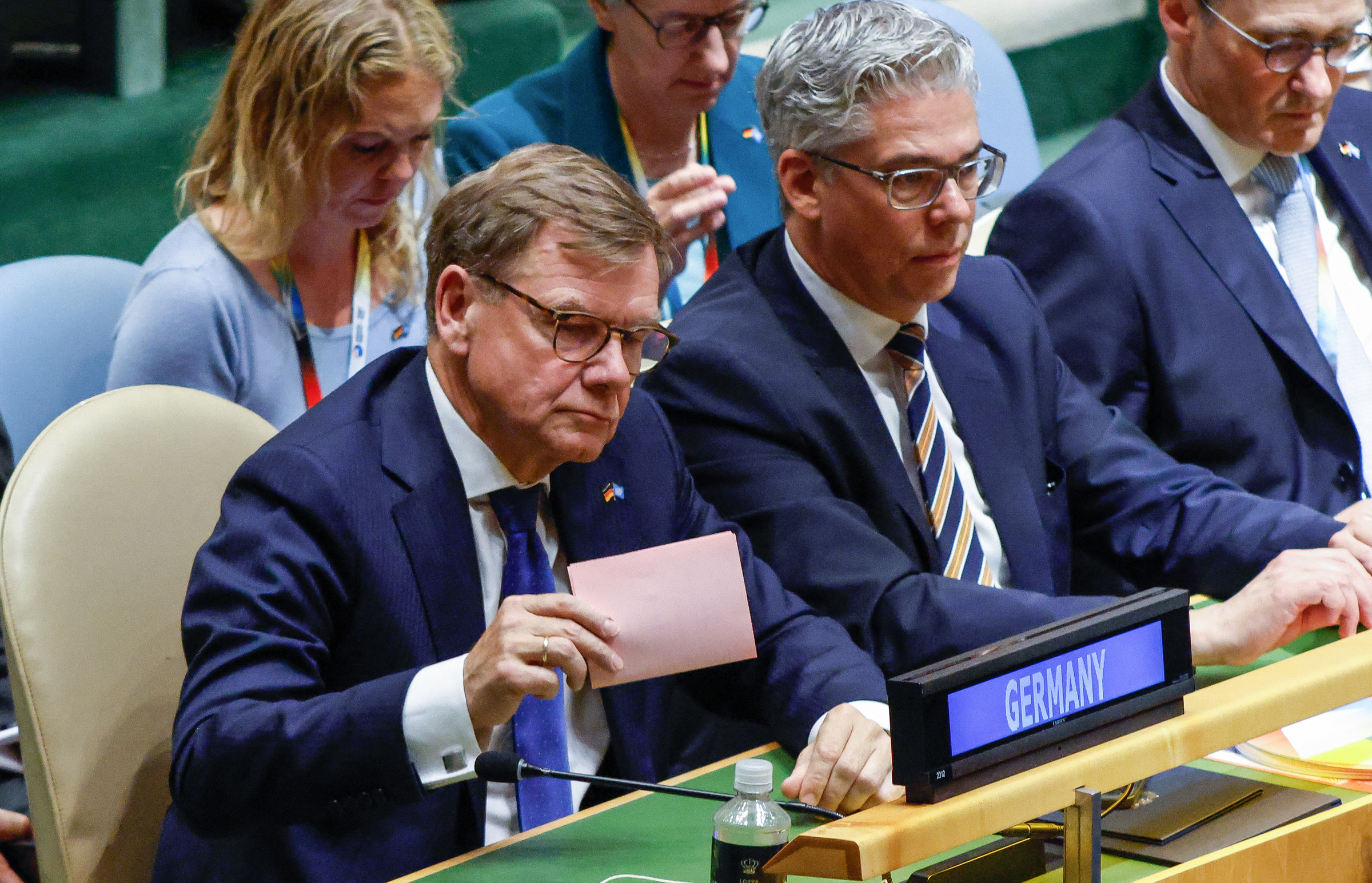 |
German Foreign Minister Johann Wadephul casts his vote at a United Nations General Assembly session in New York on 3/6. *AFP*
By Thanh Danh (DW, AFP)