"Carrier-borne aircraft of all nations operate surveillance radars during flight training. This is a normal measure to ensure flight safety", Chinese Foreign Ministry spokesperson Guo Jiakun said at a press conference on 8/12.
Guo affirmed that China's training and exercises fully comply with international law and practice, are conducted professionally and are "beyond reproach".
"The incident occurred when Japanese fighters intruded into China's exercise and training area, conducted close-range reconnaissance, and disrupted our military activities. However, Japan blamed China and sought to mislead everyone with accusations that our fighters illuminated their aircraft with radar", Guo stated.
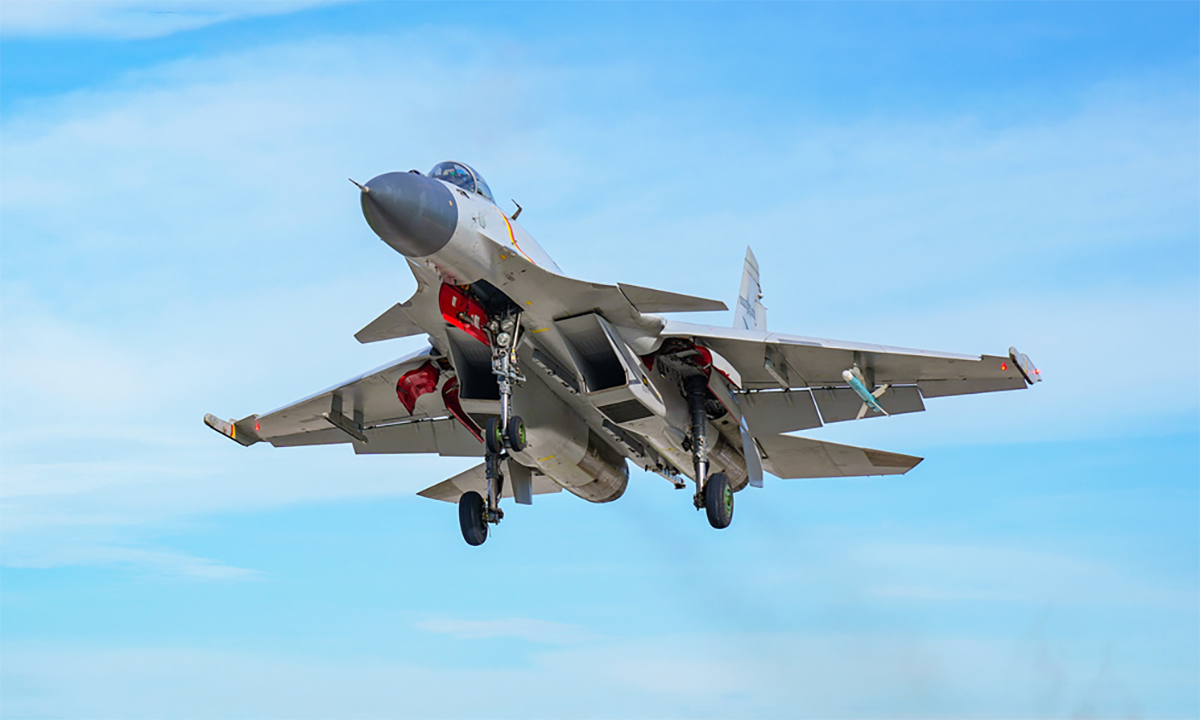 |
A Chinese J-15 carrier-borne fighter during a training flight on 29/8. Photo: PLA |
Japanese government spokesperson Minoru Kihara said the Japan Air Self-Defense Force (JASDF) scrambled F-15J fighters last weekend "due to concerns about Chinese aircraft violating airspace". Kihara dismissed China's claim that Japanese fighters hindered their flight safety as baseless.
Japanese Deputy Foreign Minister Takehiro Funakoshi summoned Chinese Ambassador Wu Jianghao to "lodge a strong protest that such dangerous actions are extremely regrettable". The Chinese Foreign Ministry rejected Japan's criticism and announced it would send a counter-protest.
The incident took place during exercises by China's Liaoning aircraft carrier strike group east of the Miyako Strait.
Japan's Ministry of Defense reported that J-15 carrier-borne fighters from the Liaoning twice activated their fire control radar, locking onto Japanese F-15 fighter jets southeast of Okinawa island on 6/12. The Liaoning strike group was then operating south of Japan's Okinawa island group.
The Chinese Navy stated that Japan's claims "do not align with the actual situation" and demanded that the country "immediately cease slandering and smearing".
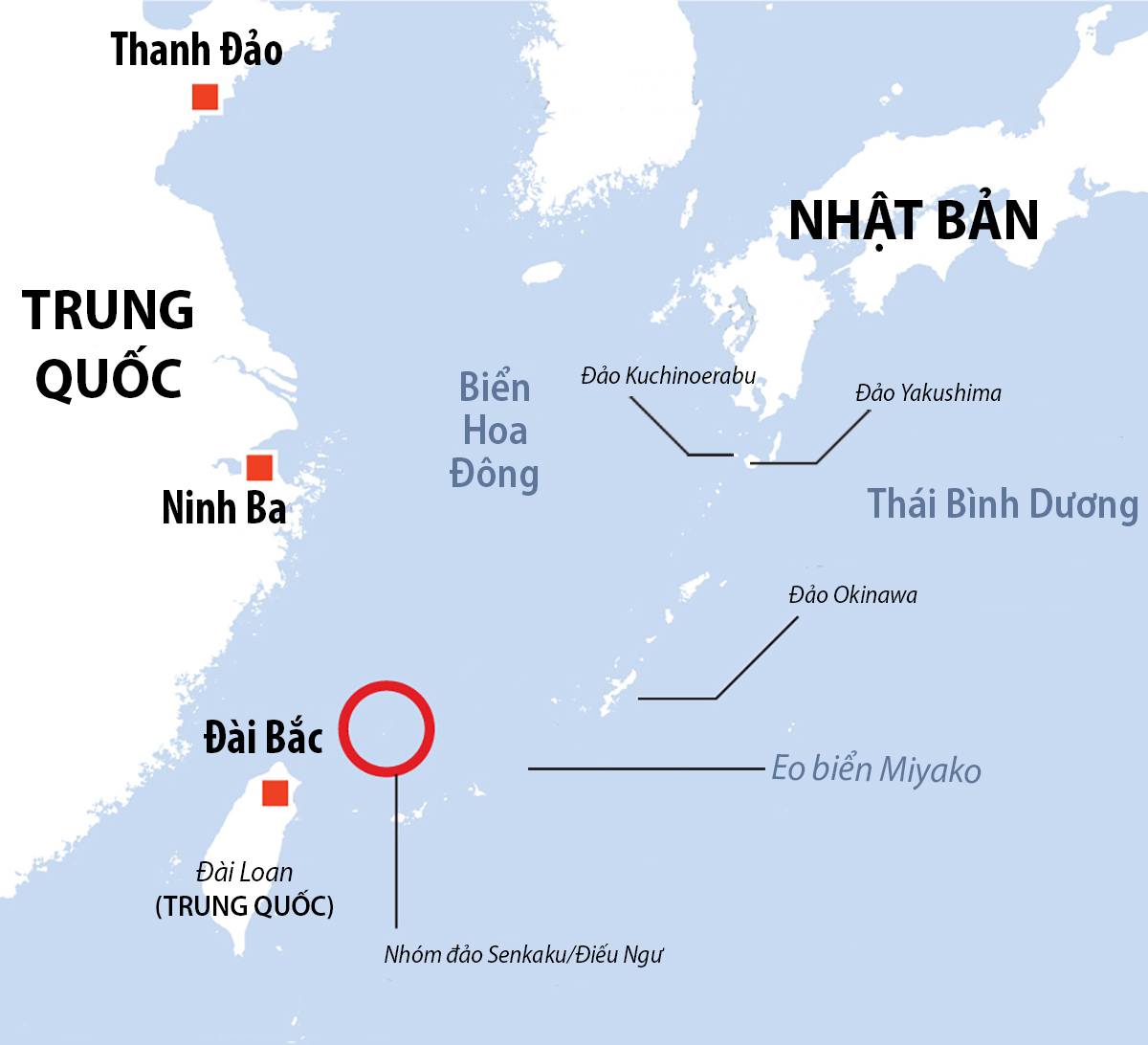 |
Location of the Miyako Strait and surrounding area. Graphics: Reuters, Straits Times |
A radar operating in surveillance mode can monitor a large area and identify many objects, helping pilots understand their surroundings and detect distant threats. Using this mode does not mean the aircraft is ready to fire.
In contrast, a fire control radar precisely locates an opponent, providing guidance parameters for missiles and guided munitions. Activating fire control radar and locking onto a target typically occurs only when one side is ready to engage in combat, and it is considered a serious provocation during peacetime.
Modern aircraft and warships are equipped with radar warning receiver systems, allowing them to determine if they are being detected and locked onto by an adversary's radar.
The fighter jet encounter near Okinawa island occurred amidst escalating tensions between China and Japan, following remarks by Prime Minister Sanae Takaichi regarding Taiwan last month. The Japanese Prime Minister later softened her tone to de-escalate tensions, but China did not accept this and continued to demand she retract her statement.