On 29/5, the Xinxiang Intermediate People's Court in China sentenced Thich Vinh Tin, whose lay name is Luu Ung Thanh, to 24 years in prison and fined him 515,000 USD. The charges stemmed from bribery, misappropriation, and embezzlement of tens of millions of USD during his tenure as abbot of Shaolin Temple and chairman of the Shaolin Charitable Welfare Foundation from 2003-2025.
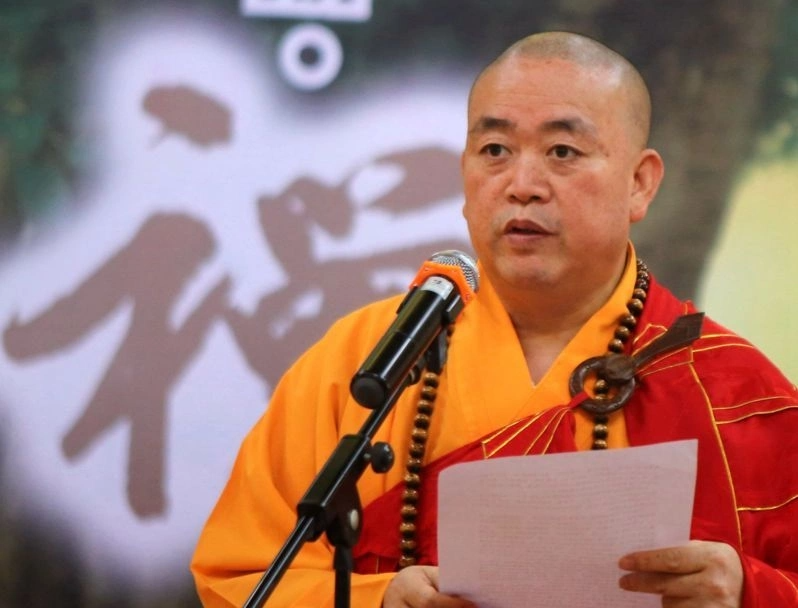 |
Former Shaolin Temple abbot Thich Vinh Tin. Photo: CNS
On the same day, the Buddhist Association of China issued a statement on its website, asserting that the verdict was fitting because Thich Vinh Tin had "reaped what he sowed". The association stated that the ruling reflects the principle of equality before the law for all, and serves as a warning to Buddhist monks and nuns.
The statement affirmed, "As members of the Buddhist community, we must firmly establish national consciousness, civic awareness, and legal consciousness; we must deeply understand that no religion is above the law, no territory is beyond the law, and no individual is above the law."
The Buddhist Association of China announced its commitment to fully implement the educational program "study regulations, uphold precepts, value cultivation, and establish a positive image", and to strictly carry out "seven initiatives" aimed at encouraging frugality, combating extravagance, and guiding Buddhists and monastics to abide by the law and preserve precepts. This effort aims to resolutely protect the pure and dignified image of Buddhism.
Born in 1965 in Phu Duong city, An Huy province, Thich Vinh Tin arrived at Shaolin Temple in 1981 and became a disciple of the 29th abbot, Thich Hanh Chinh.
After Elder Thich Hanh Chinh passed away in 1987, Thich Vinh Tin inherited his mantle, assuming the role of Head of the Shaolin Temple Management Board and overseeing all temple affairs. He was appointed abbot of Shaolin Temple in 1999 and spent the subsequent decades expanding research and promoting Shaolin martial arts abroad.
He earned the moniker "CEO monk" for establishing numerous companies. The Shaolin Temple's business footprint expanded into culture, cuisine, pharmaceuticals, and apparel. However, he also faced criticism for commercializing Buddhism. An investigation into his activities began in July last year, leading to his arrest in mid-November.
Hong Hanh (According to Zaobao)